
Another Municipality Will Benefit from the Accessibility Standards Developed at Gdańsk Tech
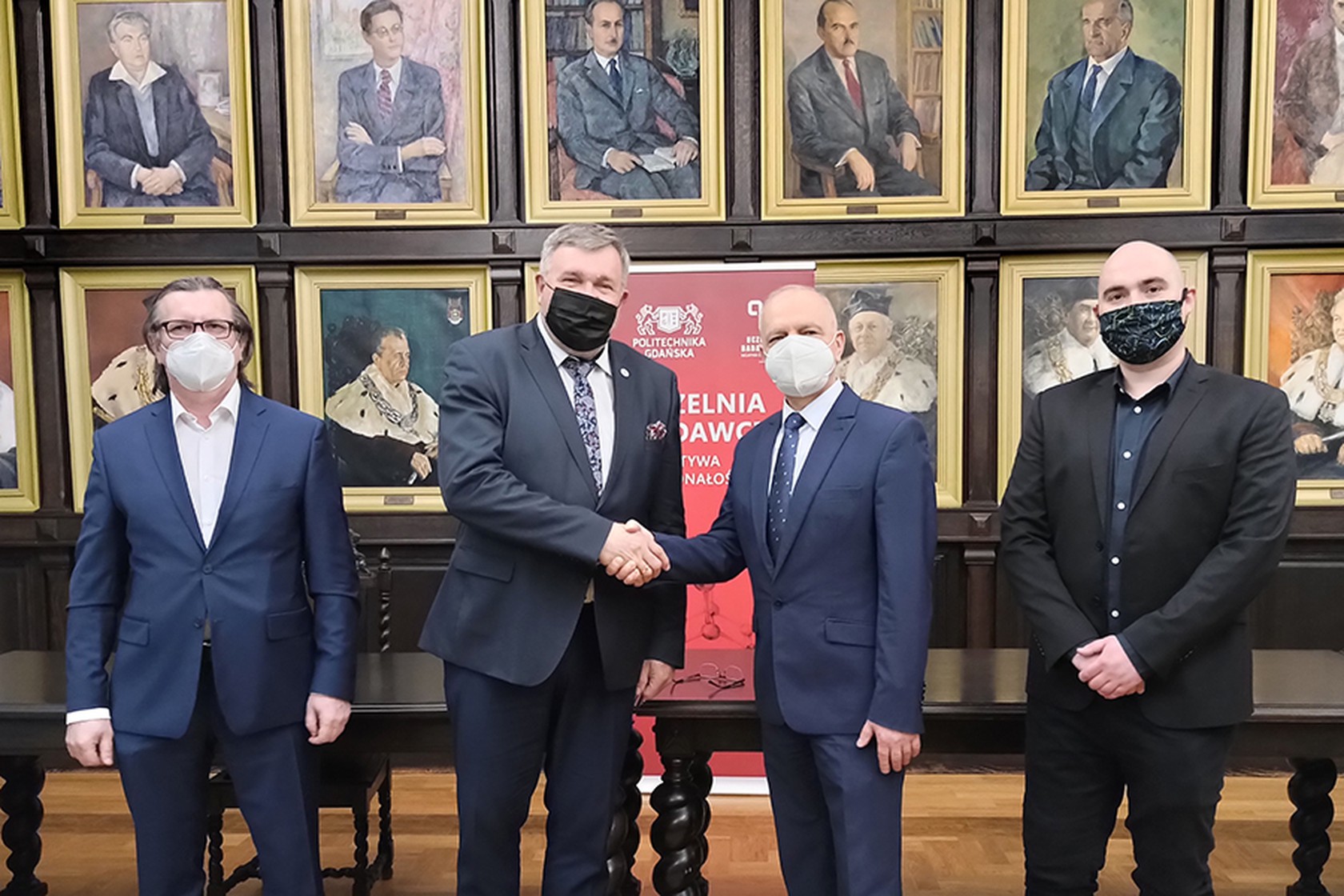
Gdańsk Tech and the Kartuzy municipality have signed a licensing agreement for the implementation of Accessibility Standards. Thus, Kartuzy has joined the group of cities committed to creating architectural solutions accessible to all users, including people with special needs, such as persons with disabilities, seniors, parents with children in strollers, and pregnant women.
Gdańsk Tech and the Kartuzy municipality have signed a licensing agreement for the implementation of Accessibility Standards. Thus, Kartuzy has joined the group of cities committed to creating architectural solutions accessible to all users, including people with special needs, such as persons with disabilities, seniors, parents with children in strollers, and pregnant women.
– The Kartuzy Municipality wants to be even more accessible and open to all residents and its guests. It is especially important that people with special needs among us can function independently and autonomously within the local community, and have the opportunity to use common services on equal terms. Tools such as the Accessibility Standards are helpful in achieving these goals – said Mieczysław Grzegorz Gołuński, Mayor of Kartuzy. – The signed agreement will allow us to implement unified solutions based on the principles of universal design into investment practices in the Kartuzy municipality.
The preparation and negotiation of the agreement’s terms were carried out by MSc Mateusz Puchalski from the Gdańsk Tech Knowledge and Technology Transfer Center, legal advisor Joanna Ratasiewicz from the Gdańsk Tech Legal Support Office for Intellectual Property and Projects, and patent attorney PhD Justyna Pawłowska from the Gdańsk Tech Patent Attorneys Team.
Gdańsk Tech was represented at the signing of the agreement by Prof. Janusz Nieznański, Vice-Rector for Internationalization and Innovation, while the Kartuzy Municipality was represented by Mayor Mieczysław Grzegorz Gołuński.
The Accessibility Standards are a set of guidelines for designing and arranging public spaces in accordance with the principles of universal design, developed by PhD hab. Eng. Arch. Marek Wysocki, DSc, university professor from the Faculty of Architecture, Gdańsk Tech Rector’s Plenipotentiary for Accessibility, and a member of the Accessibility Council at the Ministry of Funds and Regional Policy.
The solutions included in the Accessibility Standards enable people with special needs to exercise their rights and participate actively in the local community. They will be able to use public places such as pedestrian routes, parks, stops, squares, streets, or boulevards freely and independently. Solutions compliant with the principles of universal design allow for greater integration of all residents and the creation of cities where the quality of life will improve.
In January 2021, the Gdańsk-Gdynia-Sopot Metropolitan Area, as the first metropolitan area in Poland, introduced large-scale systemic solutions for people with disabilities and their caregivers. These were included in the document “Minimum Standards for People with Disabilities and Their Environment.” The document was developed with the cooperation of over 80 experts, including representatives of local governments, people with disabilities and their caregivers, representatives of healthcare services, educational and therapeutic institutions, and psychological-pedagogical counseling centers. One of its co-authors is Professor Wysocki.
– The document includes specific guidelines for the authorities of 59 local governments within the Metropolitan Area on how to implement actions in metropolitan cities, municipalities, and counties to improve the quality of life for people with disabilities and their environment. Based on these guidelines, construction investments in the metropolitan area will be regularly monitored in terms of applying accessibility solutions. The implementation of the Accessibility Standards significantly supports this process – explains Professor Marek Wysocki.
So far, the following cities have concluded a license agreement on the Accessibility Standards with Gdańsk Tech: Gdańsk, Sopot, Gdynia, Starogard Gdański, Konin, Poznań, and Środa Wielkopolska.
– Municipalities approach us with requests for the creation of new Accessibility Standards cards, including those dedicated to mass events. It is a very positive trend that local governments recognize the need to improve accessibility for people with special needs in all aspects of social life. Universal design is design for ourselves; it is worth remembering that – emphasizes Prof. Wysocki.