
3D Printing to Help Extend the Durability of Fuel Cell Components? A Researcher from Chalmers University to Investigate at Gdańsk Tech
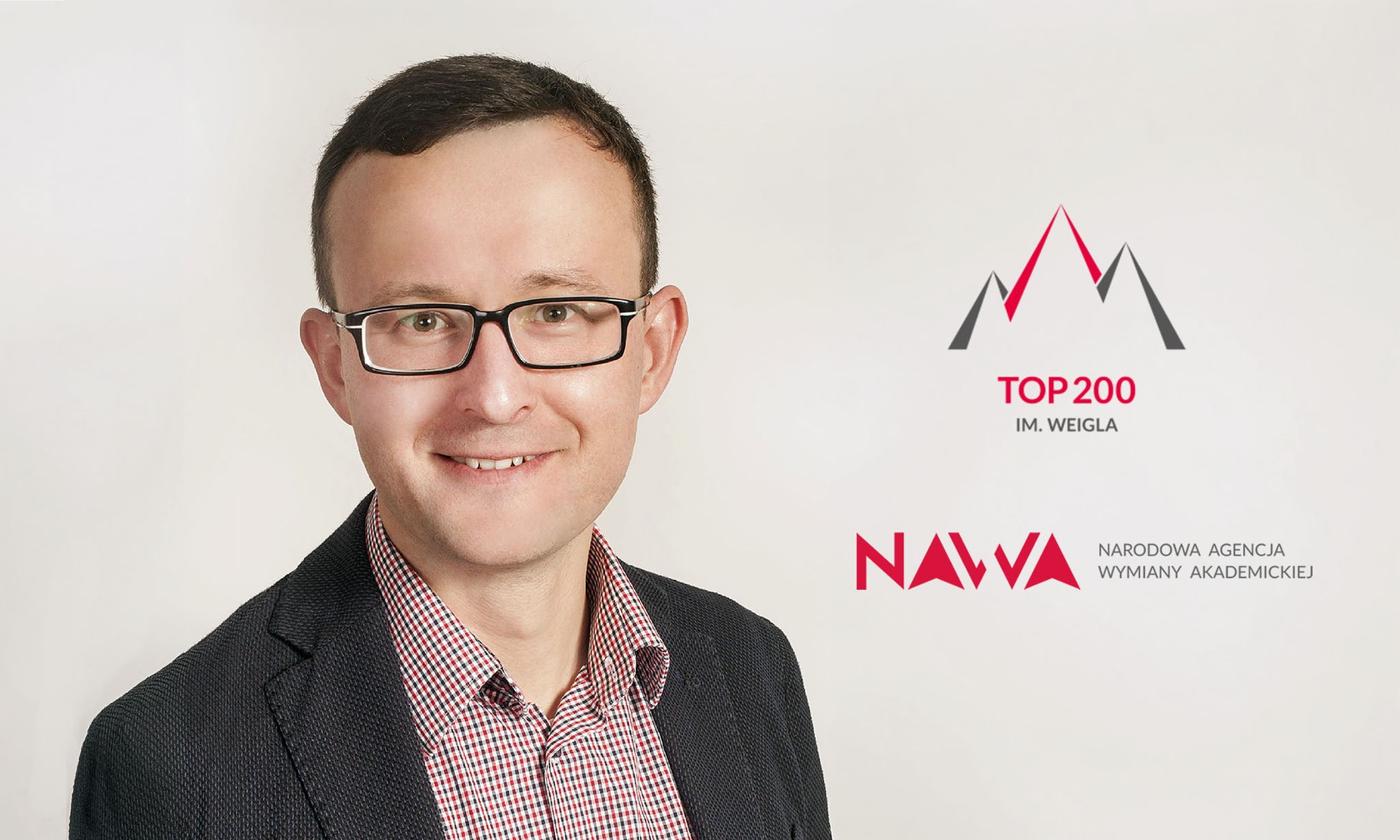
Dr Anton Chyrkin, a scientist specializing, among others, in the field of corrosion of metal alloys and the prediction of the durability of materials and protective coatings, will conduct research at Gdańsk Tech for three years on an innovative method of manufacturing fuel cell components. He will come to Gdańsk from the Swedish Chalmers University of Technology as part of the TOP200 Weigl programme of the National Agency for Academic Exchange.
Dr Anton Chyrkin, a scientist specializing, among others, in the field of corrosion of metal alloys and the prediction of the durability of materials and protective coatings, will conduct research at Gdańsk Tech for three years on an innovative method of manufacturing fuel cell components. He will come to Gdańsk from the Swedish Chalmers University of Technology as part of the TOP200 Weigl programme of the National Agency for Academic Exchange.
The Weigl TOP200 is a pilot program by NAWA aimed at bringing scientists from leading international centers (universities ranked between 1 and 200 in global rankings: the Shanghai Ranking, QS or THE) to Poland. A total of ten researchers from around the world have received funding.
Dr Anton Chyrkin will join Gdańsk Tech from Chalmers University of Technology in Gothenburg, Sweden, where since 2017 he has worked at the High Temperature Corrosion Centre (HTC). He graduated from Taras Shevchenko National University of Kyiv, Ukraine. He earned his PhD in 2012 at RWTH Aachen and completed postdoctoral research at Forschungszentrum Jülich in Germany. He was also a recipient of the MSCA4Ukraine fellowship program.
The scientist specializes in high-temperature corrosion of metal alloys, diffusion modeling of phase transformations, and predicting the durability of materials and protective coatings.
Dr Chyrkin will begin work in October at the Department of Functional Materials Engineering within the Faculty of Electronics, Telecommunications and Informatics at Gdańsk Tech. He will establish his own research team to conduct studies under the project “AMIMS — Additively Manufactured Steel Interconnectors for Solid Oxide Fuel Cells and Electrolyzers: High-Temperature Corrosion and Mitigation Strategies” in collaboration with Chalmers University of Technology, Hochschule Osnabrück, and Forschungszentrum Jülich.
More Durable Parts for Fuel Cells from a 3D Printer
What will the Gdańsk researchers under Dr Chyrkin’s leadership work on?
Solid oxide fuel cells and electrolyzers (SOFC/SOEC) can generate electricity from hydrogen, methane, or ammonia, and when operated in reverse, produce hydrogen from steam. A significant limitation is the durability of metallic components, primarily the interconnector — a shaped sheet of ferritic steel that electrically connects adjacent cells in the stack and distributes gases to the electrodes. This interconnector simultaneously operates in two different atmospheres and temperature ranges between 600-800 °C, leading to its degradation, including chromium evaporation and so-called dual atmosphere corrosion.
Currently, interconnectors for fuel cells are manufactured, for example, by stamping rolled sheet metal. Dr Anton Chyrkin proposes an innovative method — 3D printing them from metal powders. Researchers will investigate whether the dense grain boundary network in the microstructure of printed materials accelerates chromium transport and allows faster regeneration of the protective chromium oxide layer, while 3D printing provides the freedom to shape gas channels in a way that is not achievable with stamping.