New law understandable in a minute? Technology from Gdańsk Tech to be introduced to the Government Legislation Centre
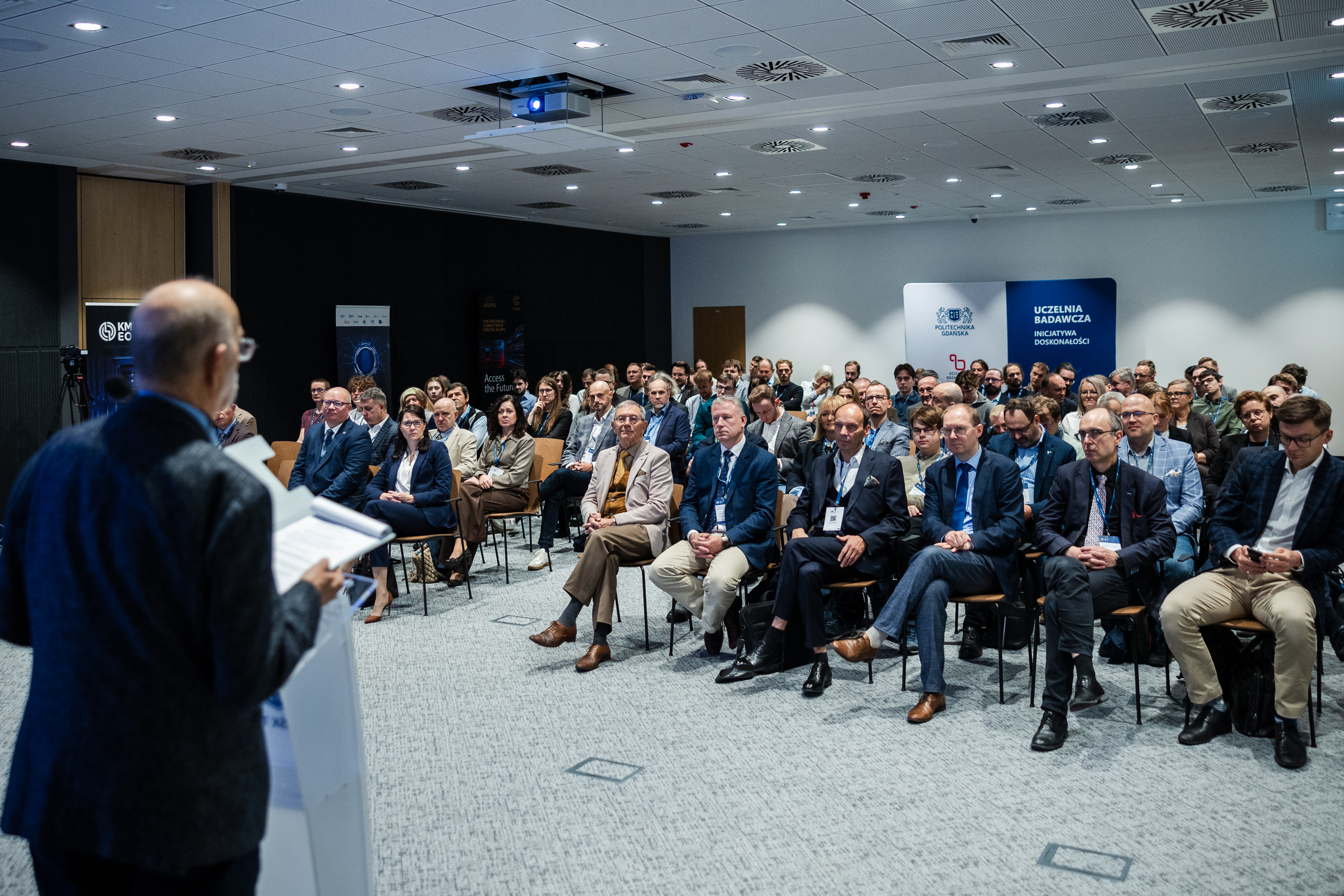
Just one minute after an amendment to the law is published, citizens could have access to the latest version of the legislation, complete with cross-references and explanatory information to help them understand it. This is one of the aims of a collaboration between Gdańsk University of Technology and the Government Legislation Centre, which is already piloting solutions developed by the university’s researchers. This initiative, along with other practical applications of artificial intelligence in public administration, healthcare and business, was discussed on 23 October at a conference marking the conclusion of the CAISE project, held at the STOS Competence Centre.
Just one minute after an amendment to the law is published, citizens could have access to the latest version of the legislation, complete with cross-references and explanatory information to help them understand it. This is one of the aims of a collaboration between Gdańsk University of Technology and the Government Legislation Centre, which is already piloting solutions developed by the university’s researchers. This initiative, along with other practical applications of artificial intelligence in public administration, healthcare and business, was discussed on 23 October at a conference marking the conclusion of the CAISE project, held at the STOS Competence Centre.
The conference provided an opportunity to present the results of 32 months of research and development carried out as part of the CAISE (Cloud Artificial Intelligence Service Engineering) project. The project aims to create a cloud-based platform for designing, developing and deploying AI-powered services. With a budget of nearly PLN 55 million, CAISE is being developed under the European IPCEI CIS initiative (Important Project of Common European Interest – Cloud Infrastructure and Services).
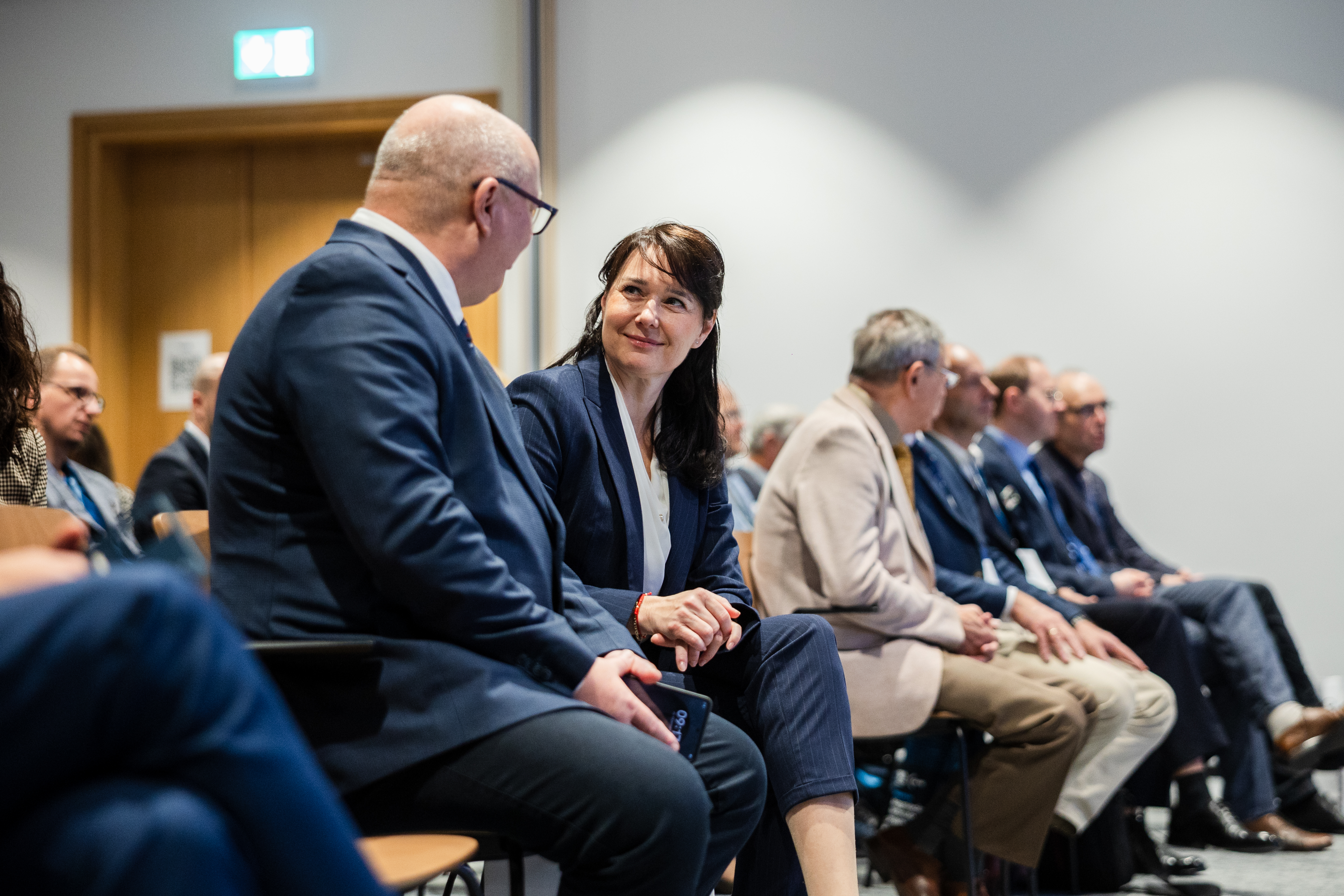
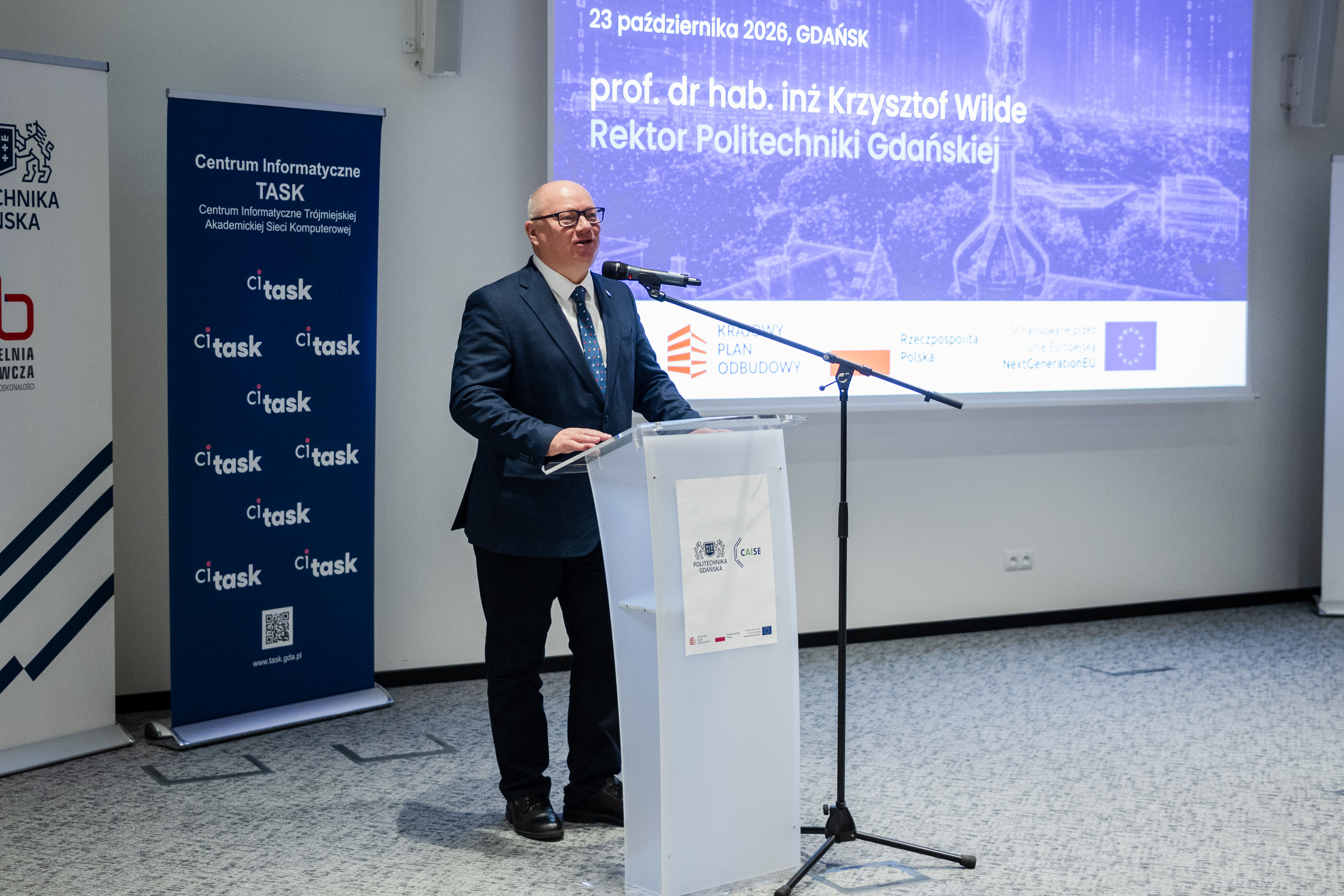
Among the guests was Joanna Knapińska, Minister responsible for overseeing the implementation of government policy and President of the Government Legislation Centre. The conference brought together representatives from academia, public administration and business. Guests were welcomed by Prof. Krzysztof Wilde, Rector of Gdańsk University of Technology, and Prof. Henryk Krawczyk, CAISE Project Leader, who highlighted the importance of collaboration between institutions working to advance modern technologies and drive the digital transformation of the public sector.
Artificial intelligence should serve people, not technology for its own sake
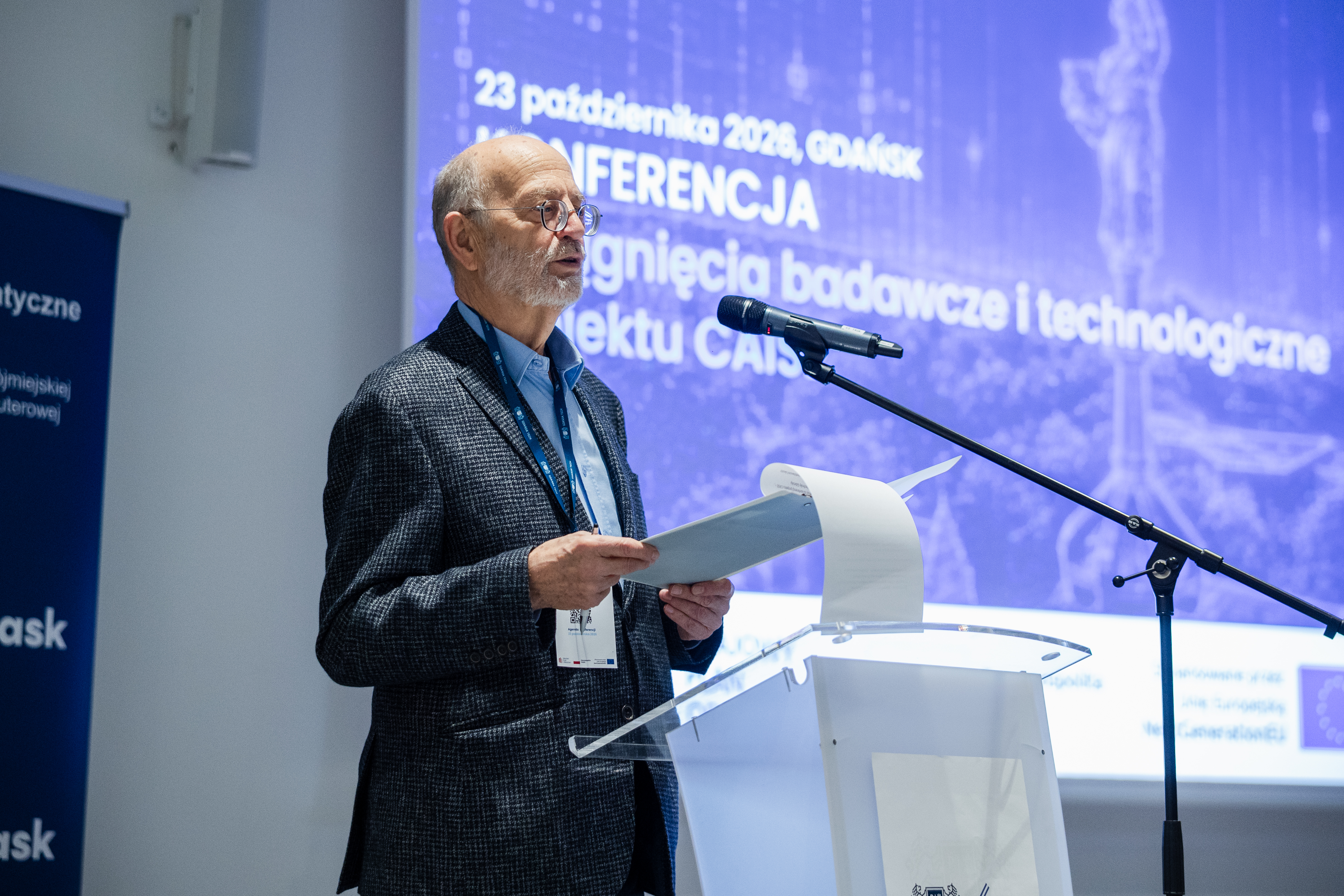
Opening the conference, Rector Krzysztof Wilde stressed that the development of artificial intelligence should, above all, benefit people. AI should make everyday tasks easier, improve efficiency and enhance the quality of work.
“Artificial intelligence should be a tool that works for us. Its purpose is to make our jobs easier, increase productivity and, importantly, not to replace people or reduce employment. Above all, it should help us deliver better-quality results, much faster and to the highest possible standard,” said the Rector.
He emphasised that a key feature of the CAISE platform is its ability to make advanced technologies accessible to people without specialist expertise in artificial intelligence. He also pointed to the technological maturity of the solutions developed and their potential for commercialisation.
“We are competing with the tech giants. We are not trying to win the race to develop superintelligence capable of solving every problem. Instead, we are focusing on a product designed for specific applications,” he explained.
According to the Rector, CAISE's strength lies in its ability to support the development of specialised services that address real user needs, including those in public administration, legislation and healthcare.
“The world is increasingly moving away from ready-made software towards services that can be combined to create specific workflows. The idea is to develop individual building blocks – in our case, cloud services – which can then be brought together to create complete solutions,” explained Prof. Henryk Krawczyk, the project leader.
Making the law clearer and more accessible to citizens
One of the most tangible examples of how technologies developed at Gdańsk University of Technology can be put into practice is the university's collaboration with the Government Legislation Centre.
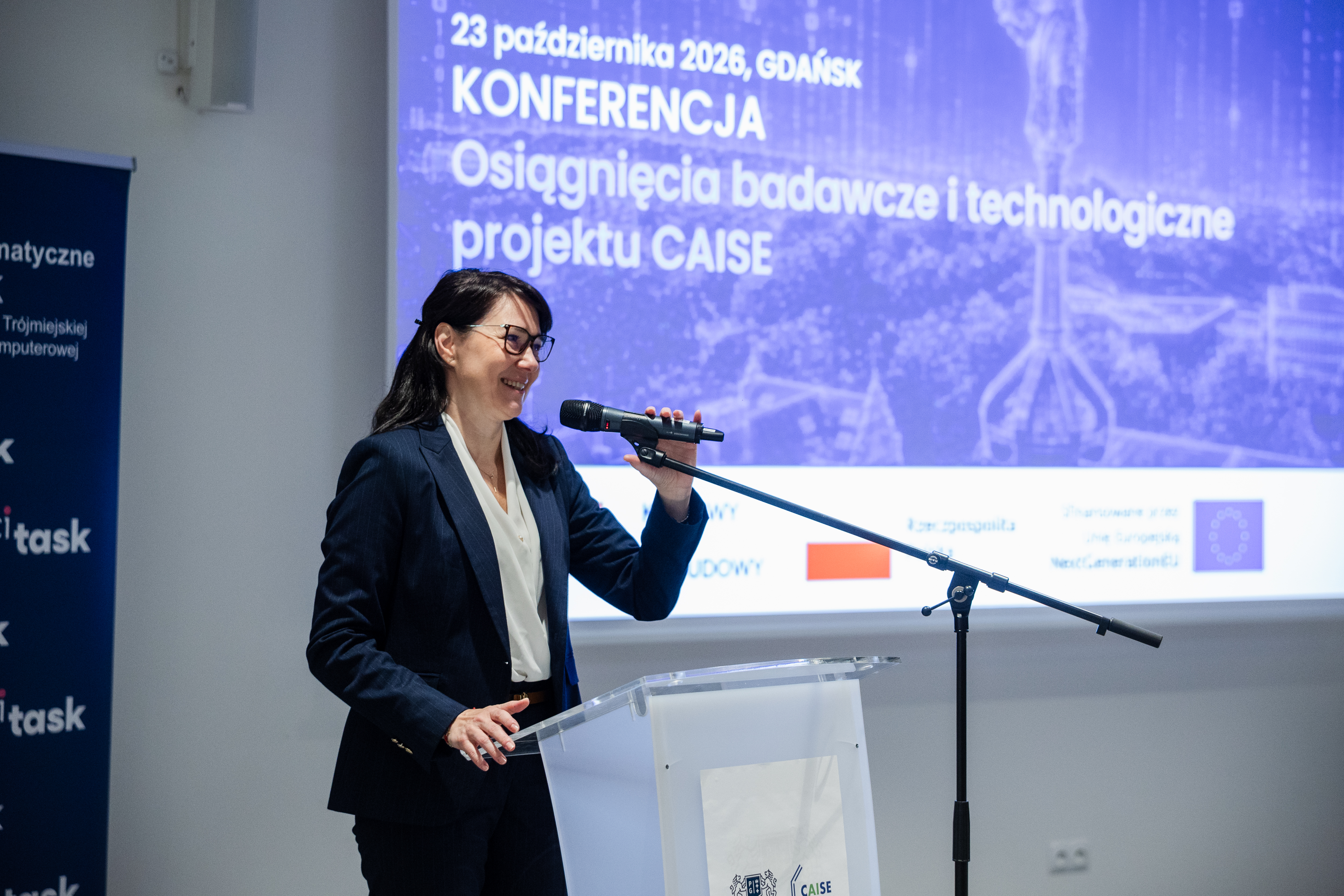
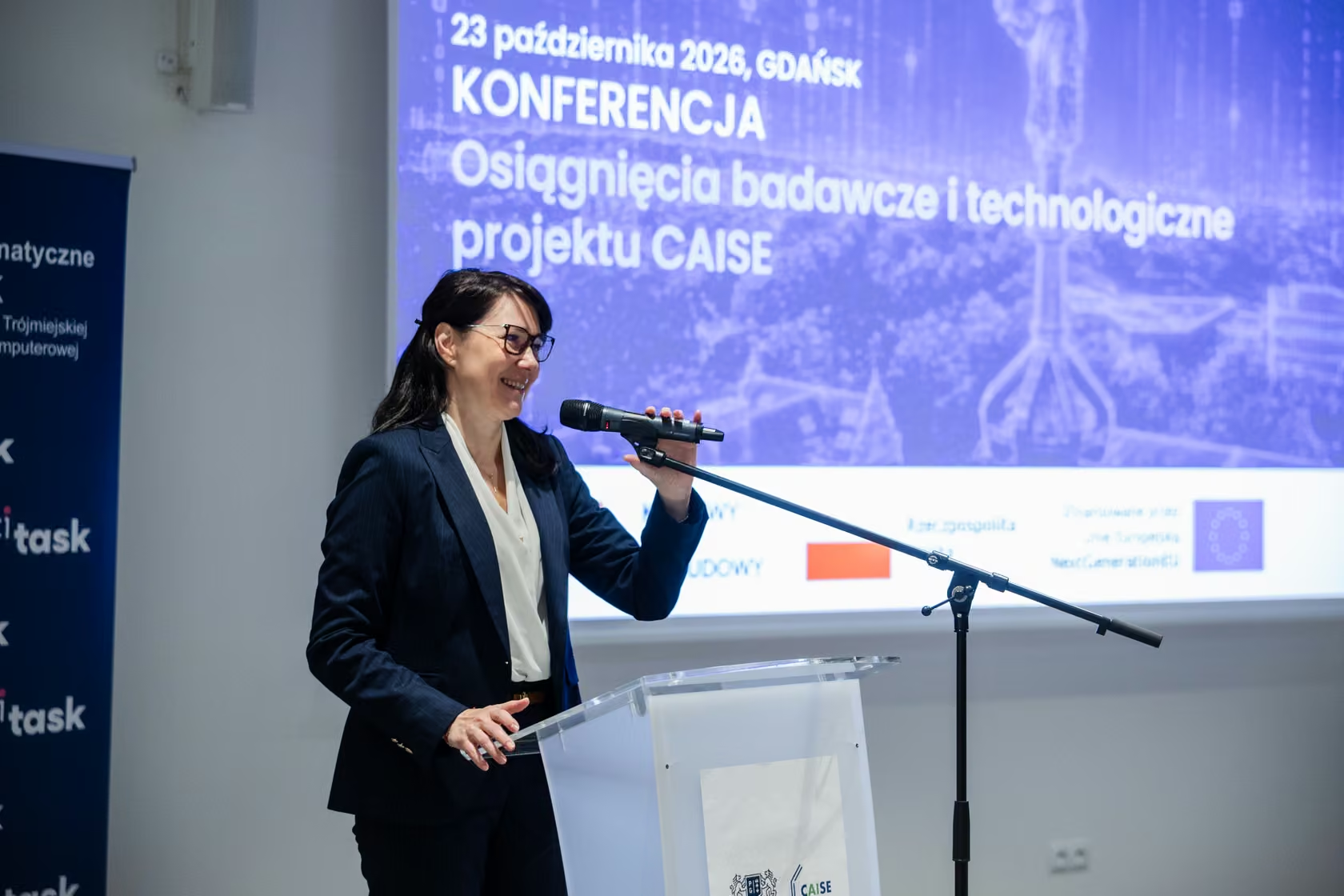
Joanna Knapińska, Minister responsible for overseeing the implementation of government policy and President of the Government Legislation Centre, spoke about how the partnership began. As she acknowledged, it grew out of curiosity and the commitment of specialists from two very different fields: law and computer science.
A turning point came when she was shown a solution that offered an entirely new way of working with legal texts. At first, the technical representation of legislation seemed difficult to understand. However, seeing the practical capabilities of the tool under development changed her perception of what the technology could achieve.
“Suddenly, a legal text intended not just for me but for every citizen had features that would make working with it easier and provide access to knowledge that not everyone currently has,” said Joanna Knapińska.
She confirmed that the solution is already being piloted at the Government Legislation Centre and that further development could significantly change the way people access and use legal information.
One of the main objectives is to give citizens rapid access to up-to-date legislation as soon as amendments are published. Rather than having to work through successive changes to the law themselves, users could receive an updated version of the legislation, complete with references to the provisions that have been amended.
The Minister stressed that the aim is not to replace the official consolidated text of legislation, but to provide an additional, user-friendly tool to help people understand the law currently in force.
“This is not a product for me, nor is it a product for the Government Legislation Centre. This is a project for citizens,” Joanna Knapińska emphasised.
The President of the Government Legislation Centre praised the work of the Gdańsk Tech research team and expressed her hope that the collaboration would continue.
From medical diagnostics to economic productivity
The practical applications of artificial intelligence, along with its opportunities and limitations, were also explored during three scientific sessions, each followed by a panel discussion.
The first session focused on the use of the CAISE platform in healthcare. Prof. Mariusz Kaczmarek, Vice-Rector for Education, delivered a lecture entitled “Artificial Intelligence in Medical Diagnostics: Opportunity or Pitfall?”. He explored one of the most promising, yet challenging, applications of AI: supporting diagnostic processes and the work of medical professionals.
The second part of the conference examined the role of artificial intelligence in scientific research and the economy. Prof. Marcin Woźniak from the Silesian University of Technology delivered a lecture entitled “Artificial Intelligence: 70 Years of Dreams, Achievements and Revolution”, tracing the development of a technology that has evolved over the decades from an academic concept into a practical tool used across an ever-growing range of fields.
The final session addressed the use of AI in public administration and the economic implications of emerging technologies. Prof. Jacek Winiarski from the University of Gdańsk gave a lecture entitled “Artificial Intelligence and the Productivity Paradox: Why Technology Diffusion Does Not Translate into GDP Growth”.
Each session concluded with a discussion, bringing together different academic perspectives and highlighting the diverse ways in which artificial intelligence can be applied in practice.
The project may be ending, but work on the platform continues
Although the CAISE project is drawing to a close, researchers at Gdańsk University of Technology have no intention of stopping work on the cloud platform. As Prof. Henryk Krawczyk explains, the results achieved so far demonstrate the considerable potential of the technology, but the rapid pace of technological change means that continuous development is essential.
“We have demonstrated that our product offers enormous possibilities, but technology does not stand still. We cannot simply stop at what we have achieved today,” the researcher stressed.
The team is already exploring ways to improve the platform further. One possibility under consideration is to use artificial intelligence not only in the services delivered through CAISE, but also to help manage the platform itself.