IX Economic Convention of FarU. Science, Art, and Economy – Together for the Future
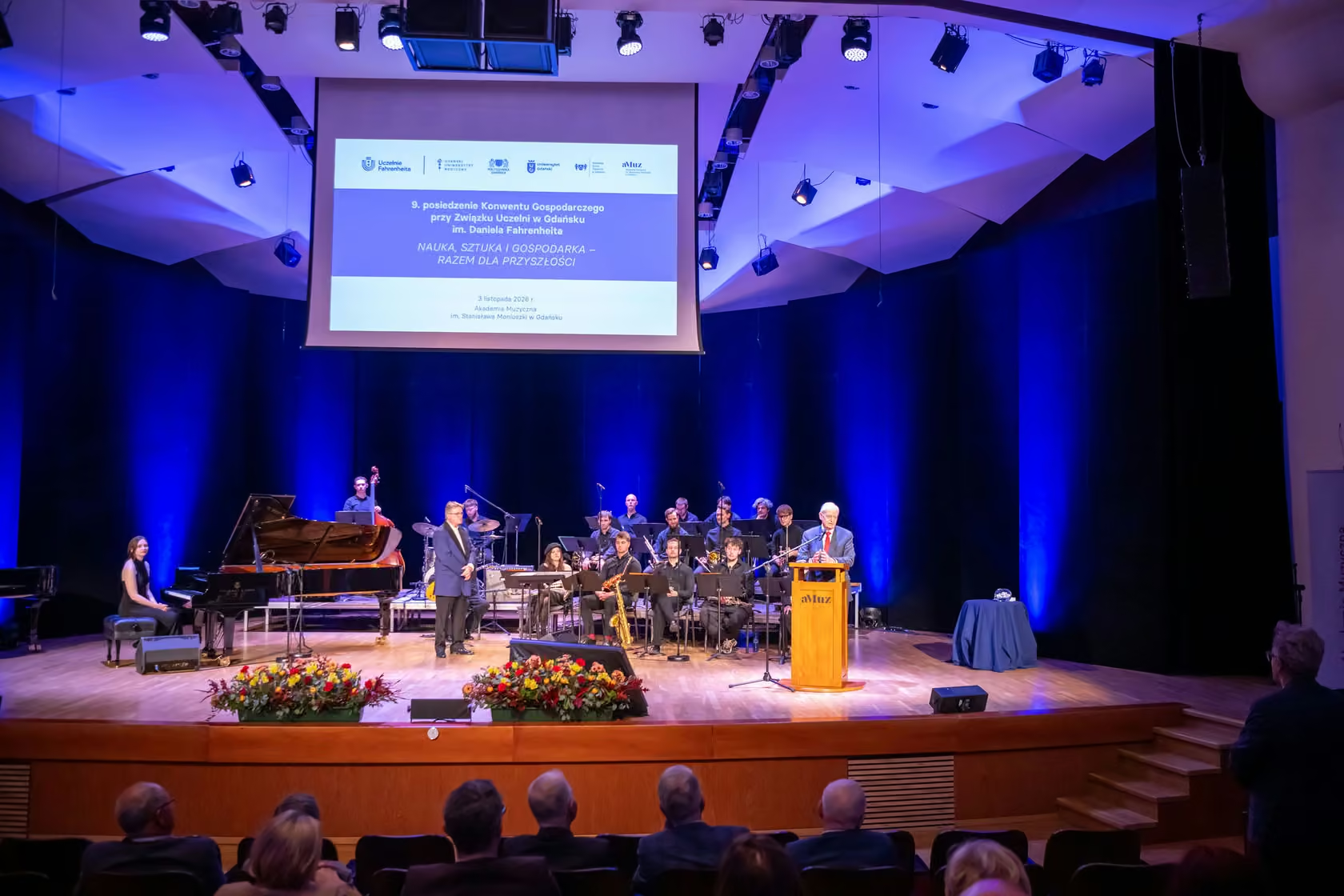
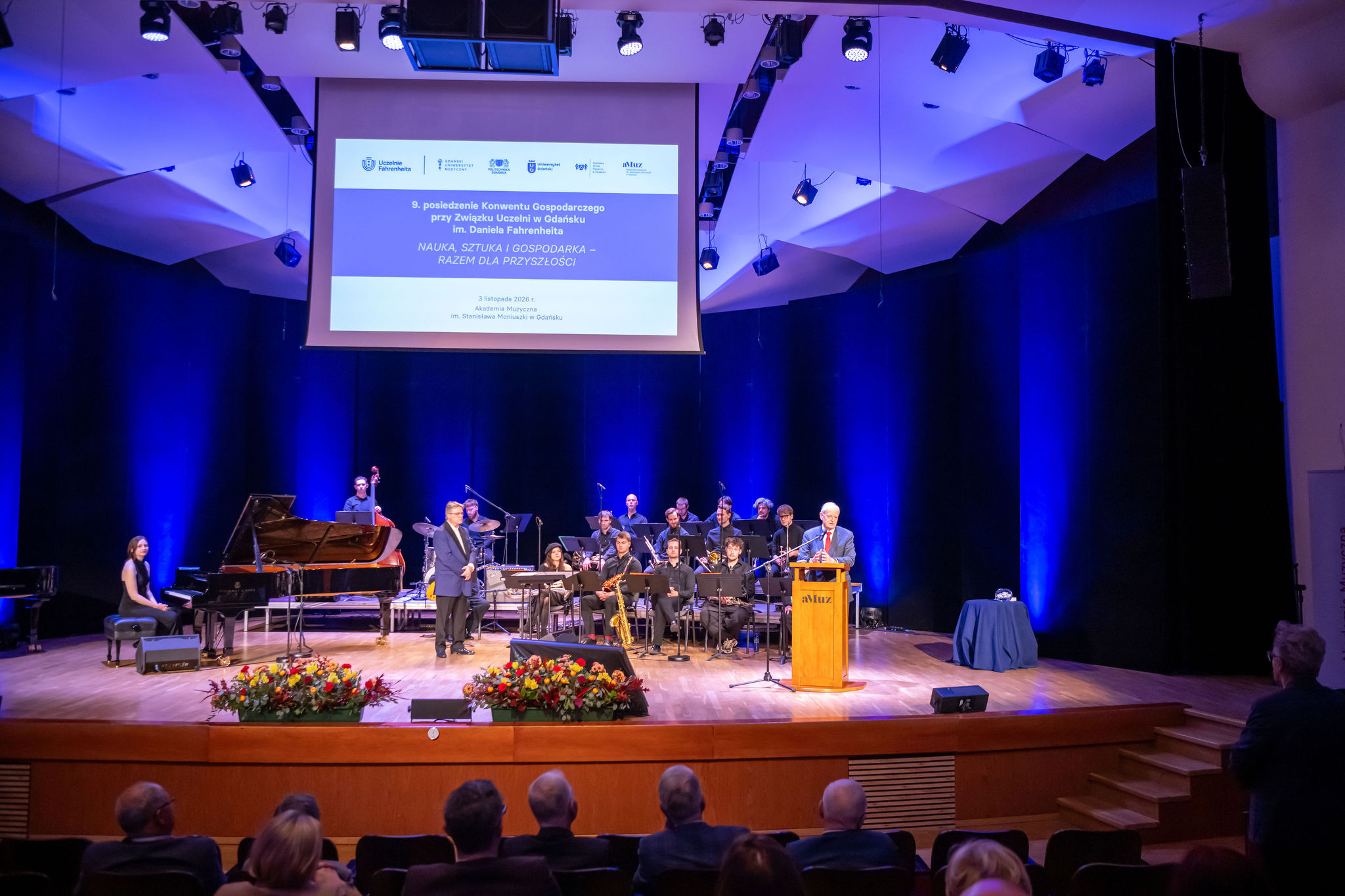
The Gdańsk Academy of Music has become a space for debate about the future of Pomerania. During the IX Economic Convention of the Fahrenheit Universities Association, representatives from academia, local government, and business sought answers on how to combine market potential with culture and innovation. The event, organized under the slogan #Science, Art and Economy – Together for the Future, set new directions for strategic cooperation in the region.
The Gdańsk Academy of Music has become a space for debate about the future of Pomerania. During the IX Economic Convention of the Fahrenheit Universities Association, representatives from academia, local government, and business sought answers on how to combine market potential with culture and innovation. The event, organized under the slogan #Science, Art and Economy – Together for the Future, set new directions for strategic cooperation in the region.
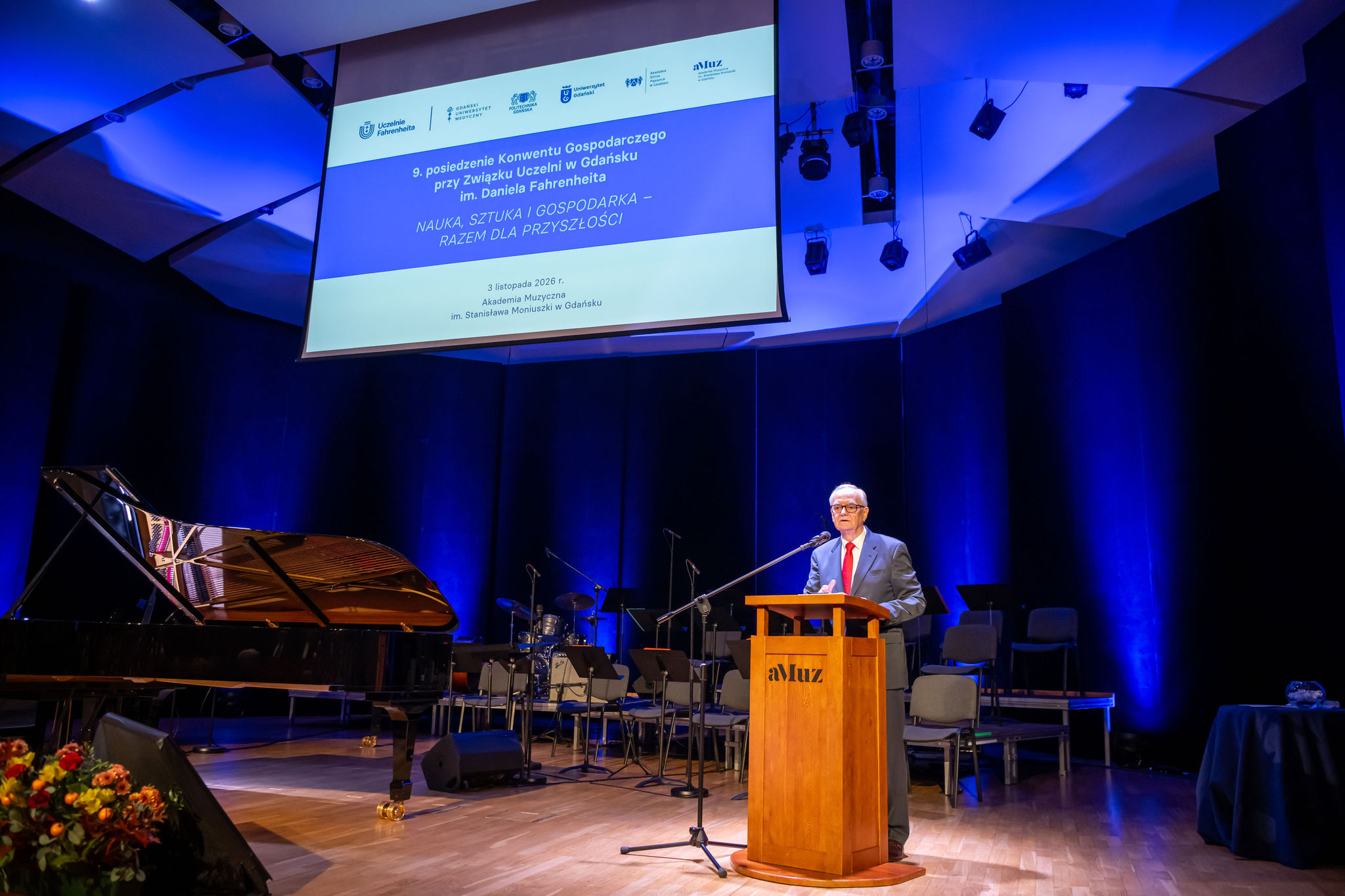
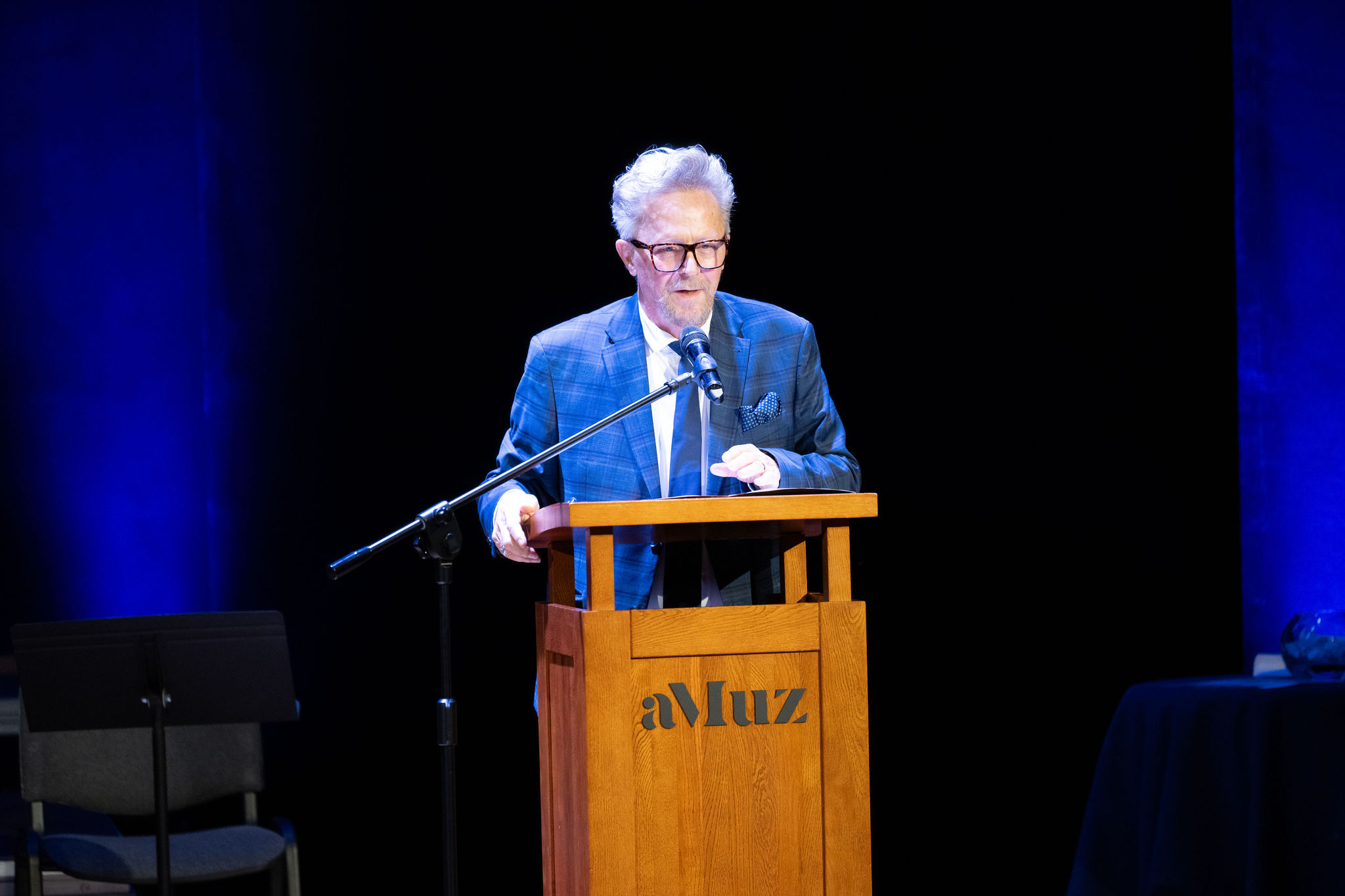
The meeting was inaugurated by the chairman of the Economic Convention at FarU, PhD Zbigniew Canowiecki, who, after welcoming the guests, greeted two Gdańsk art universities – the Stanisław Moniuszko Academy of Music and the Academy of Fine Arts in Gdańsk – as part of the Fahrenheit Universities Union. He noted with a smile that although three quarters of the meeting would be devoted to music, the remaining part would strongly address key economic challenges.
PhD Zbigniew Canowiecki spoke several times throughout the entire session. He particularly highlighted cooperation with the Marshal of the Pomeranian Voivodeship, Mieczysław Struk, emphasizing his role in motivating local communities to develop bold development strategies. As the Chairman pointed out, it is thanks to this that unique innovations on a national scale are being implemented in Pomerania – for example, in healthcare, communication, and the federation of universities.
The guests were welcomed by the host – Rector of the Stanisław Moniuszko Academy of Music in Gdańsk, Prof. DSc Ryszard Minkiewicz. He expressed gratitude for the large turnout of the Pomeranian academic and business communities. In his subsequent presentation, he presented the rich history and transformation of the university, concluding with an appeal to business and local government representatives: “Let us find areas of cooperation because art truly develops.”
Opening remarks were also made by the chairman of the Assembly of the Fahrenheit Universities Union, Prof. Krzysztof Wilde. The Rector of Gdańsk Tech emphasized that the transition from interdisciplinarity to transdisciplinarity forms the foundation for expanding FarU. He noted that a key goal of the Convention is to invigorate university development and attract and retain talents in Pomerania. He also stressed that the choice of a place to live depends on the quality of the environment, including cultural offerings. Prof. Wilde referred to the strategic future of the union, announcing plans to submit an application for the establishment of the federal University of Fahrenheit. As he pointed out, the statute provides for the status of associated units, allowing inclusive incorporation of new entities into the association and joint building of regional competitiveness.
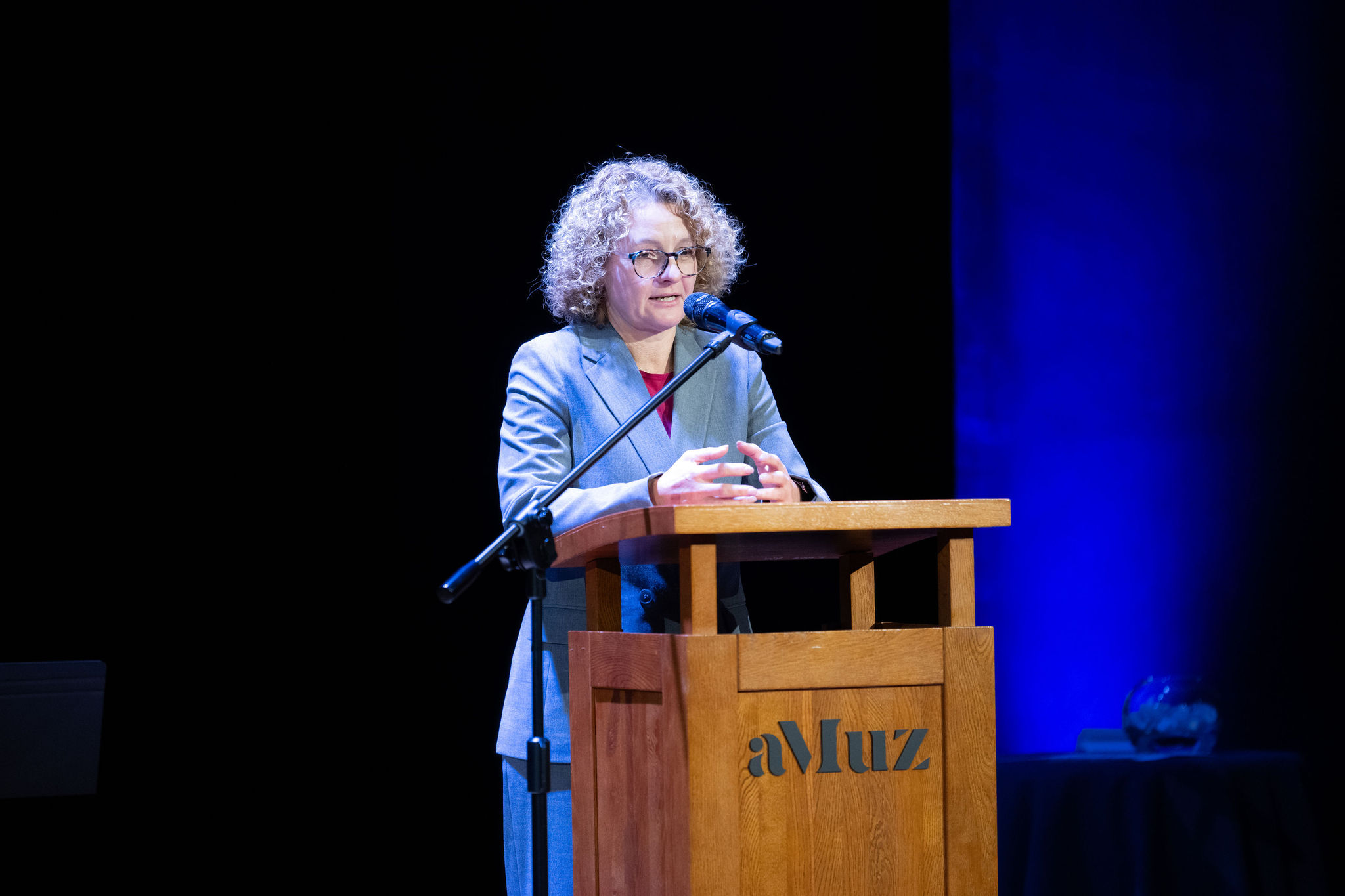
Anna Olkowska-Jacyno, Vice Voivode of Pomerania, also spoke, referring to the “Quo vadis FarU?” debate and appreciating the pace of development and synergistic effect of combining the potential of Gdańsk universities. She expressed confidence that integration is the only way to effectively compete on the map of innovation in Poland and Europe. She emphasized that a strong region creates a strong Poland and European Union, and building the future of Pomerania must be based on supporting knowledge, dialogue with art, and fair remuneration for local talents.
On behalf of local government, Magdalena Czarzyńska-Jachim, Mayor of Sopot, expressed full support for the development of FarU, confirmed by local government officials’ decision to allocate 5% of the metropolitan association’s budget for this purpose. Referring to the theme of the European Cultural Compass, she pointed to the key interdependence between culture and the economy. She appealed to the business and administration communities to change their mindset and treat creative work on par with any other profession. She stressed that the development of artistic talents requires stable economic conditions, not just opportunities to present creative output.
The key regional perspective was presented by PhD Adam Mikołajczyk, Director of the Department of Regional and Spatial Development at the Marshal’s Office of the Pomeranian Voivodeship, presenting the assumptions of the Pomeranian Voivodeship Development Strategy 2035. He emphasized that this document is and should be the result of the work of the entire community, not just local government. He spoke about the necessity of attracting talents from Lviv, London, and Lublin, as well as building a new metropolitan brand. He encouraged participants to actively engage in the consultations of the strategy, ongoing until January 8, 2027, under the slogan “Seek storms and build.” Dr Mikołajczyk also drew attention to the northward shift of Poland’s energy pole, emphasizing that whether Pomeranian industry and economy develop accordingly depends on local cooperation.
During the presentation “Development for Students – aMuz for the Future,” PhD Magdalena Ochlik-Jankowska, Vice-Rector for Student Affairs and Promotion at aMuz, discussed adapting university offerings to the dynamic labor market. She presented the results of deep program reforms over the past six years, highlighting the work of a team of specialists led by the Vice-Rector for Organization and Science – Prof. DSc Marek Rocławski. The university has introduced a range of innovative specializations: from music composition for games and films, through music in media communication and chamber music, to music production and sound engineering within the newly established 5th Faculty of Jazz and Popular Music. All this aims to enable graduates to consciously shape their careers and be fairly rewarded for it.
Dr hab. Andrzej Kacprzak, Vice-Rector for Artistic Affairs, in his presentation “Academy of Music – the Potential of People, Culture, and Region,” continued the theme of human resource potential and the successes of alumni from the Gdańsk alma mater, distinguished with the highest A+ category. Pointing to alumni such as Leszek Możdżer, Justyna Steczkowska, and Ralph Kamiński, he emphasized that aMuz does not train copies but unique personalities. The Vice-Rector highlighted the possibility of transferring “musician’s thinking” to the business world. As an example, he cited a string quartet – an ideal model for a corporate team, based on mutual listening, trust, and shared responsibility for the final product.
The thematic presentations showcased a wide spectrum of applications of art and music in medicine, business, and the contemporary creative market:
- Multidimensional Artist. Art'n'Voices as a Model of Contemporary Creative Activity | MSc Anna Rocławska-Musiałczyk, PhD Tomasz Chyła
- Music that Connects — Art Therapy and the Art of Cooperation | PhD Michał Kierzkowski
- Music in Business | MSc Barbara Marwińska-Hansson
The program of the meeting included not only theoretical discussion but also experiencing it in practice – participants listened to live performances. The artistic part was opened by a solo piano performance by Mikołaj Sikała, highlighting the excellent skills of young performers associated with the Gdańsk music scene. The event was co-hosted by jazz journalist, poet, songwriter, and vocalist Marta Goluch, who is currently also a student at aMuz.
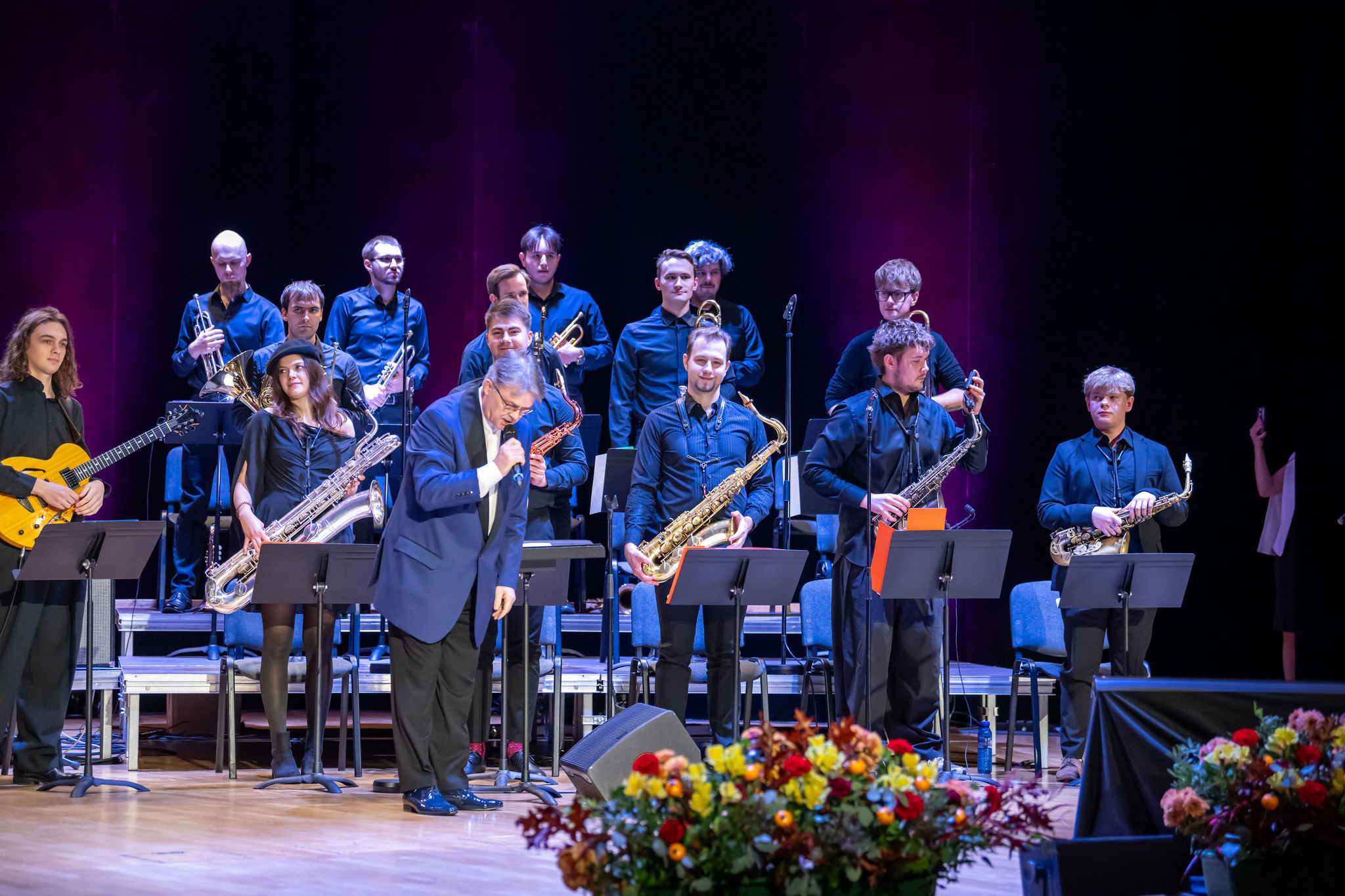
The event concluded with a performance by the aMuz Big Band under the direction of Jan Konop. The ensemble presented jazz arrangements of pieces by the university’s patron – Stanisław Moniuszko. The dynamic performance of classical motifs in a new interpretation was warmly received by the audience.