
Artificial Intelligence Increases the Chances of Early Detection of Brain Aneurysms
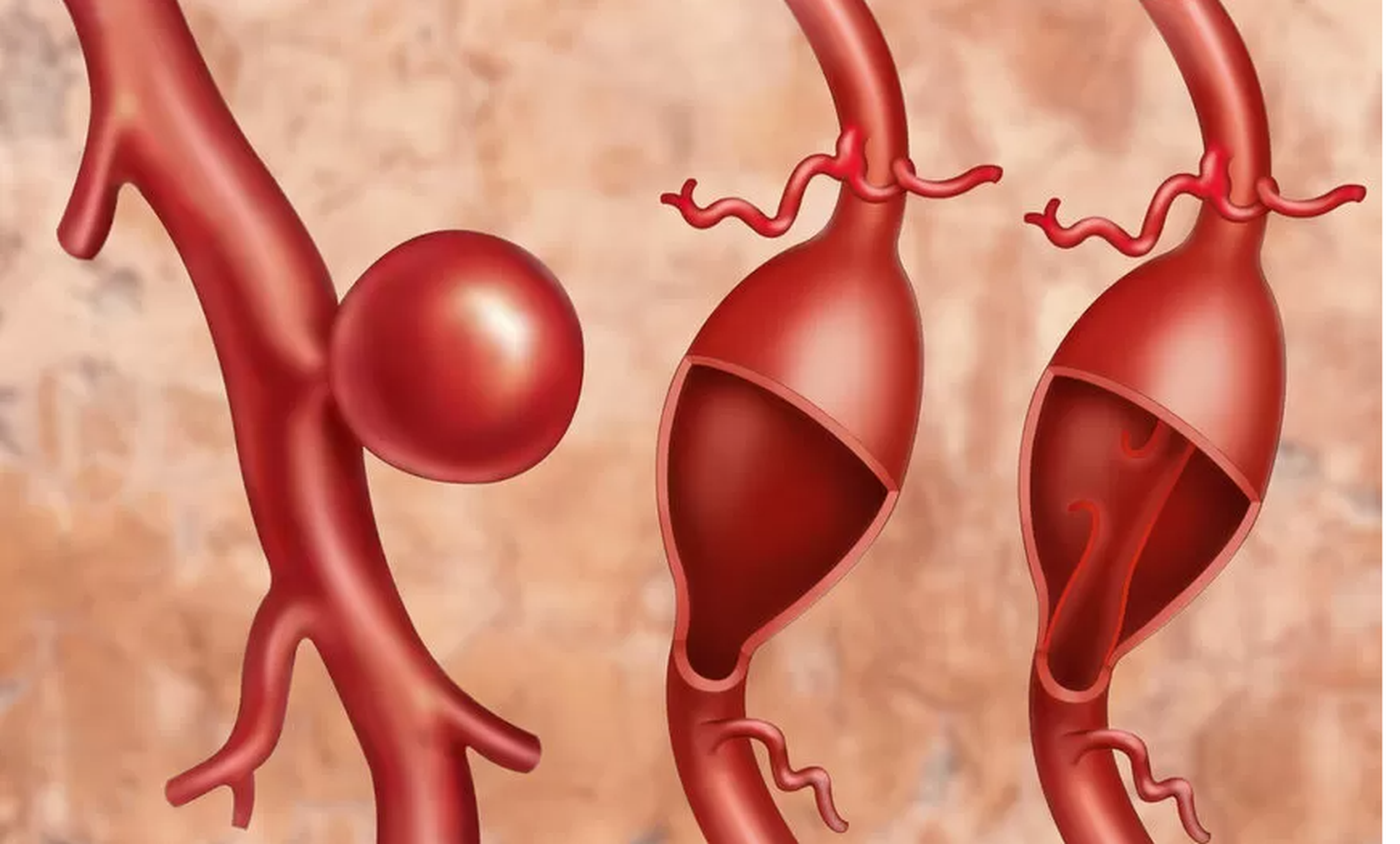
Intracranial aneurysms may remain asymptomatic for years, and their rupture often ends tragically – up to half of the patients die, and many suffer from permanent neurological consequences. A team of scientists from Gdańsk Tech, Gdańsk Medical University, and the University Clinical Centre in Gdańsk is working on a solution that could dramatically increase the chances of detecting the threat before an aneurysm ruptures and causes hemorrhage. Artificial intelligence analyzing clinical data plays a key role in this process.
Intracranial aneurysms may remain asymptomatic for years, and their rupture often ends tragically – up to half of the patients die, and many suffer from permanent neurological consequences. A team of scientists from Gdańsk Tech, Gdańsk Medical University, and the University Clinical Centre in Gdańsk is working on a solution that could dramatically increase the chances of detecting the threat before an aneurysm ruptures and causes hemorrhage. Artificial intelligence analyzing clinical data plays a key role in this process.
Data Instead of Scalpel – A Paradigm Shift in Diagnostics
The aim of the project is to create a tool that, based solely on laboratory data, medical history, and descriptions from medical documentation, will estimate the risk of aneurysm presence and its rupture. This is a groundbreaking approach – until now, it was believed that such an assessment was possible only based on imaging studies such as tomography or angiography.
The researchers assume three stages of work:
- Prediction of aneurysm rupture risk,
- Assessment of the probability that a patient belongs to a risk group in terms of aneurysm occurrence,
- Creation of a clinical calculator and application for doctors to support decisions related to the treatment of at-risk patients.
– The leitmotif of our research project is: "From data to diagnosis. From diagnosis to saved life" – emphasize PhD Eng. Patryk Jasik, team leader from Gdańsk Tech, and PhD Justyna Fercho, team leader from the Medical University of Gdańsk and UCK.
Hundreds of Thousands of Data Points and Machine Learning
Models created by the scientists analyze routine laboratory test results and textual medical documentation. The data of more than 60,000 patients treated at the University Clinical Center in Gdańsk between 2006 and 2024 was used to develop it.
Already the initial models achieved very promising results, providing over 77% accuracy and about 80% sensitivity, indicating significant clinical potential.
In the first stage, 26 laboratory test results and predictors built based on textual medical documentation were used, including results of tests such as glucose level, platelets, creatinine, sodium, MCH, MPV, lymphocytes, potassium, as well as risk factors such as smoking, diabetes, and hypertension. Significant statistical differences between patients with ruptured and unruptured aneurysms were demonstrated at this stage. In the case of patients with ruptured aneurysms, tests were always conducted based on data collected before the rupture.
– The data was very precisely prepared for the analysis and modeling stages, with particular attention to safeguards against data leakage. We applied modern predictive models – including TabNet – and ensured their multi-criteria validation, which prevented result inflation. The accuracy of the selected models exceeds 80%, and in some analyses even surpasses 90% – explains PhD Jasik. – The use of such methods is currently highly desired by physicians – notes PhD Fercho and adds – The knowledge on which basis the model returns the probability of aneurysm risk can be consciously used for more effective patient diagnosis.
Language Models Support Documentation Analysis
A new element of the project is the use of large language models (LLM), such as LLaMA, PLLuM, or Bielik. Their task is the automatic extraction of information from medical descriptions, which significantly improves the effectiveness of predictive models and allows for the analysis of data that was previously difficult to process computationally.
– The use of language models allows for very rapid processing and analysis of medical notes, which are a very valuable data source in the entire aneurysm diagnostics – explains the scientist.
Aneurysms – A Health Crisis and Huge Costs
The problem of aneurysms can affect any of us. Statistically, even 1 in 50 adults may have an unruptured brain aneurysm. In Poland, this means hundreds of thousands of potentially at-risk individuals.
Currently, two main methods are used to secure unruptured aneurysms.
– The first is surgical clipping, which is an invasive method requiring opening the skull, with an average cost of about 30,000 PLN – says PhD Justyna Fercho. – The second, less invasive endovascular method is embolization, involving the introduction of materials that close the aneurysm through a thin catheter (most often via the femoral artery). Platinum coils (coiling) are most often used, filling the aneurysm interior, causing its closure, cutting it off from circulation, and forming a clot, thus preventing rupture or rebleeding. In cases of wide-necked or complex aneurysms, additional stents supporting the procedure (stent-assisted coiling) or flow diverter devices, which placed in the parent vessel change hemodynamics and promote natural aneurysm closure, are used. The price of such an endovascular procedure ranges roughly from 25,000 to 40,000 PLN, depending on the materials used.
If the aneurysm ruptures, treatment costs for the patient after subarachnoid hemorrhage increase exponentially and are incomparably higher than aneurysm securing costs. Additionally, there are years of rehabilitation payments, which are essential, as well as disability pensions since most patients after such injury are no longer able to undertake professional work.
– Early detection of an unruptured aneurysm based on risk estimated by us is not only saved health and life but also real savings for the healthcare system – emphasizes PhD Patryk Jasik.
Recognized in the I3HIES Program
The project "AI-Powered Medical Software for Predicting the Likelihood of Intracranial Aneurysm" is the result of close collaboration between scientific teams from the Medical University of Gdańsk, Gdańsk Tech (Faculty of Electronics, Telecommunications and Informatics and BioTechMed Center), University Clinical Center, and industry partners specializing in data science.
Currently, the project has been qualified for the international acceleration program I3HIES, which supports the most promising innovations in healthcare and helps develop them up to the investment and commercialization stage.
The I3HIES program operates within the framework of the Interregional Innovation Investment Instrument (I3) funded by the European Regional Development Fund. Its role is to support health projects with high implementation potential – especially those requiring advanced validation, overcoming regulatory barriers, and preparation for investment.
– Thanks to participation in this program, we will be able to verify whether our solution is suitable for wide implementation. We will check, among other things, how to prepare our product so that European country governments can purchase it for their citizens. This is primarily an opportunity to showcase our research in other countries and popularize this knowledge so that patients from other countries also have access to an innovative diagnostic tool that enhances the effectiveness of detecting potential brain aneurysms – summarizes PhD Jasik.
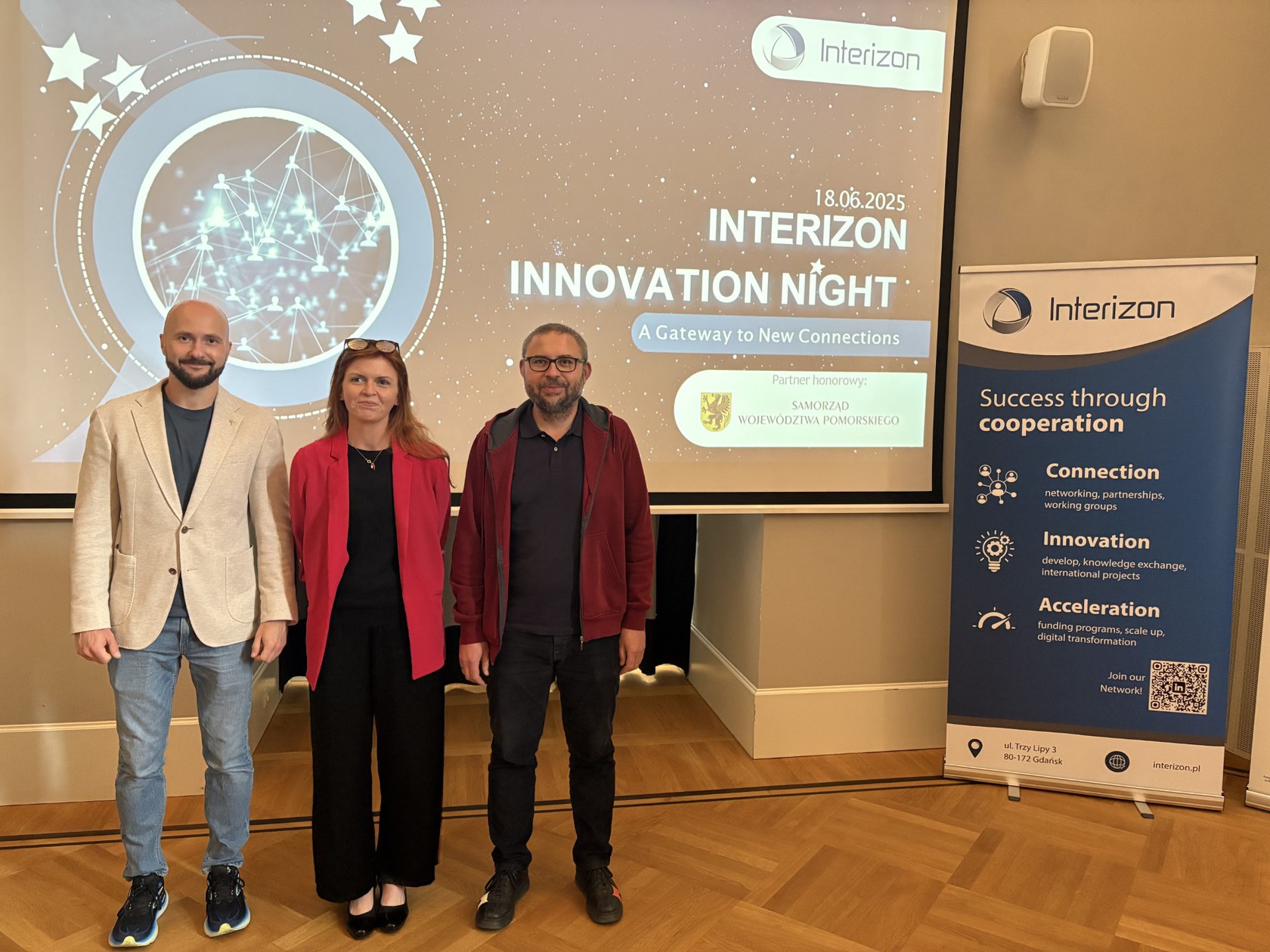
Project Team:
Medical University of Gdańsk and University Clinical Centre in Gdańsk: PhD Justyna Fercho (Department and Clinic of Emergency Medicine), prof. Edyta Szurowska (head of the 2nd Department of Radiology), prof. Mariusz Siemiński (head of the Department and Clinic of Emergency Medicine), DSc Tomasz Szmuda (Department and Clinic of Neurosurgery), PhD Jacek Szypenbejl (Department and Clinic of Emergency Medicine), EMBA MSc Eng. Dariusz Szplit (head of the Department of Innovation, Analytics, and Implementation of Medical Technologies), Klaudia Kokot, Michalina Dudra, Weronika Jagieło.
Gdańsk Tech, Faculty of Applied Physics and Mathematics and BioTechMed Centre: PhD Eng. Patryk Jasik, MSc Mariusz Liksza (currently Data Science Senior Manager at Kinesso), MSc Julia Zakaszewska, Eng. Piotr Hajduk, BSc Wiktoria Nawrocka, Eng. Paweł Rybczyński, Eng. Cezar Roman, MSc Piotr Fonferek, MSc Katarzyna Konieczna, MSc Hanna Lisowska, MSc Jakub Sadowy, MSc Daria Binerowska, MSc Maciej Pestka, MSc Aleksandra Kowalczyk, MSc Szymon Langer, MSc Emilia Murawiejko, MSc Szymon Pawłowski, MSc Jakub Cieślak.