
More effective and sustainable wastewater treatment. Award for the best doctoral dissertation
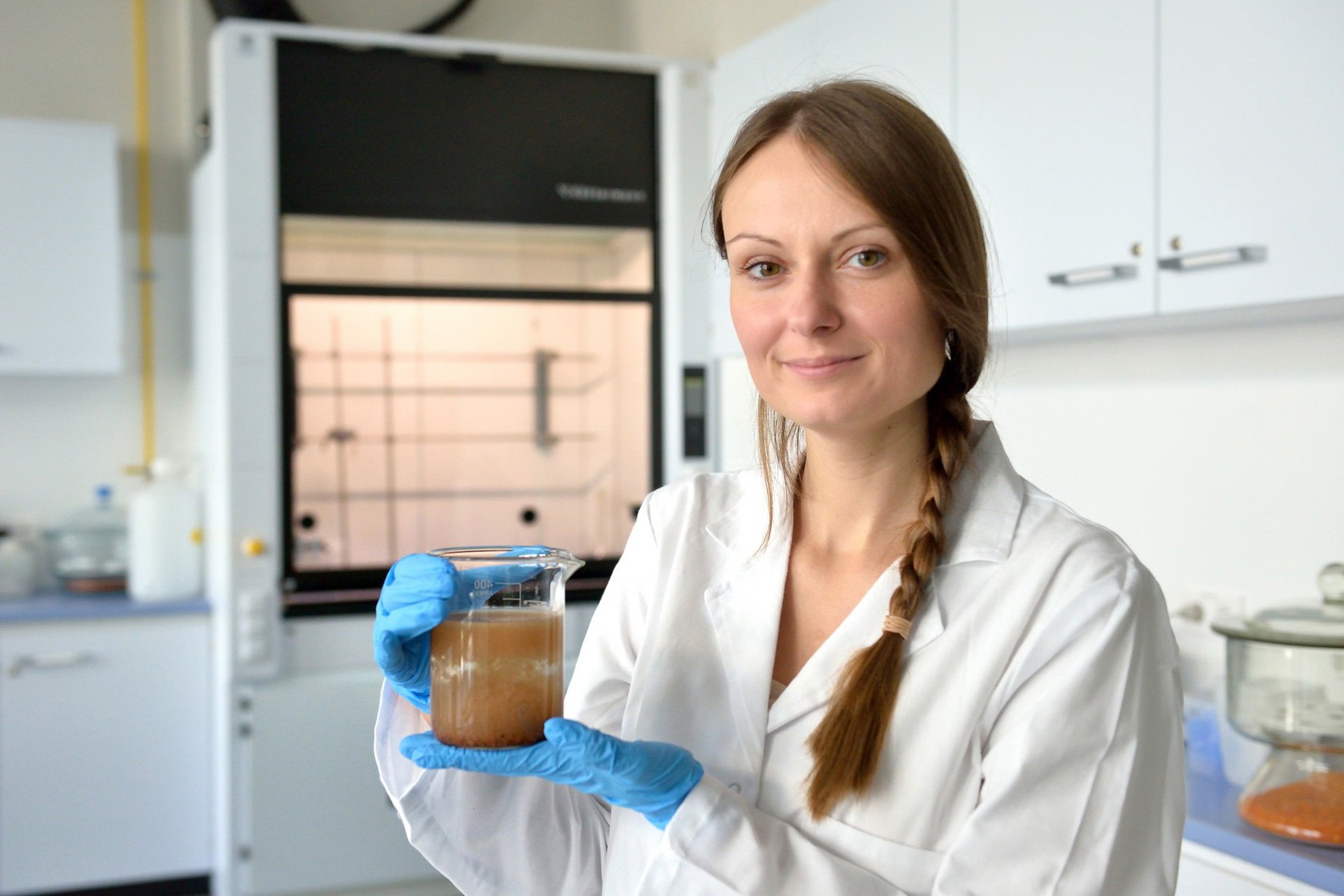
PhD Eng. Dominika Derwis is working on solutions that increase the efficiency of biological nitrogen removal from wastewater. She is particularly interested in processes occurring under limited availability of organic carbon, while simultaneously utilizing sulfur transformations. Her research conducted as part of her doctoral dissertation was recognized in the Baltic University Programme PhD Award.
PhD Eng. Dominika Derwis is working on solutions that increase the efficiency of biological nitrogen removal from wastewater. She is particularly interested in processes occurring under limited availability of organic carbon, while simultaneously utilizing sulfur transformations. Her research conducted as part of her doctoral dissertation was recognized in the Baltic University Programme PhD Award.
The awarded dissertation entitled “The impact of sulfur transformations on nitrogen removal processes in systems with granular sludge” addresses challenges related to sustainable wastewater treatment, energy efficiency, and reducing dependence on external sources of organic carbon.
The research by PhD Eng. Dominika Derwis, a graduate of the Doctoral Studies at the Faculty of Civil and Environmental Engineering and an assistant professor at the Department of Sanitary Engineering, aimed to optimize the integration of nitrogen, sulfur, and carbon cycles in wastewater treatment systems with granular sludge, with particular emphasis on the impact of sulfates. The research also included an assessment of the influence of the presence or absence of organic carbon and nitrites on the functioning of integrated nitrogen and sulfur removal processes.
– My primary goal was to understand the mutual relationships between the processes occurring in granular sludge and to determine under what conditions they can jointly support effective nitrogen removal. It was especially important to identify how to harness the natural properties of sulfur transformations to reduce the process’s dependence on an external source of organic carbon – explains PhD Eng. Dominika Derwis. – I managed to demonstrate that the integration of cycles can be significant in treating wastewater with low or variable availability of easily biodegradable carbon, as well as in wastewater with elevated sulfate concentrations.
The research was based on a broad interdisciplinary approach, and the applied research methods covered fields ranging from environmental engineering, wastewater biotechnology, microbiology, environmental chemistry, biogeochemistry, and stoichiometric modeling to sustainability sciences.
The award justification emphasized that the dissertation addresses a topic of great social importance, not only for the Baltic Sea region.
– The results of this research represent a significant step towards the development of next-generation environmental technologies supporting more sustainable and resilient wastewater management systems. The most valuable element of the dissertation is the development of an original technological concept based on an integrated N-S-C approach to wastewater treatment, enabling effective nitrogen removal – the award justification noted.
The dissertation takes the form of a series of scientific publications, and the research findings were published in four highly ranked journals listed in the JCR, with a combined Impact Factor of 37.7: Journal of Cleaner Production, Bioresource Technology, Science of the Total Environment, and Journal of Environmental Management. In all these publications, PhD Eng. Dominika Derwis is the first author. Additionally, the researcher is a co-author of 16 scientific articles and has achieved an H-index of 10.
The dissertation, which was defended with the highest distinction, was supervised by Prof. Jacek Mąkinia, with assistant supervisor PhD Eng. Joanna Majtacz.
About the award
The Baltic University Programme PhD Award is a distinction that promotes high-quality research for sustainable development in the Baltic Sea region. It recognizes doctoral dissertations defended at institutions participating in the program. The award is granted in two categories: natural sciences, technologies, and engineering, in which PhD Eng. Dominika Derwis was honored, and social sciences and humanities.