


Date added: 2026-07-20
URWIS takes to the water: the next stage in the development of the student-built rescue craft

URWIS is being developed to support rescue services during operations conducted on lakes, at sea and on other bodies of water. Its purpose is to reach a person in the water quickly and provide them with a flotation device before rescuers arrive. The vessel is not intended to replace rescuers, but to reduce the time a person has to wait for assistance during the first and often most critical stage of an emergency response.
First test under real-life conditions
Until now, the team had tested the hull, among other locations, in the model basin at Gdańsk University of Technology, analysing its watertightness, draught and stability. The trials on Lake Kałębie provided the first opportunity to test the complete vessel on open water, with more room for manoeuvring and natural water movement.
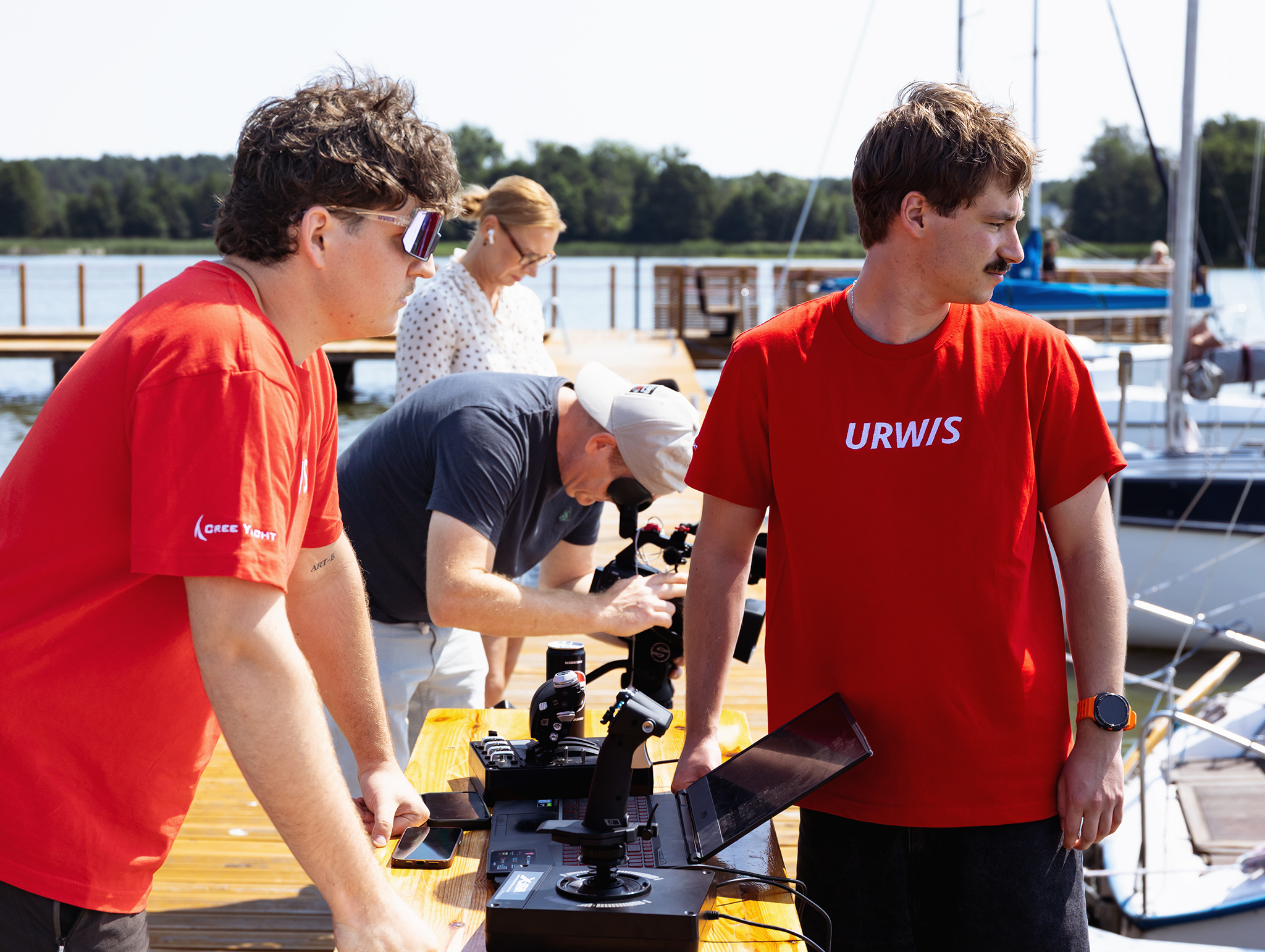
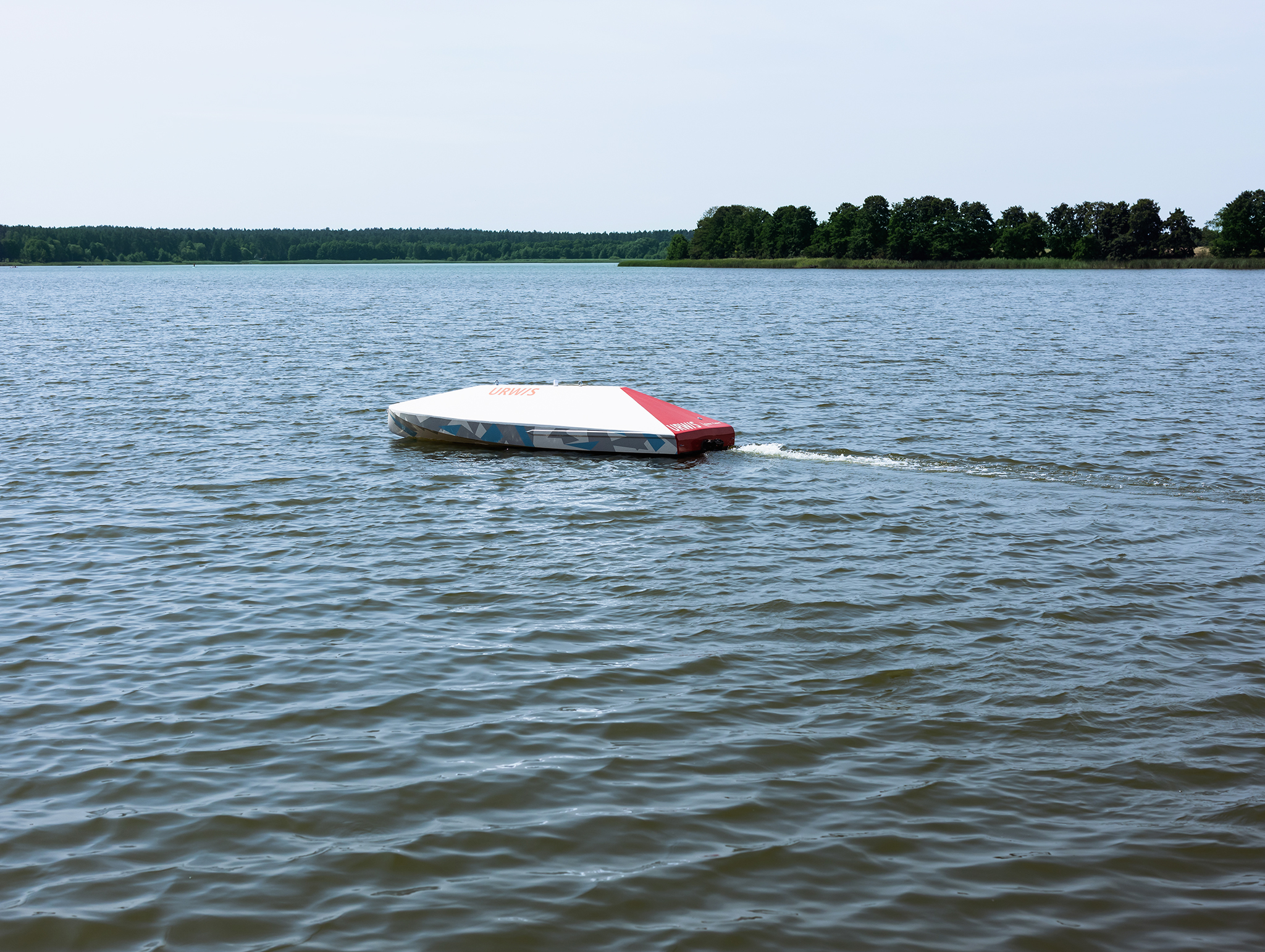
During the launch, URWIS travelled across the lake, performed manoeuvres and responded to commands sent by its operators. The students monitored the propulsion system, the vessel’s behaviour while changing direction and the stability of the connection between the craft and its control system.
The trials confirmed that the key solutions incorporated into the prototype were operating as intended. URWIS will now undergo further development. Planned improvements include installing a more powerful propulsion system and a camera, which will allow the operator to observe the vessel’s route more accurately and control it at a greater distance from the shore.
Project attracts the attention of national media
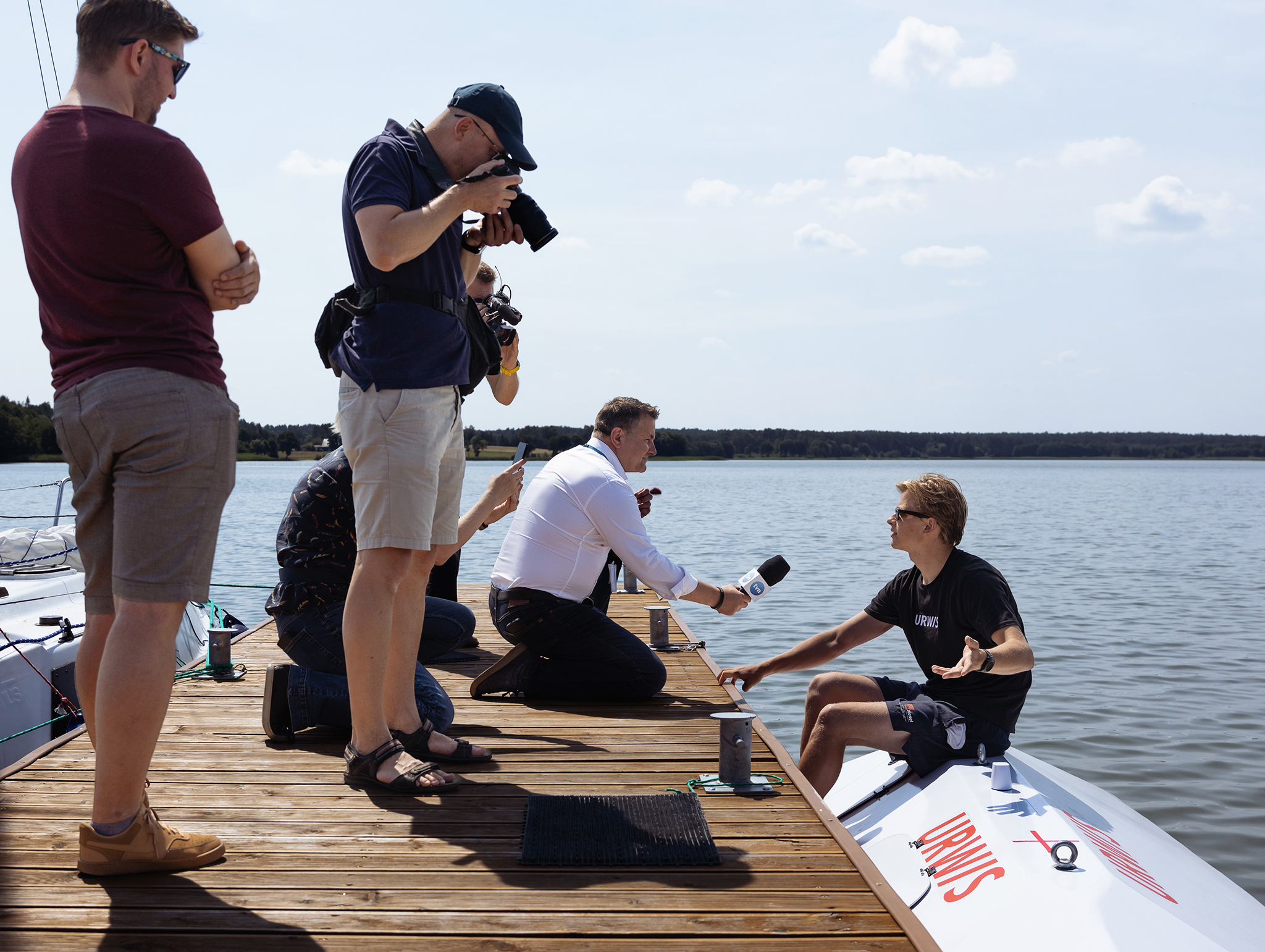
Representatives of national television broadcasters, including TVN and TVP Info, attended the first launch. Journalists observed the trials on the lake and spoke to the people involved in the project.
Interviews were given by the creators of URWIS: Maksym Domkowski, Julian Baron and Łukasz Gede-Niewiadomski, students of the Faculty of Mechanical Engineering and Ship Technology at Gdańsk University of Technology. They discussed the development process, the technical solutions incorporated into the prototype, the results of the first trials and plans for the vessel’s further development.
PhD Eng. Aleksandra Wiśniewska, the team’s academic supervisor and Vice-Dean for Education at the Faculty of Mechanical Engineering and Ship Technology, also spoke about the significance of the project and the students’ work. Konrad Kaczmarczyk from Startup Academy also took part in the interviews.
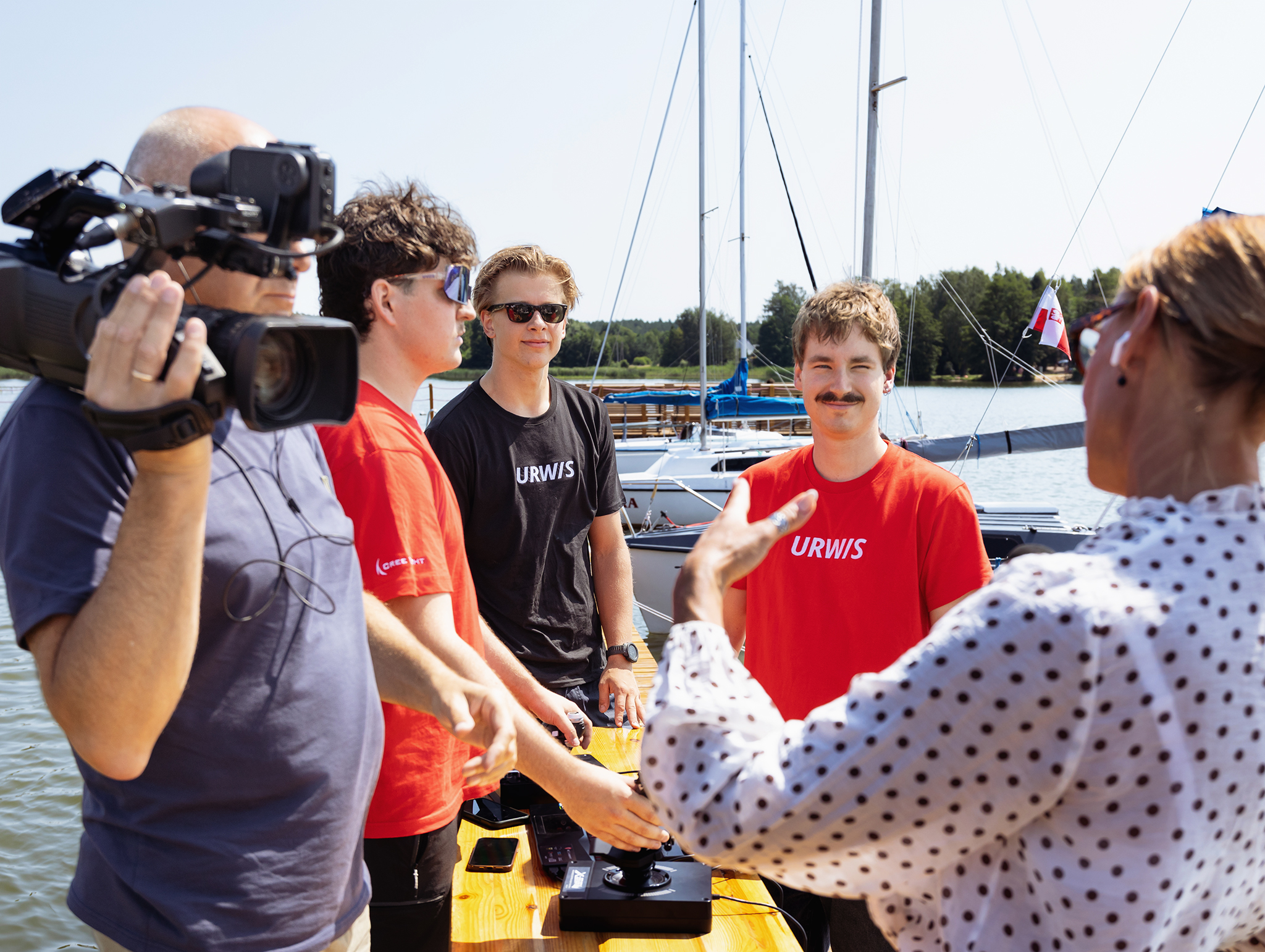
At its current stage of development, URWIS is controlled via a GSM network using an application created by the students. The operator can issue commands concerning the direction and movement of the vessel and monitor its operation from the shore.
Ultimately, the system is to be equipped with partially autonomous functions. URWIS would be able to travel independently to a designated location, detect obstacles and adjust its route accordingly. During the final stage of a rescue operation, a rescuer would take control of the vessel and guide it precisely towards the person requiring assistance.
Plans also include equipping the vessel with a towed life raft. A person in the water would be able to climb onto it and wait more safely for the rescue services to arrive. Further solutions may include a thermal imaging camera and sensors supporting the detection of people after dark, in difficult weather conditions or when visibility is limited.
URWIS in the “Universities of the Future” project
URWIS was developed as part of the “Universities of the Future” project, implemented under the European Funds for Social Development 2021–2027 programme (agreement no. FERS.05.01-IZ.00-0080/24). The project is led by the National Centre for Research and Development.