


Date added: 2026-10-16
From Concept to Factory: How Gdańsk Tech Students Developed Biodegradable Cups

Krzysztof Rekowski, Kajetan Siemienowicz and Łukasz Pędrasik are seventh-semester Nanotechnology students at Gdańsk University of Technology, specializing in Nanostructures and Functional Nanomaterials. As part of the "Universities of the Future" project, they developed an innovative composite material and tested it under industrial conditions. In this interview, they discuss the technological challenges, research results and their journey from initial setbacks to turning their idea into reality.
You joined the "Universities of the Future" project with a different idea from the one you eventually developed. What happened along the way, and why did you decide to change direction?
Initially, we wanted to focus on thermal insulation using aerogels and develop special layered glass panels that could be used in greenhouses. However, we quickly realised that the costs and technological challenges would be too significant at that stage. Rather than giving up, we decided to follow the principle of "third time's the charm" and explore other applications for aerogels. We began considering combining them with the biodegradable biopolymer PHA, which led us to the idea of producing cups for hot beverages. After further analysis, we decided to replace the aerogel with natural cork, which also has excellent thermal insulation properties. We presented our idea again, and this time we received approval to begin working on it. The material could provide an alternative to conventional plastics.
You eventually developed cups made from a PHA and cork granule composite. What makes this material different from conventional materials used to produce disposable cups?
Most people assume that an ordinary paper cup is completely environmentally friendly. In reality, however, it contains an inner layer of polyethylene, which makes recycling much more difficult and prevents composting. Cups made from the popular bioplastic PLA, on the other hand, begin to soften at around 50°C, meaning that hot tea can deform them. Our cups perform well with hot beverages, retaining their shape even when exposed to nearly boiling water. The material itself demonstrated very high thermal resistance, reaching a heat deflection temperature of 145°C during testing. It also has good mechanical strength and excellent thermal insulation properties. Equally importantly, unlike conventional plastics such as PE or PP, our cups are biodegradable. In our tests, they achieved more than 90% degradation after just 50 days in industrial compost and 80 days in home compost. This offers an opportunity to reduce the amount of long-lasting waste.
What was it like moving from a university laboratory to a real factory in Świdwin?
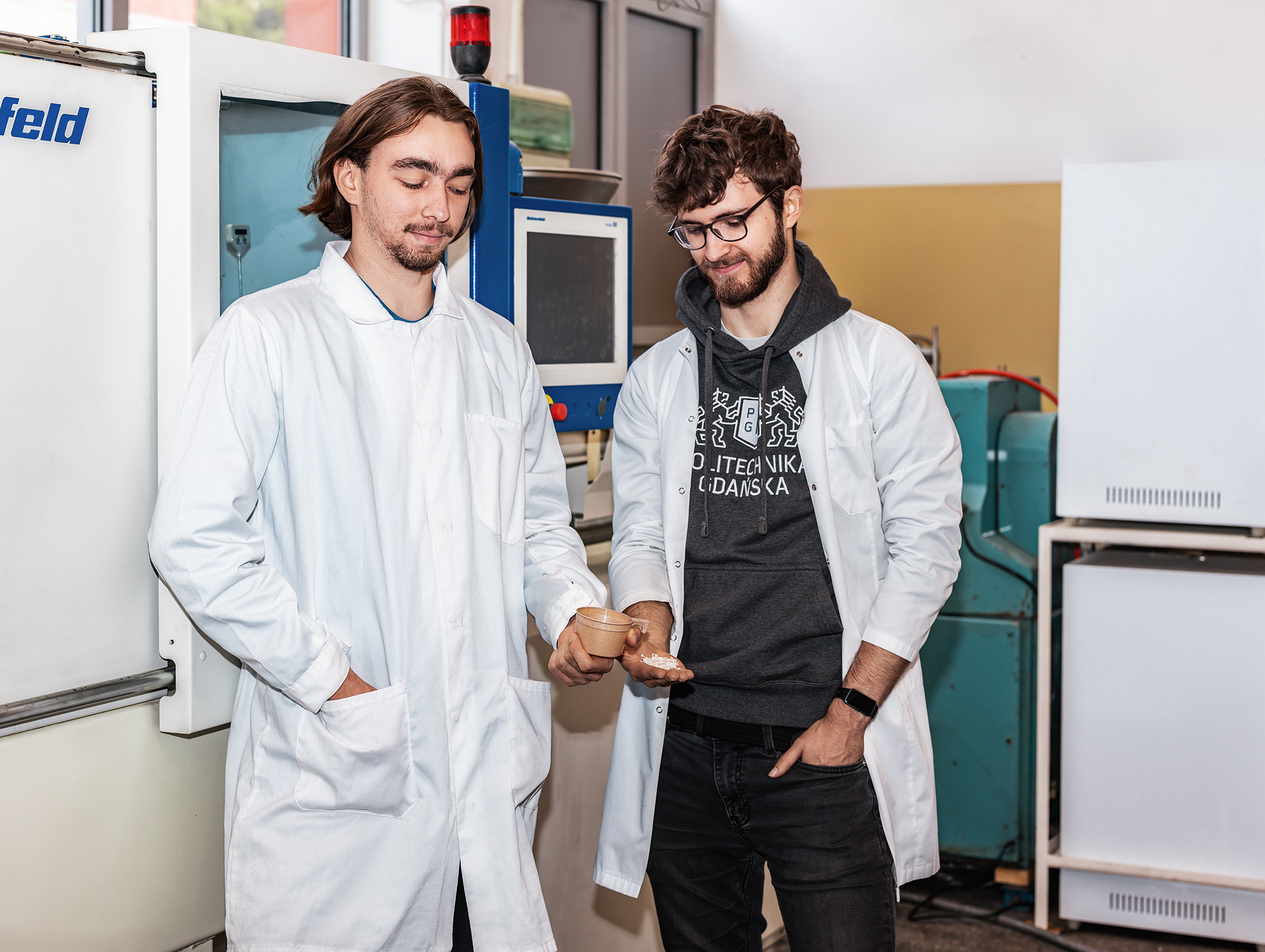
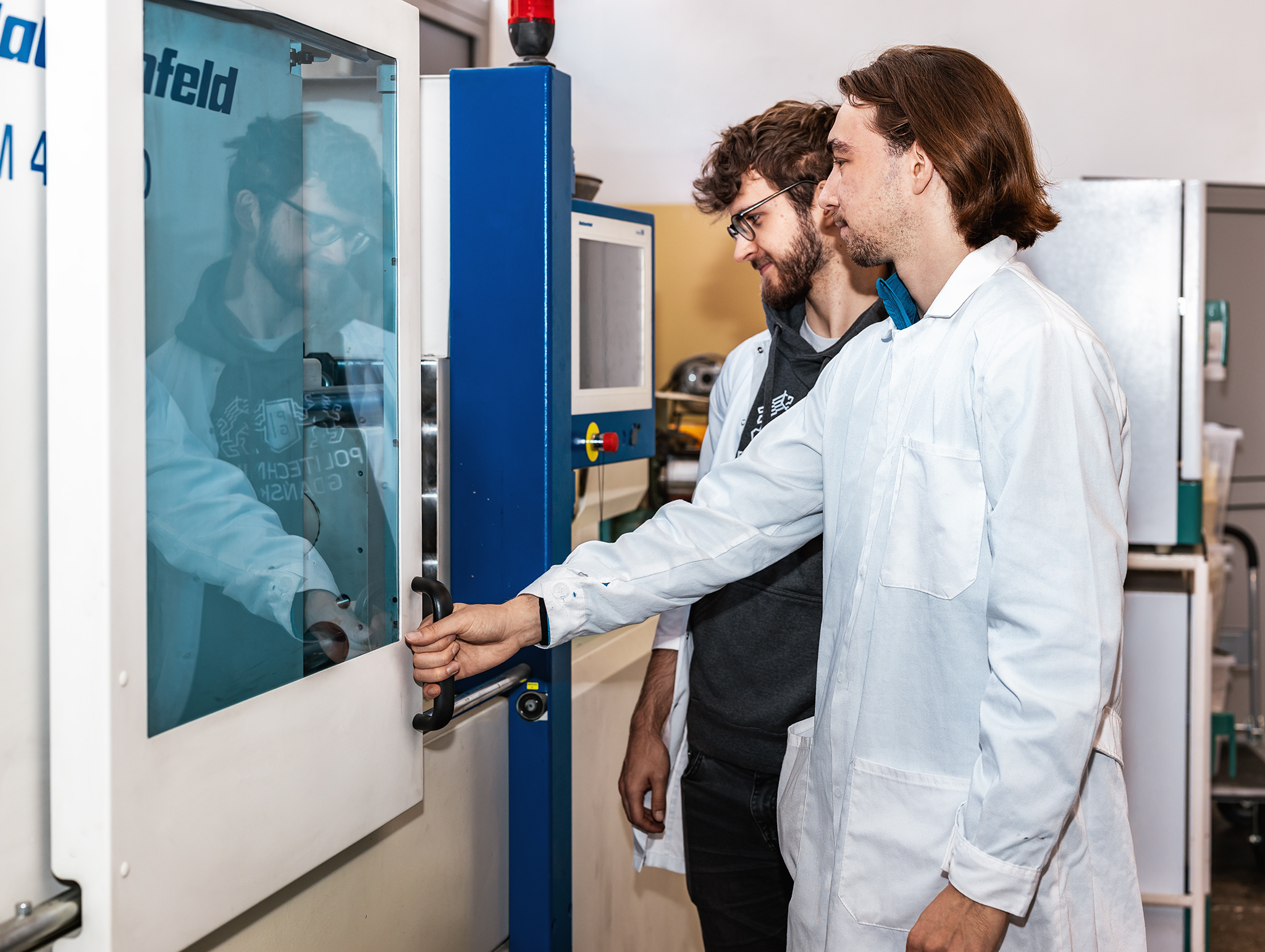
It was definitely the most interesting experience of the entire project. At the university, we mainly worked with small samples under laboratory conditions. At BIO PLAST POM in Świdwin, however, we found ourselves working with large industrial production machines. We had to adjust the injection moulding parameters, pressure and temperature to ensure that our cork-containing granulate behaved consistently during continuous production. The most satisfying moment came when the first successful cups started coming out of the mould. Ultimately, we managed to produce more than 120 cups using our selected material. We could finally see how months of laboratory work had resulted in a fully functional product manufactured in a real factory, something we could actually hold in our hands.
Do you see the cup as the final outcome of your project or rather as a starting point? What other disposable products could this composite be used for?
We see the cup as a starting point for further development. We have successfully developed the material and tested its potential under industrial conditions, so we would now like to use it in other products, such as trays, bowls and containers for hot meals. We are also planning further research, including studies on the safety of the material for food contact, and intend to prepare a scientific paper presenting our results. We are also open to further collaboration with companies and the potential commercialisation of our solution.
Meet the Team
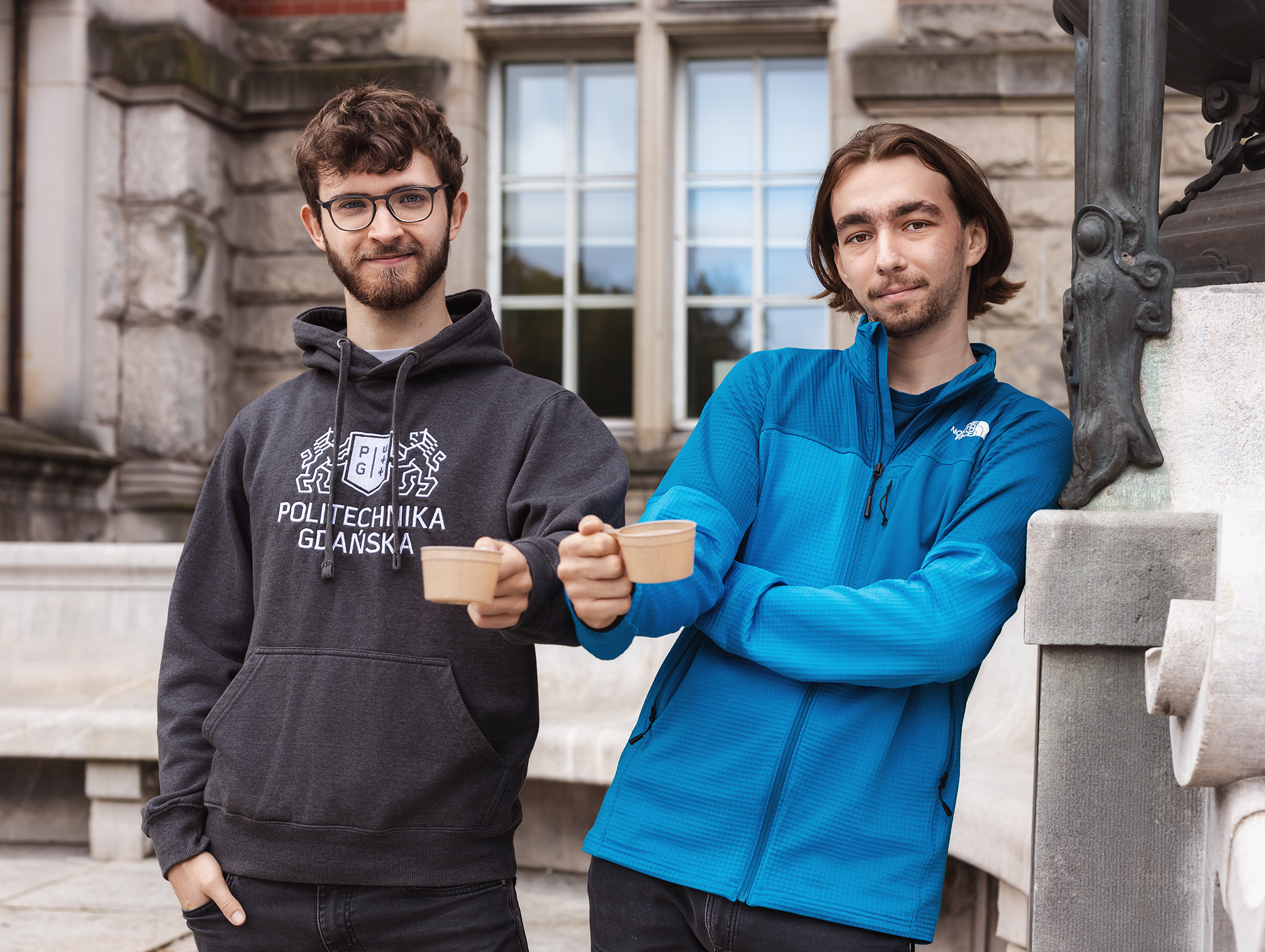
Krzysztof Rekowski – Team Leader
Krzysztof is a hands-on person who prefers solving real-world problems to focusing solely on theory. In his free time, he enjoys working out at the gym, running and playing racing games using his home racing wheel setup. He appreciates good food and spending time with people close to him.
Kajetan Siemienowicz – Team Member
Kajetan comes from Augustów and is a former Polish Junior Champion in water skiing. His interests include history, politics, travelling, sports and keeping animals, particularly fish and reptiles. At home, he has three aquariums with fish and shrimp, as well as a gecko.
Łukasz Pędrasik – Team Member
Łukasz loves travelling and discovering new places. In his free time, he enjoys playing role-playing games with friends. He has also recently developed an interest in the stock market and is learning about investing.
The biodegradable cup project using natural cork is being carried out as part of the nationwide "Universities of the Future" project. The team's academic supervisor is Dr. Maciej Sienkiewicz. The project activities at Gdańsk University of Technology are coordinated by the Young Researchers Office, while the project leader at Gdańsk Tech is Prof. Mariusz Kaczmarek, Vice-Rector for Education. The project is coordinated at the national level by the National Centre for Research and Development (NCBR).
