


Main Building
|
|
|
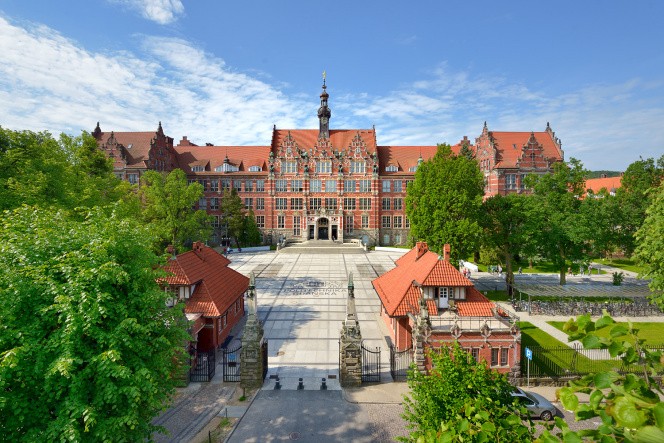
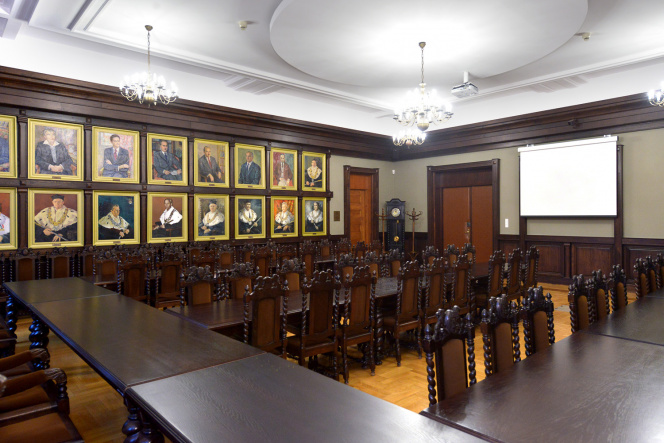
The Gdańsk University of Technology has been a place of profound significance for many generations of the Pomeranian region’s residents. It was founded in 1899 by decree of the German Emperor and King of Prussia, Wilhelm II. Construction of the university buildings was completed in 1904 under the supervision of engineer and architect Albert Carsten, who later became a professor at the institution. The most representative structure of the complex is the Main Building, admired for its monumental scale and its façade, which harmoniously combines traditional red brick with grey sandstone. The richly adorned architectural sculptures and ornamental detailing further enhance its grandeur. The building was severely damaged by fire in the spring of 1945. It was painstakingly rebuilt thanks to the dedicated efforts of successive rectors, faculty members, and students. During the Second World War, 60% of its volume and 70% of its roof structure were destroyed. Restoring this historic landmark to its former splendor continued almost until the beginning of the 21st century. Its distinctive façade, featuring an elegant portico and a clock tower crowned with a gilded statue of a female figure holding a book and a torch — the personification of Science — has become an enduring symbol of the Gdańsk University of Technology.
Auditorium
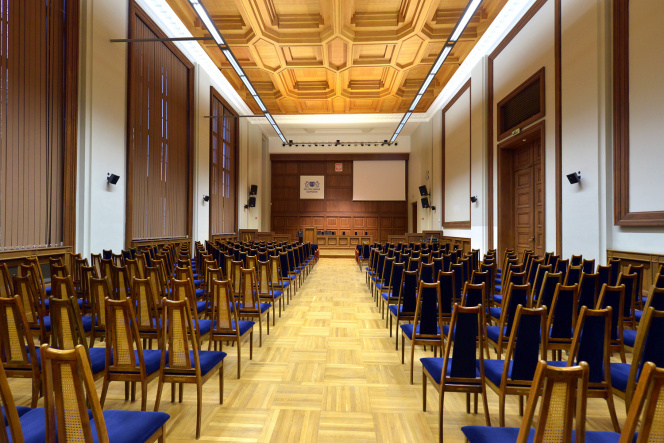 Auditorium / photo: Gdańsk Tech |
The most distinguished and representative room of the Main Building is the Auditorium, located on the second floor. In the pre-war period, the entrance was framed by a portal with allegorical repre-sentations of art and technology. The interior walls of the Auditorium were adorned with murals. Today, the Auditorium serves as a conference room, accommodating up to 370 people. It hosts events of great importance to the academic community of the Gdańsk University of Technology, including the inauguration of the academic year, University Day celebrations, ceremonial sessions of the Senate, and the awarding of honorary doctorates.
Courtyards
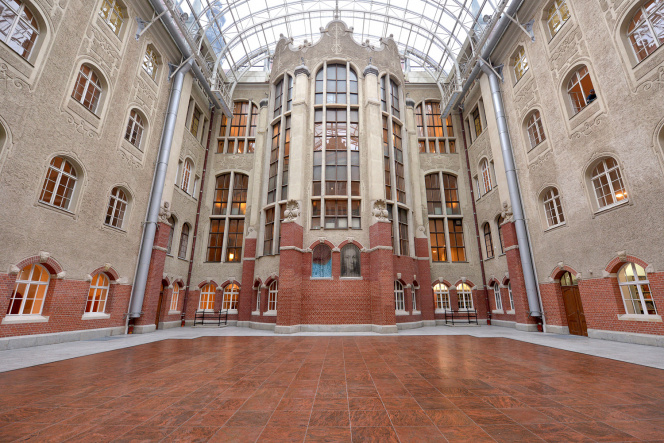 Daniel Gabriel Fahrenheit Courtyard / photo: Krzysztof Krzempek |
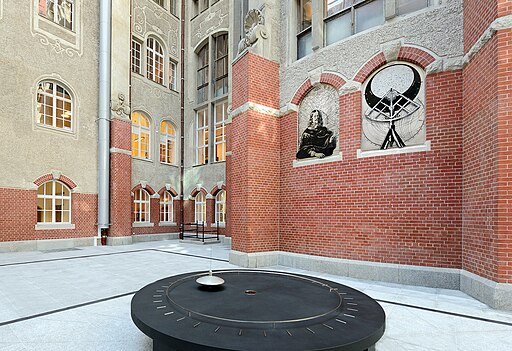 Johannes Hevelius Courtyard / photo: K. Krzempek |
On 22 September 2010, by resolution of the Senate of the Gdańsk University of Technology, the southern courtyard was named after Johannes Hevelius, while the northern courtyard was named after Daniel Gabriel Fahrenheit. Representations of these distinguished Gdańsk scholars, accompa-nied by their scientific instruments, have been installed in the courtyards. Additionally, Johannes Hevelius Courtyard features a Foucault pendulum.
Daniel Gabriel Fahrenheit Courtyard
The eponym of this site, DANIEL GABRIEL FAHRENHEIT (born in Gdańsk in 1686, died in The Hague in 1736), was a physicist and engineer, best known as the inventor of the mercury thermome-ter. He described the phenomenon of supercooling of water, demonstrated the relationship between the boiling point of water and atmospheric pressure, and described the properties of platinum. He also improved the Newtonian telescope. In 1725, he developed the temperature scale that bears his name — the Fahrenheit scale (32°F = 0°C). Today, it is primarily used in English-speaking countries. Daniel Gabriel Fahrenheit is also the eponym of the Daniel Fahrenheit Union of Universities in Gdańsk (FarU), established in 2020 on the joint initiative of the rectors of the Gdańsk University of Technology, the Medical University of Gdańsk, and the University of Gdańsk.
Johannes Hevelius Courtyard
The eponym of this site, JOHANNES HEVELIUS (Polish: Jan Heweliusz; born 1611, died 1687 in Gdańsk), was a distinguished astronomer, brewer, and city councilor. Hevelius was a master constructor of astronomical instruments and the inventor of the pendulum clock, the periscope, and the micrometer screw. On the rooftops of his townhouses, he built an astronomical observatory, which he equipped with instruments he either made himself or supervised their construction personally. Hevelius conducted detailed observations of stars, planets, and comets, studied the phenomenon of the Moon’s libration, and identified nine new constellations. He compiled the results of his research himself and published them in richly illustrated volumes, most notably “Selenographia”, meaning “Description of the Moon”. He was the first scholar from Poland to become a member of The Royal Society of London. In recognition his discoveries, he received financial support from John III Sobieski, King of Poland, and Louis XIV of France, among others.
Mechanical Laboratory
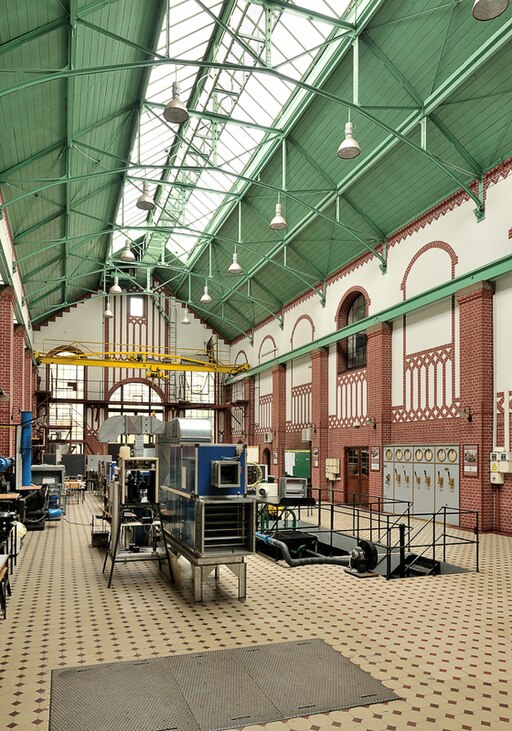 Mechanical Laboratory / photo: Krzysztof Krzempek |
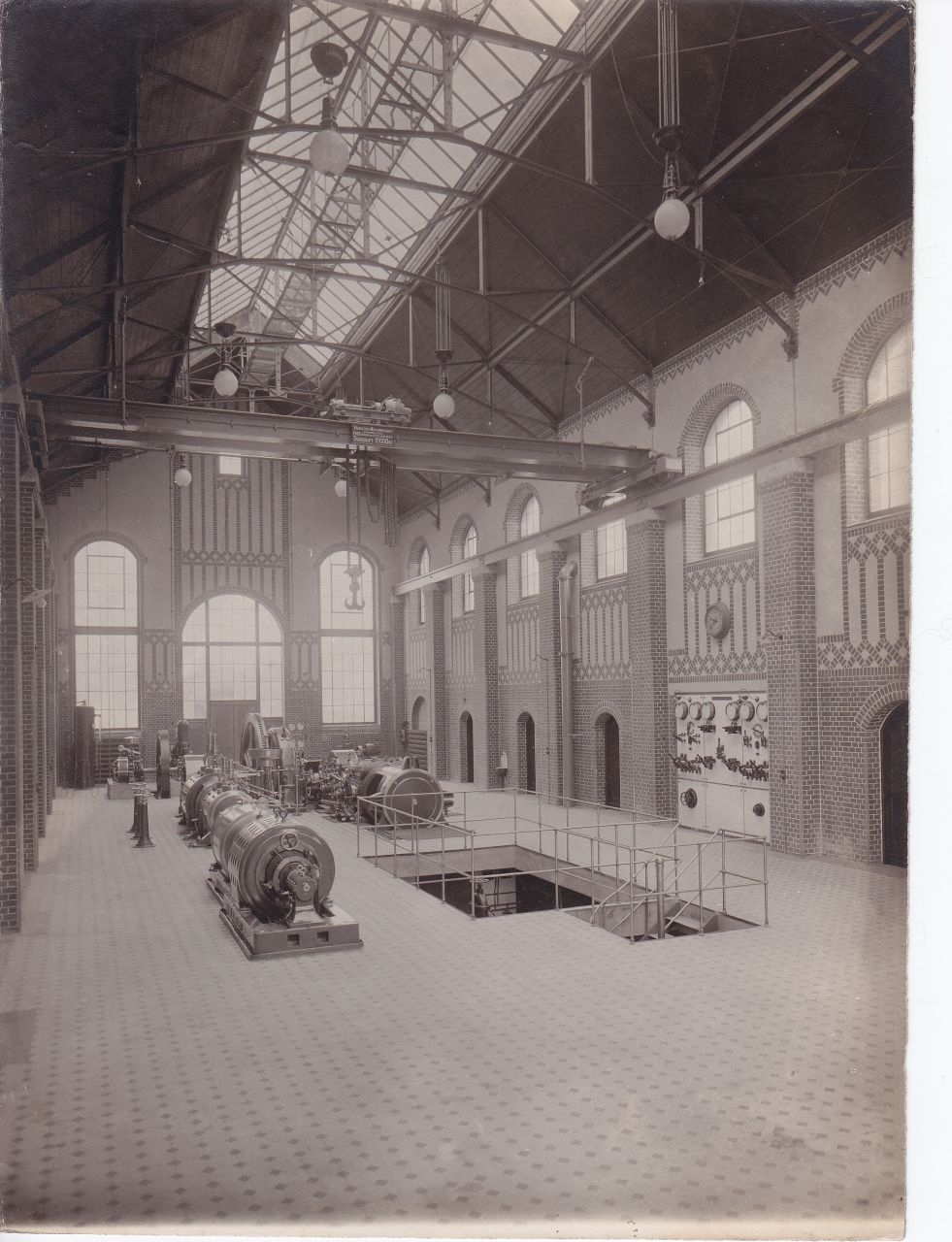 Mechanical Laboratory 1904 year / muzealia.pg.edu.pl |
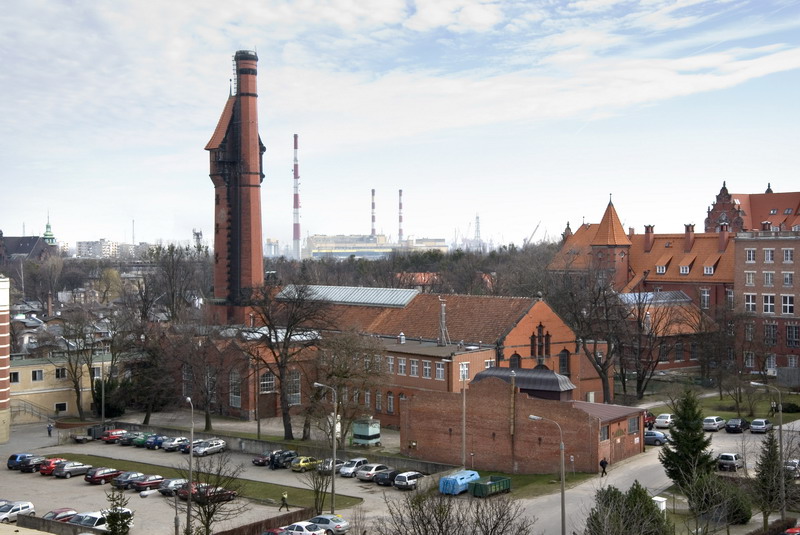 Mechanical Laboratory / photo: Krzysztof Krzempek |
The Mechanical Laboratory, like the Main Building, is a historic structure. Originally, it was a technical complex consisting of a main hall, a steam boiler room, a brick chimney with a water tower, a coal storage area and a cooling tower. The hall was equipped with its own power supply from a steam turbo-generator, a water intake, and a heat exchanger substation. Over the years, the complex was adapted to meet the current educational needs of the university. It was also updated to keep pace with technological developments in the energy and machinery sectors, as well as in heating, ventilation, and air conditioning. Parts of the complex have been repurposed into, among others, a laboratory and a boiler room, which now serves as the main heat distribution hub of the Gdańsk University of Technology. The former coal storage has been converted into a laboratory for the Mechanical Vehicles Section. The chimney from the cooling tower remains an architectural relic.
Chemical Auditorium
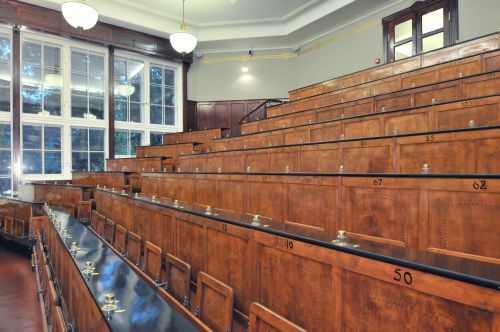 Chemical Auditorium / photo: Krzysztof Krzempek |
This historic auditorium located in the original building of the Faculty of Chemistry features equipment dating back to the early 20th century. In 2010, the auditorium underwent a thorough renovation, during which its interiors were restored. This was especially important because most of the original decor and furnishings were preserved, including: wall paintings, decorative architectural elements of the ceiling, laboratory tables, seats, lecterns, earthenware laboratory sinks, and window joinery. During the renovation work, a periodic table of elements painted on the wall dating back to 1904 was discovered.
Campus of Gdańsk University of Technology
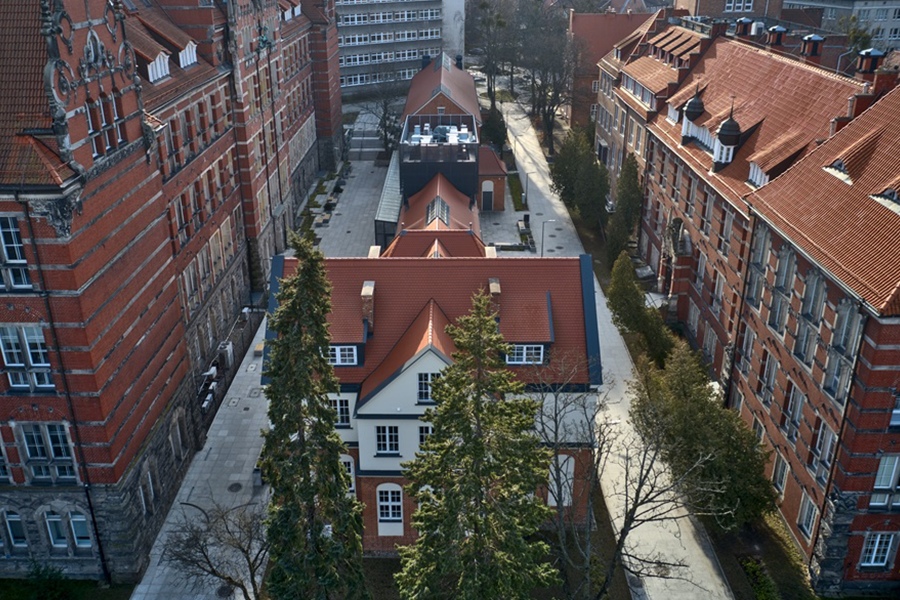 Hydromechanics Building / photo: Maciej Buczeń |
The campus stretches across an expansive area from Bracka and gen. Józefa Fiszera streets to Romualda Traugutta and Jana Sobieskiego streets. Here, historic architecture blends harmoniously with modern buildings and highly specialized laboratories. It is complemented by preserved green heritage, including 120-year-old oaks, along with innovative features like rain gardens and student-planted wildflower meadows buzzing with beehives. The linden tree avenue along Gabriela Narutowicza Street leads toward charming guardhouses and the grand gate, beyond which rises the elegant façade of the Main Building. In this remarkable space, science resonates with architecture, art intertwines with nature, heritage meets cutting-edge technology, and a multifaceted past converges with an already captivating future.