


Gdańsk Tech Library until 1945
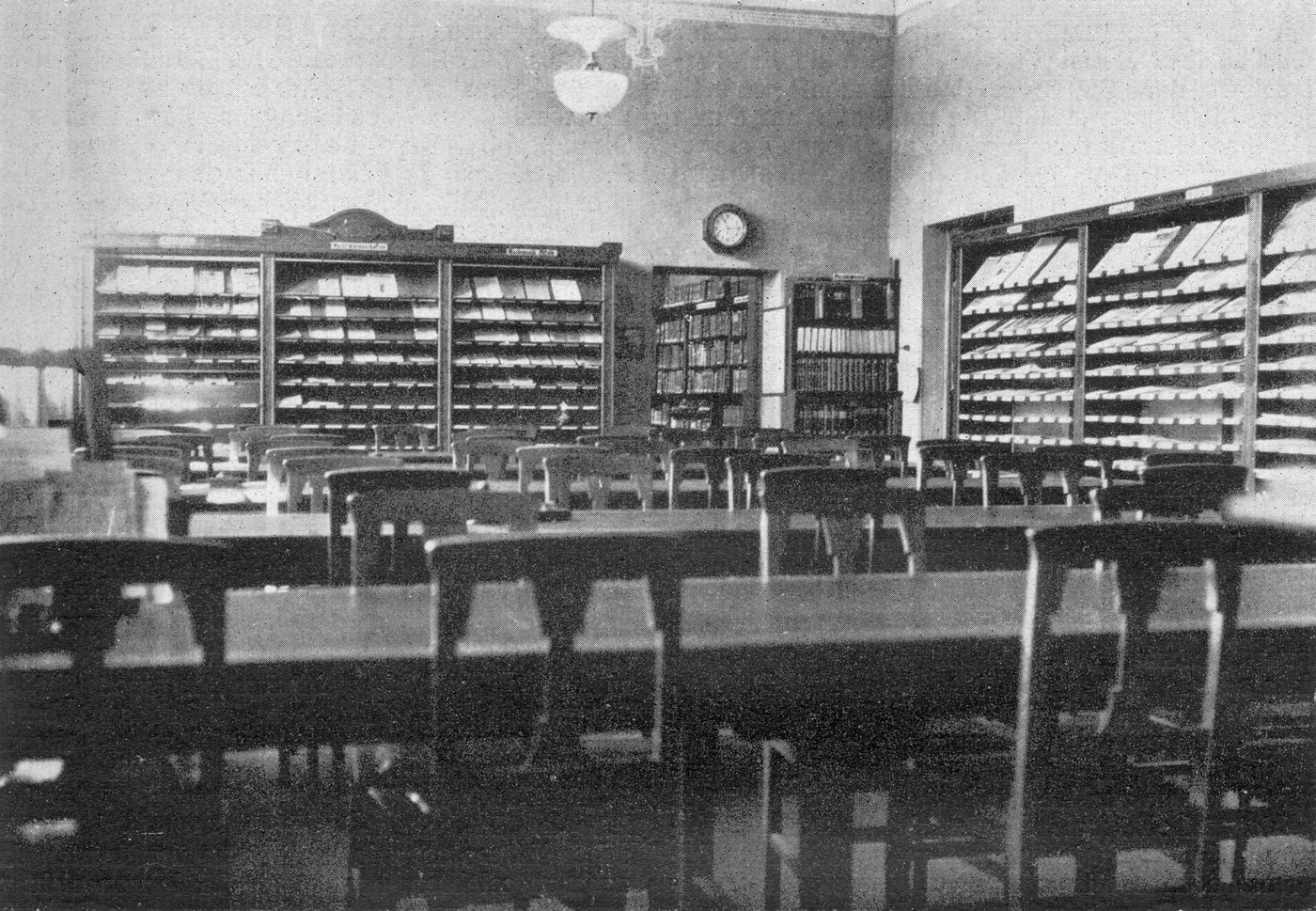
The Gdańsk University of Technology Library was established in 1904, together with the University of Technology (then Königliche Technische Hochschule zu Danzig, during the Free City period and under the occupation with a changing name). It had a diverse book collection, corresponding to the diversity of the university's educational offer, which provided education in both the field of technical subjects and the humanities.
The library rooms were located on the ground floor of the main building of TH Danzig in the centre of the rear area. The warehouse had an area of approximately 200 m2 (three floors with double Lipmann shelves, usable area for approximately 50 to 58,000 volumes), the reading room had 36 workstations (approx. 90 m2), the book rental was also the office of the library clerk (approx. 45 m2), and at the end there was a room for lecturers (approx. 28 m2).
In 1923, by the decision of the Senate of the Free City of Gdańsk, the University of Technology Library received the book collection of the Natural Sciences Society in Gdańsk, founded in 1742, consisting of approximately 30-35,000 volumes. It included, among others: valuable old prints and manuscripts, often white ravens. At this point, the Library's collection as a whole amounted to 100,000. volumes.
In 1924, the Library began interlibrary cooperation with the Municipal Library of the Free City: books could be read, ordered and returned in both institutions. Cooperation with the Municipal Library solved the problem of the lack of more items in the humanities.
As the Library grew, the corridors filled with books. Two additional rooms were added to the reading room, so that in the academic year 1929/30 there were approximately 100 workstations available.
In addition to the main library, 29 university institutes had their own library collections. In 1945, following professors leaving the city, the archives, part of the polytechnic equipment and valuable books from the Library's collection were evacuated by sea. Packed in 500 crates, they sailed on 27 January onboard of the ship "Deutschland" to Kiel. The collections that were taken to Germany mostly went to Schmalkalden in Thuringia. Some, mainly manuscripts and early prints, from the collections of the Natural History Society's library were found in the state (later university) library in Bremen. The collection of over 100,000 volumes that was not evacuated, burned in the main building. The same applies to most reference libraries of departments and institutes.
Gdańsk Tech Library in the years 1945-1989
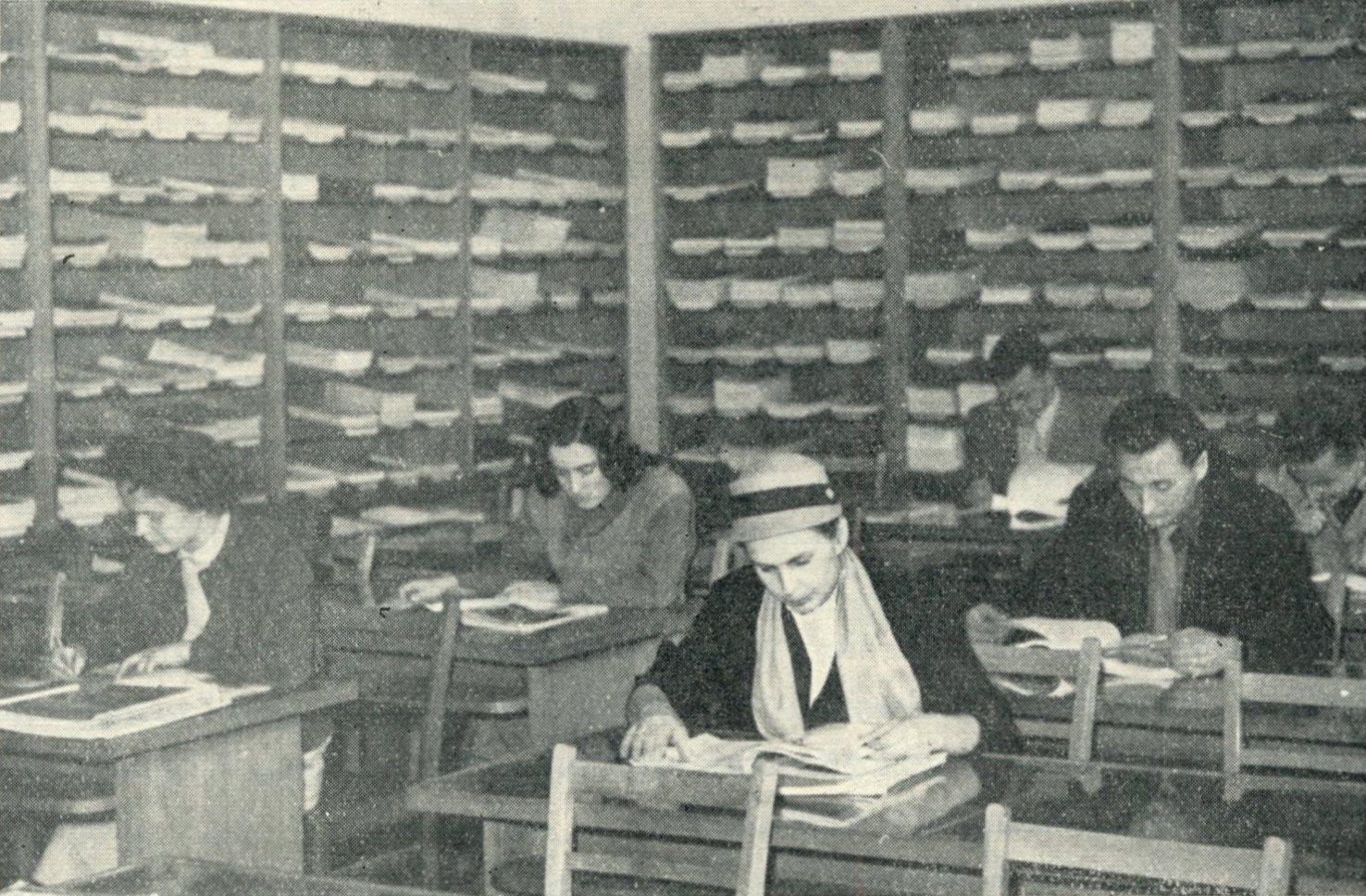
After the university was taken over by the Operational Group of the Ministry of Education and the election of the University of Technology authorities, three people were employed to open the Central Library (from 1950 the Main Library). Due to the destruction of the central part of the Main Building, a three-person team functioned on the ground floor of the side wing of the building in two rooms and a hall, where on 66 m2 there was a storage, an office, a reading room and a lending library, and books were also placed on the floor.
The first works consisted of reclaiming, securing, sorting and inventorying the surviving book collection. Resources hidden in Świncz were brought in, items were also obtained from German manor libraries, monasteries (Starogard Gdański, Bydgoszcz, Kartuzy), the book collection from the construction and mechanical school in Zgorzelec and donations from, among others, former professors and employees of the University of Technology. Only 126 items remained from the book collection of the Natural History Society in Gdańsk. The inventory performed in 1946 showed 26,000 volumes, after the selection in 1948, 9,600 volumes consistent with the Library's profile were retained (the rest were transferred to other libraries).
Catalogues were created: substantive, subject-specific and alphabetical, special, departmental for mathematics, architecture, physics, and a handy catalogue in the reading room. A central catalogue of the collections of departments of individual faculties was also prepared. Due to the nature of the collection, in 1950 a new subject catalogue was introduced (by decision of the Library Committee of the Senate of the University of Technology), prepared by the director of the Library. It replaced the catalogue based on the Universal Decimal Classification used in other libraries.
Reconstruction activities were also undertaken of the destroyed part of the Main Building, which housed the Library: Jerzy Winnicki, Eng. Arch. designed the new reading room, lending room and catalogues. Construction works were completed in 1950 under the supervision of prof. Witold Minkiewicz: the size of the library was increased, the layout of the hall, corridors and rooms was changed.
Gdańsk Tech Library after 1989
Fundamental changes in the functioning of the library were brought about by computerization initiated in 1990, when library employees Wojciech Charkin and Lech Zięborak developed the "Concept of computerization of library and information processes in the Main Library". The software was selected, IBM PC computers were configured and installed, and a computer network diagram in the library was developed.
Since 1991, the Main Library has been implementing and developing its own integrated computer system, APIS, which enables the creation of databases regarding compact and serial publications. The system guaranteed full access to information about the library's resources, as well as their sharing. In 1997, a network system for sharing databases on CD-ROMs called Infoware CD/HD from Info Technology Supply was installed and launched. The system enabled access to CD-ROM databases located in the Library via the University of Technology's computer network and the Tricity Academic Computer Network (TASK).
Originally, CD collections were cheaper than the Internet because it was based on telephony, which changed over time, which is why journals, standards and patents appeared on CDs first, but they still took up a lot of space. Later, some of the collections (journals, books and patents) were made available online, separately or, more and more often, in the form of scientific databases - bibliographic, abstract and full-text (with the possibility of downloading or printing individual texts, articles or book chapters).
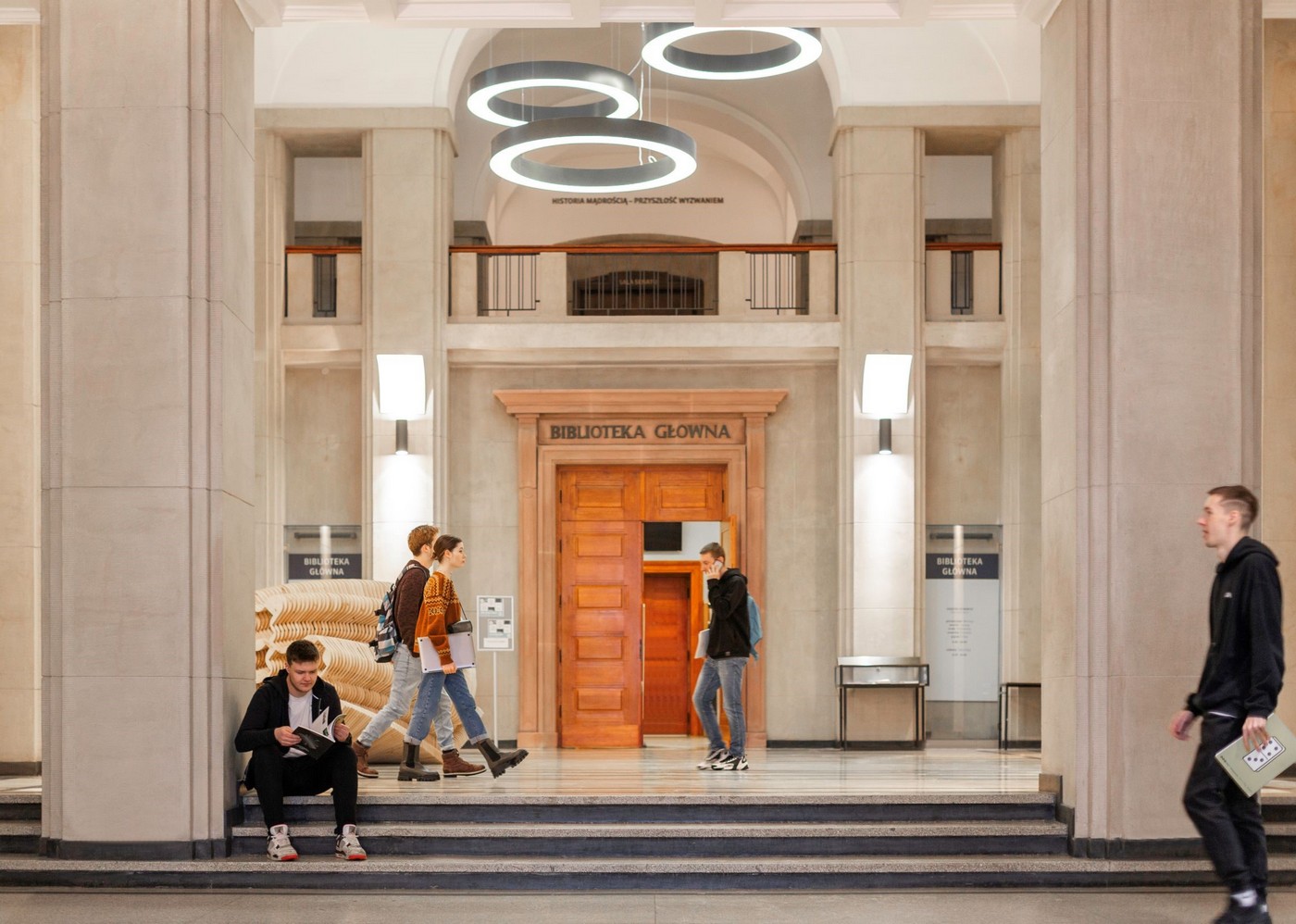
In the following years, computer systems, catalogues and digital collection resources were developed. Social media played an increasingly important role, and trainings were organized from the basic ones - for students starting their studies - to highly specialized for PhD students and employees of the University of Technology. The library organized exhibitions, meetings and scientific conferences. At the same time, traditional collections were developed, new rooms for the Library's branches were created and the reading rooms in the Main Library were transformed, adapting them to the changing needs.