


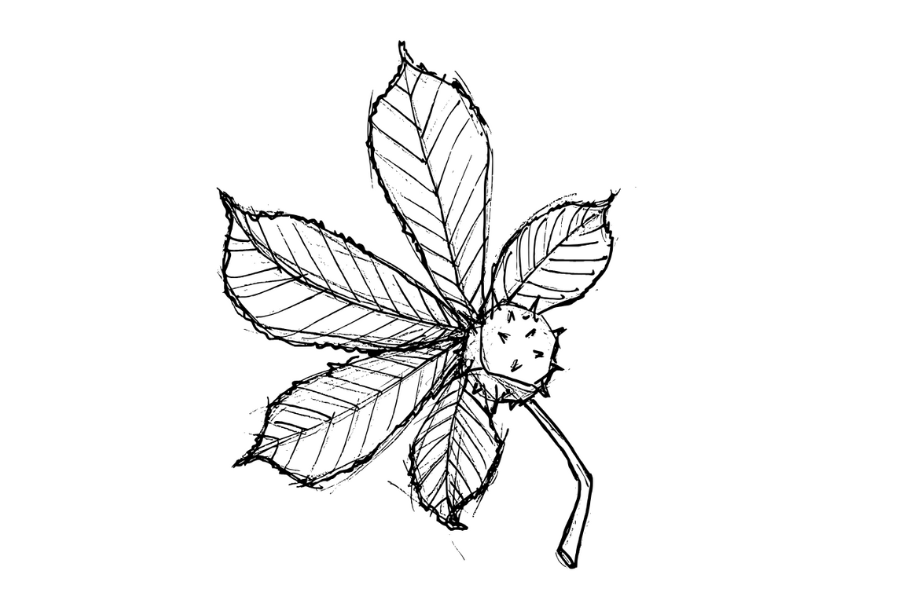
The horse chestnut is not a native species. It is planted in forests only occasionally, mainly for its fruits, which serve as a supplementary food source for deer and other ungulates. However, it is widely used in parks, avenues, and along streets. The tree can reach impressive dimensions—up to 25 m in height and 2 m in trunk circumference. Large palmately compound leaves grow on thick shoots, composed of 5–7 leaflets measuring 10–25 cm in length, with serrated margins.
Worth knowing: For nearly a decade, horse chestnuts have been seriously threatened by the horse-chestnut leaf miner—a moth whose feeding activity forces trees to flower again in autumn. This effort weakens the trees, exposes them to frost damage, and leads to the dieback of many specimens. In response, a national Horse Chestnut Protection Program was established.
Fun fact: Horse chestnut should not be confused with the true edible chestnut. The latter does not grow naturally in Poland due to the cool climate, although its fruits are available in shops and are edible—unlike the fruits of the horse chestnut.
Source: Lasy Państwowe