


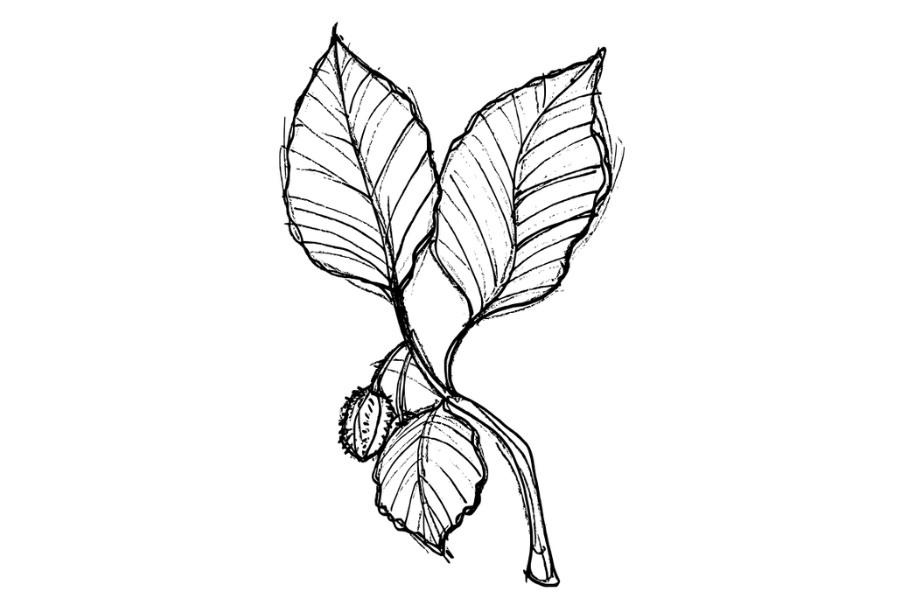
The beech is one of the most magnificent deciduous trees found in Polish forests. In autumn, beech forests captivate with a rich palette of colors as the leaves turn vibrant shades of yellow, orange, and red. In spring, newly unfolded, oval-shaped leaves are bright green on the upper surface and lighter underneath; initially softly hairy, they gradually become smooth and shiny. A characteristic feature of the beech is also its smooth, silvery bark.
Beech fruits are small, triangular nuts enclosed in a spiny husk. Known as beechnuts, they are edible and eagerly eaten by animals, especially squirrels, jays, and wild boars. Beeches grow best on fertile, moderately moist, and slightly shaded soils.
Fun fact: Beeches can live up to around 300 years. In Poland, their natural distribution marks the edge of their range—they are mainly found in the west, north, and south of the country. In the mountains, up to about 900 meters above sea level, they form lower montane forests, growing alongside species such as fir, hornbeam, sessile oak, and spruce. In parks and gardens, decorative cultivars with purple leaves are often planted.
Source: Lasy Państwowe