


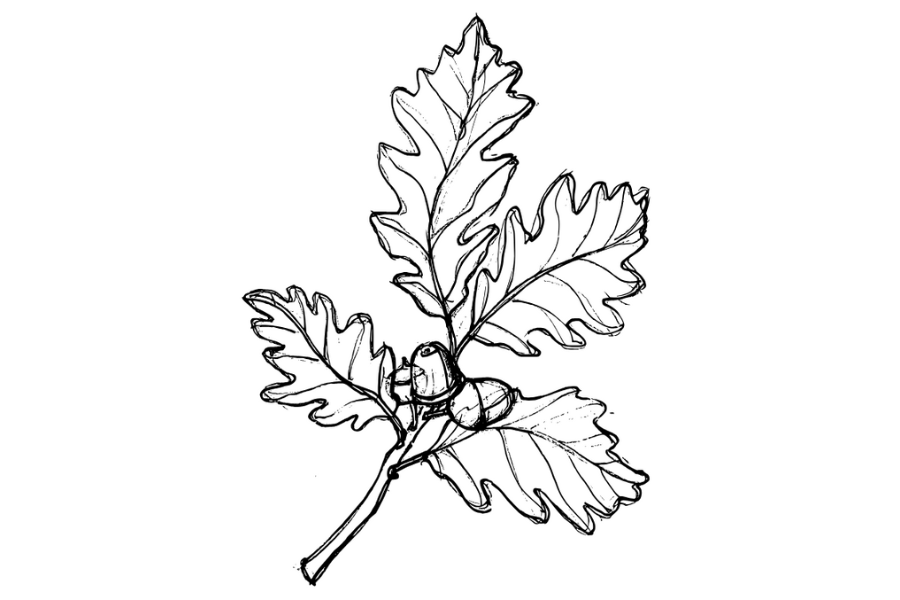
In Poland, two species of oaks occur naturally: the sessile oak (Quercus petraea) and the pedunculate oak (Quercus robur). The sessile oak prefers poorer, drier, and warmer habitats. It also blooms about two weeks later than its pedunculate relative. The male flowers form green, pendulous catkins, while the female flowers—small and sessile—are located close to the shoot. After flowering, acorns develop, usually in clusters of 3–7, serving as an important food source for many bird and mammal species.
The sessile oak grows primarily in mixed forests or forms oak groves. It thrives best on light, stony, or clay soils. It is a characteristic species of foothills and lower mountain areas, whereas in lowlands and riparian forests it is replaced by the pedunculate oak.
Worth knowing: In winter, when the sessile oak is leafless, it is easy to recognize by its long, straight trunk that extends deep into the crown.
Source: Lasy Państwowe