


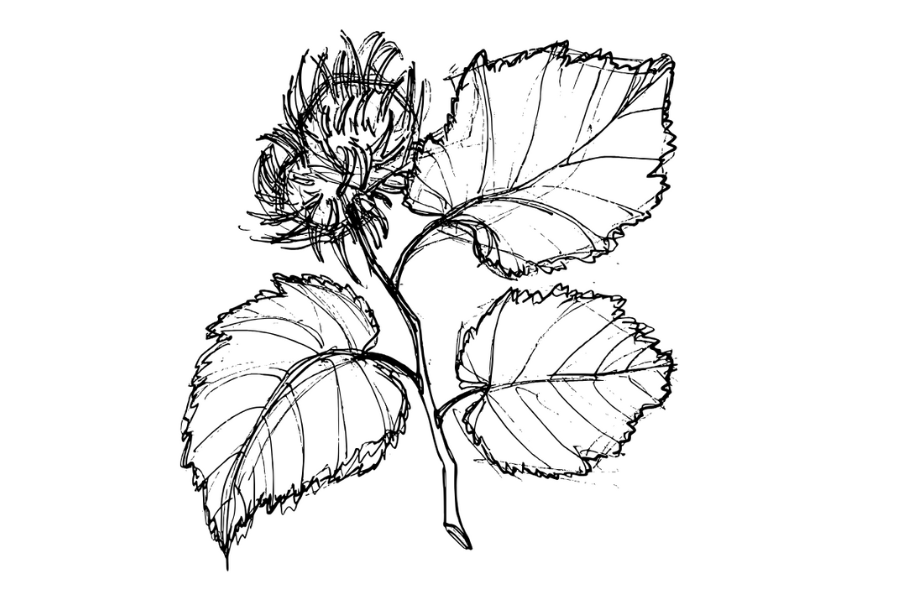
The Turkish hazel naturally occurs in southeastern Europe, Turkey, and the Caucasus. A distinctive feature of this species is its dense, regularly conical crown. Thanks to its numerous, strongly branched shoots, the tree appears carefully shaped even from a distance. The trunks are straight, covered with gray, fissured bark, and the trees reach a height of 20–25 meters. Large, green leaves borne on 2–3 cm long petioles add to the tree’s ornamental appeal. The Turkish hazel begins to bear fruit only after several years of cultivation; its nuts ripen in autumn and are a treat for squirrels.
This is a long-lived species, resistant to high temperatures, drought, and air pollution, reflecting its southern origins. In the central and western parts of the country, as well as in cities, it tolerates winter well. It prefers fertile, clayey soils rich in calcium, with a neutral to alkaline pH, and sunny, warm locations—ideally with a southern exposure.
Source: Związek Szkółkarzy Polskich