MERA 400 Comes Back to Life at Gdańsk Tech
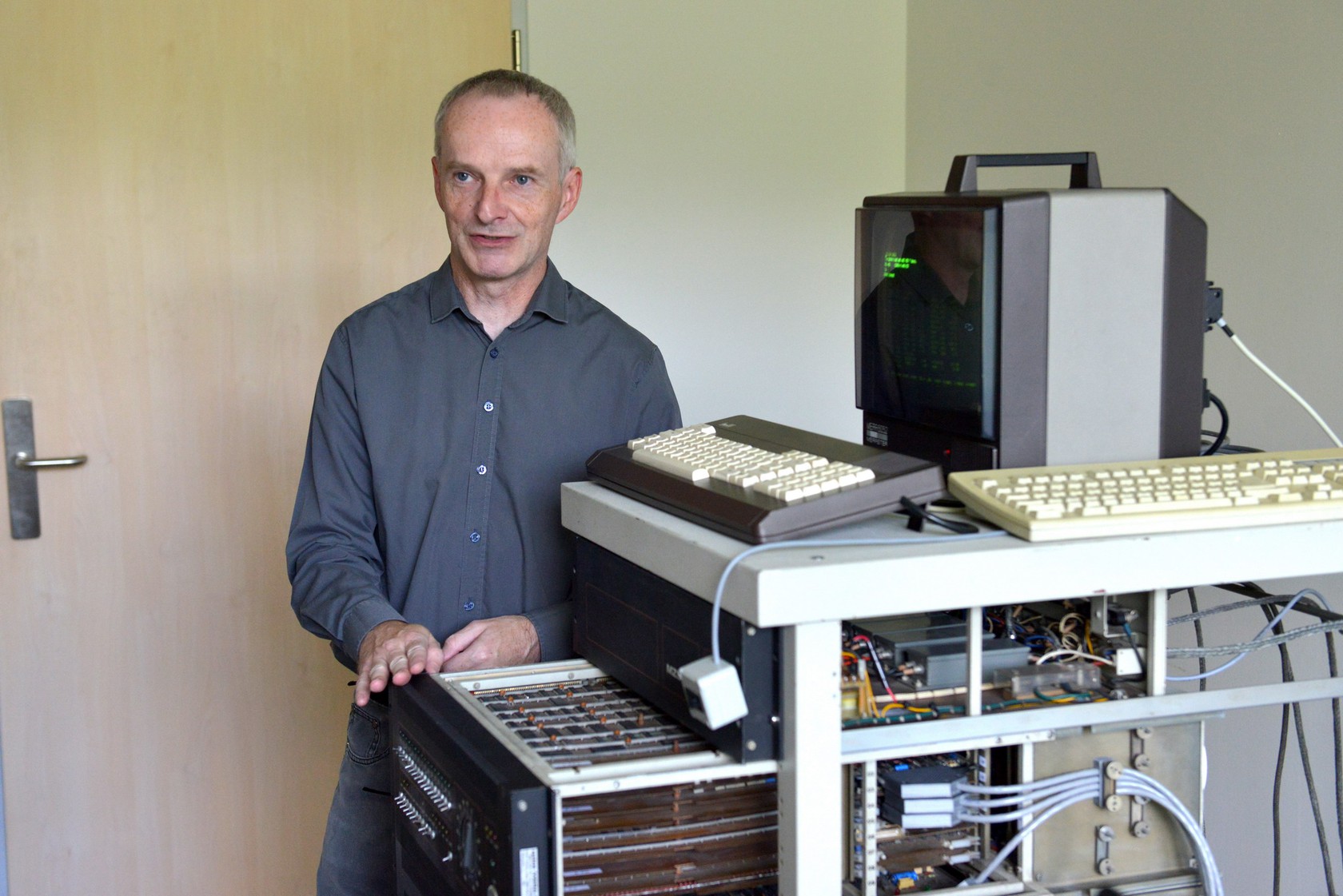
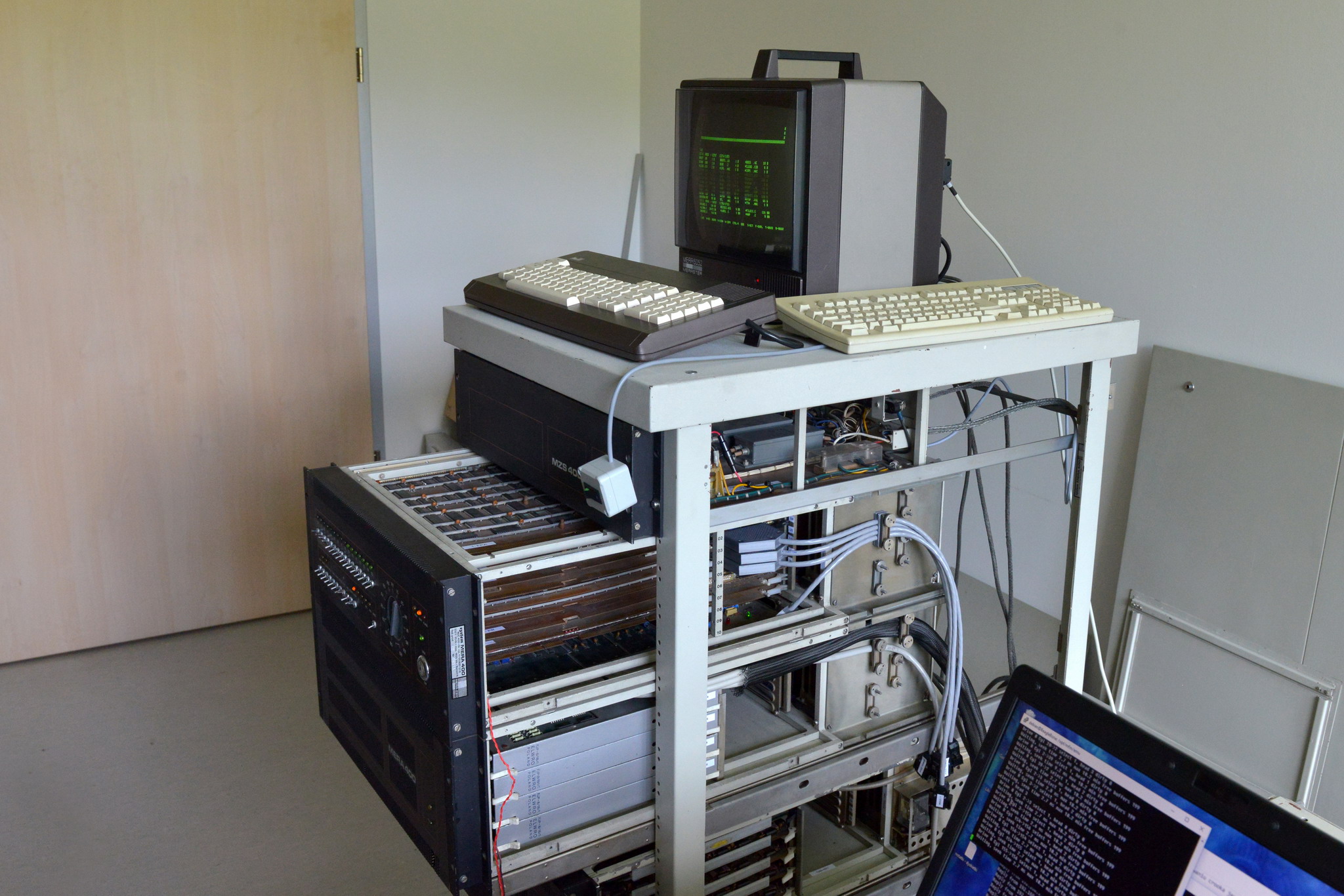
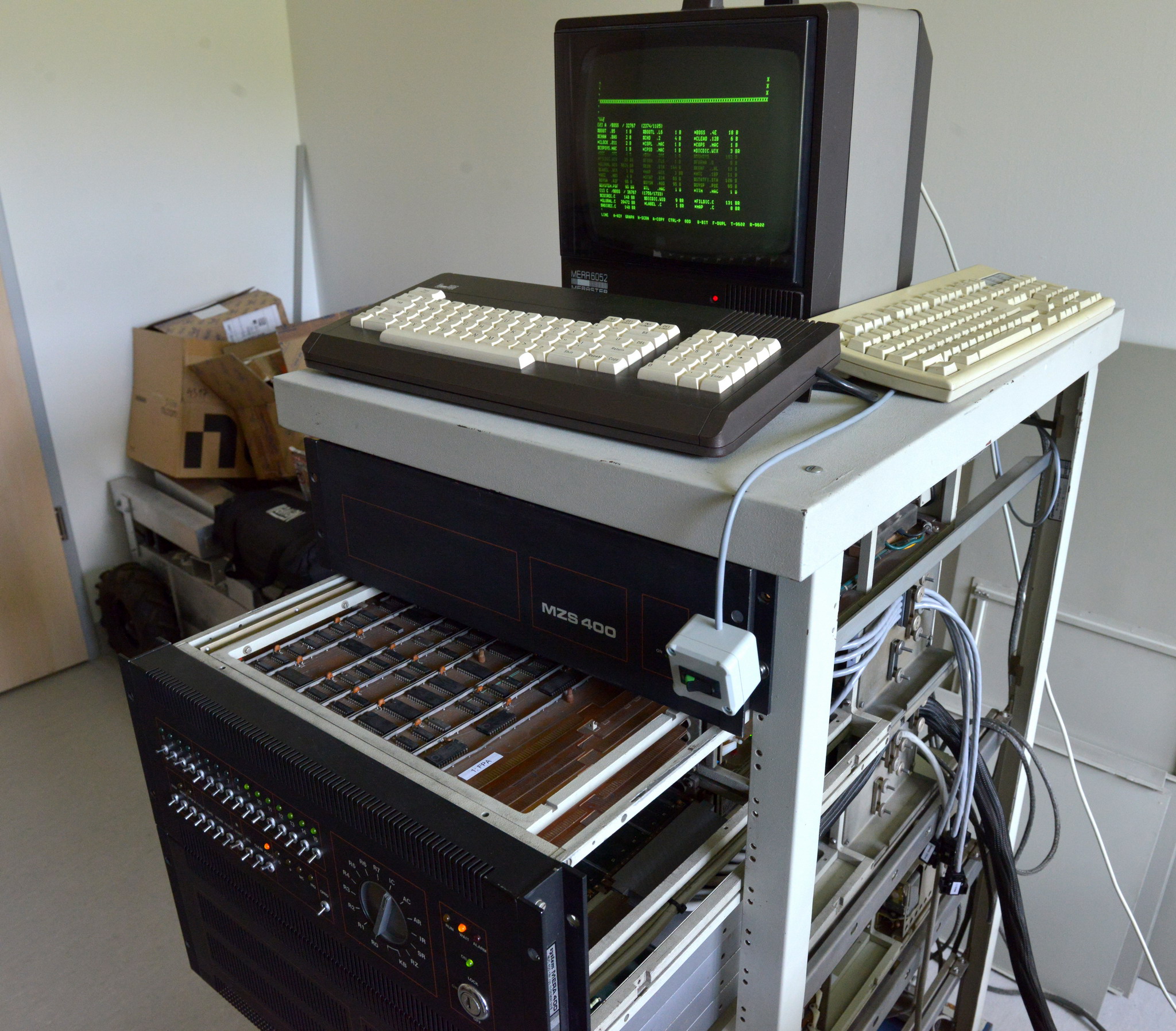
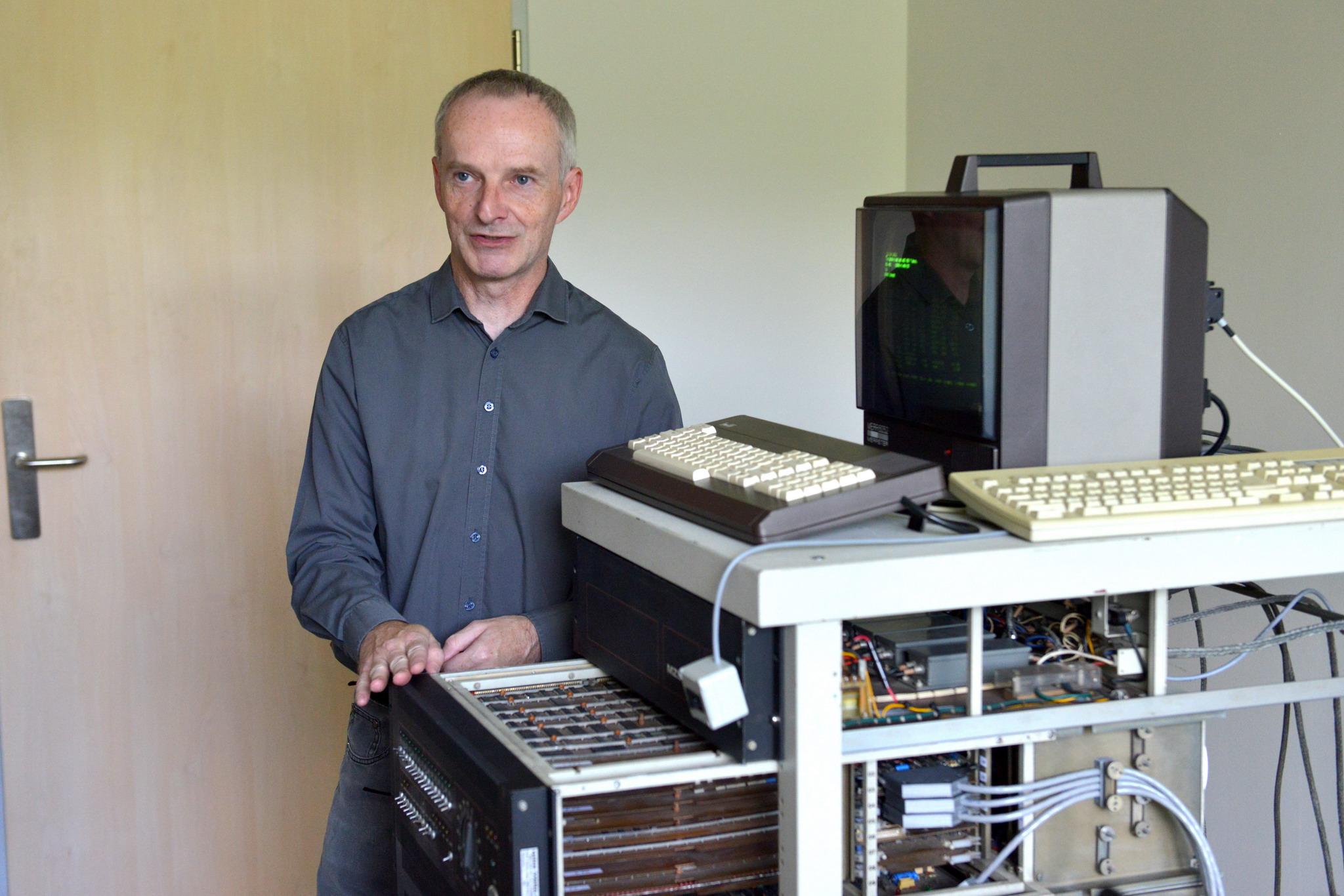
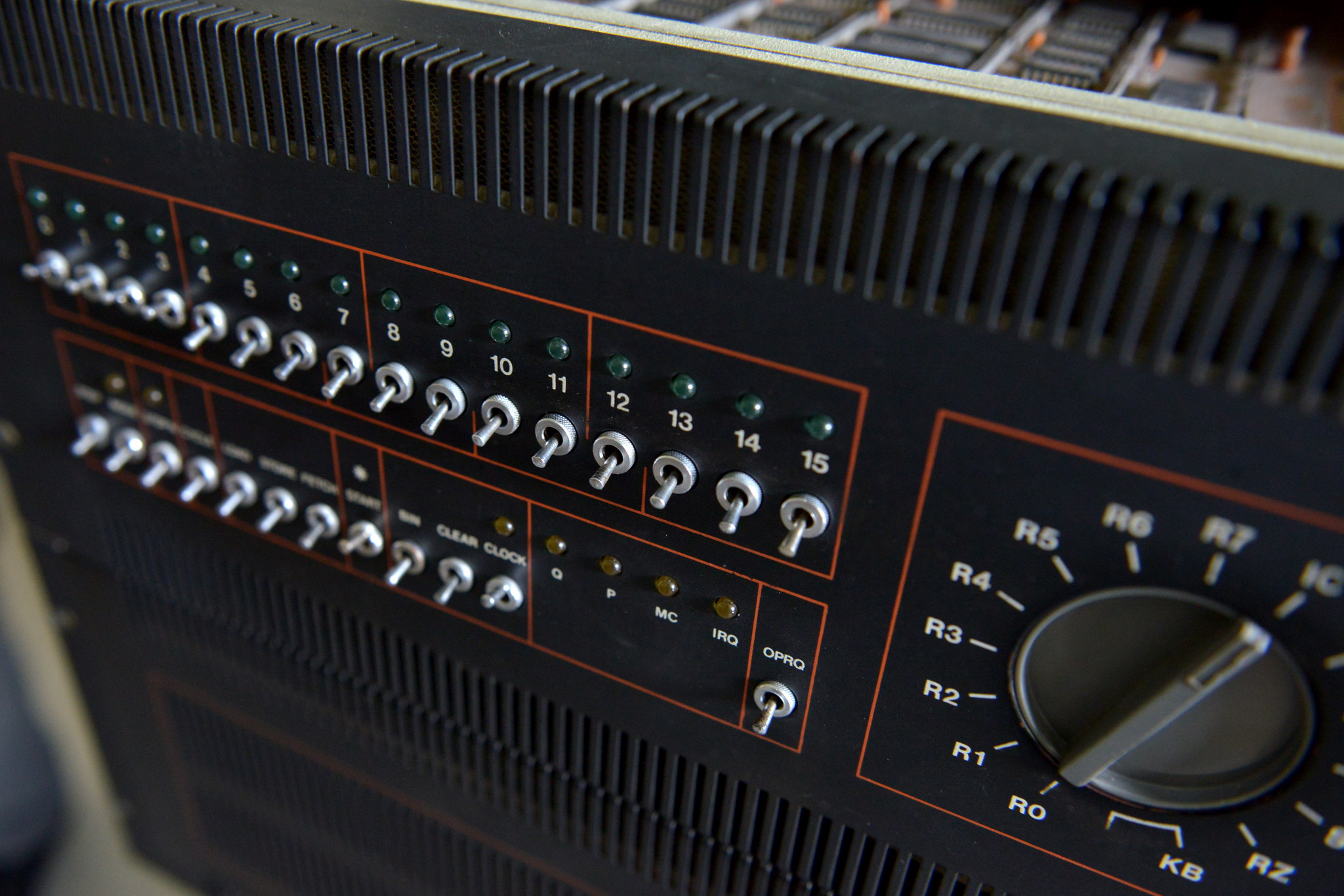
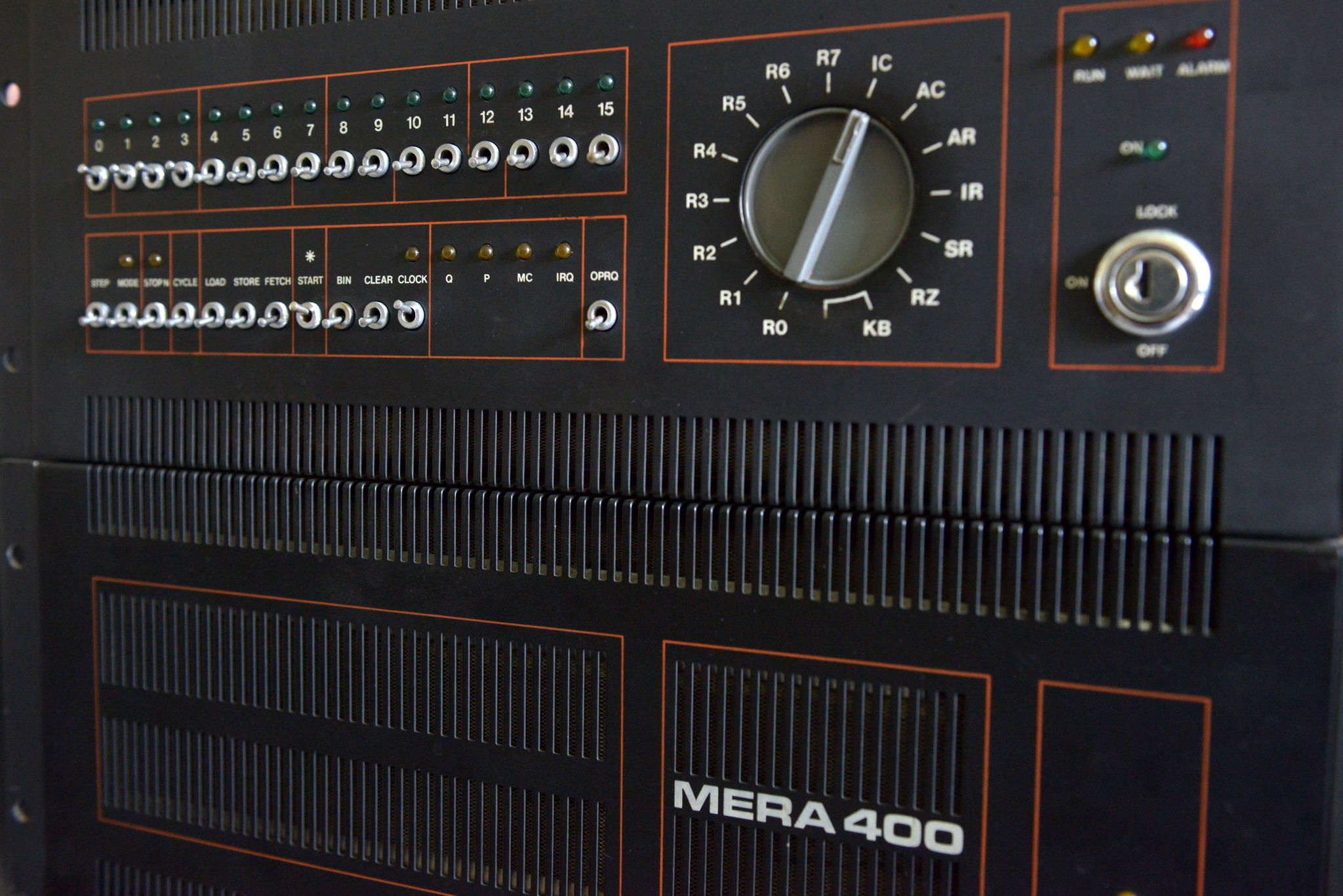
First she worked at the Shipbuilding Institute, later for years she was a museum exhibit. Today, she is again running programs and the CROOK operating system, developed years ago precisely at Gdańsk Tech. The historic MERA 400 has been restored to working condition for nearly a year now by Prof. Jarosław Sadowski.
First she worked at the Shipbuilding Institute, later for years she was a museum exhibit. Today, she is again running programs and the CROOK operating system, developed years ago precisely at Gdańsk Tech. The historic MERA 400 has been restored to working condition for nearly a year now by Prof. Jarosław Sadowski.
It all started by chance. In June 2025, Jarosław Sadowski from the Faculty of Electronics, Telecommunications and Informatics attended a meeting at the STOS Competence Centre. There he saw MERA 400, which had returned to Gdańsk Tech after years spent at the National Museum of Technology in Warsaw.
– I asked if Gdańsk Tech would be interested in attempting to start up this computer. The Chancellor agreed, and I have been working on it since October – says Dr. hab. Eng. Jarosław Sadowski, Prof. Gdańsk Tech, Head of the Department of Radiocommunication Systems and Networks.
This is not just any random example of a historic computer. This particular MERA actually worked at Gdańsk Tech years ago.
CROOK was developed on this computer
The history of the CROOK operating system dates back to the 1970s and the then Shipbuilding Institute of Gdańsk Tech. It was there that a team of scientists worked on software enabling the use of computers, among others, in automation and control.
First, the SOWA system was created, and then CROOK was developed at Gdańsk Tech. Its initial versions were prepared for the K-202 computer, and later the system was also developed for the MERA 400. The unit Jarosław Sadowski is currently working on was one of the computers used at the university during this work.
– That is why the hard drive located on this computer is also so valuable. It contains programs, source codes, and the CROOK operating system itself – emphasizes Sadowski.
The ability to restart this very system is today one of the most important achievements of the entire project.
First, three months of work on the power supply
When MERA arrived at the workshop, primarily preserved was the unit located in the large cabinet. Parts of the cabling, external devices, and documentation were missing. Therefore, it was not possible to simply connect the computer to the power and check if it would start.
– The work on the computer began with the inspection, repair, and testing of the power supplies. These are high-power power supplies, made using old technology. I had to be sure that they were functioning correctly, as their failure could cause further damage to the computer – explains Jarosław Sadowski.
Work on the power supply systems took approximately three months. The professor identified not only components damaged by years of use and storage but also faults originating from the production period – including incorrectly installed components and faulty protective circuits.
Only once it was safe to power up did the checking of other computer components begin. Today, it is operational again and can run programs as well as the CROOK operating system.
Data survived over 30 years without power
One of the most remarkable moments of the project was powering up the ferrite memory. This is a technology in which information is stored in microscopic magnetized cores. Unlike modern RAM, the data does not disappear when power is disconnected.
In the case of MERA from Gdańsk Tech, it turned out that after over 30 years without power, the memory still retained data recorded in the early 1990s. It was possible to read system information from two memory modules. One of the remaining modules had damaged electronics. After thorough diagnostics, the cause was traced to a single transistor. After its replacement, the module regained full functionality.
– This memory is still functional. We managed to read its contents from the 1990s. This is a solution that is no longer found in modern computers – says the scientist.
Parts have to be sourced from all over the world
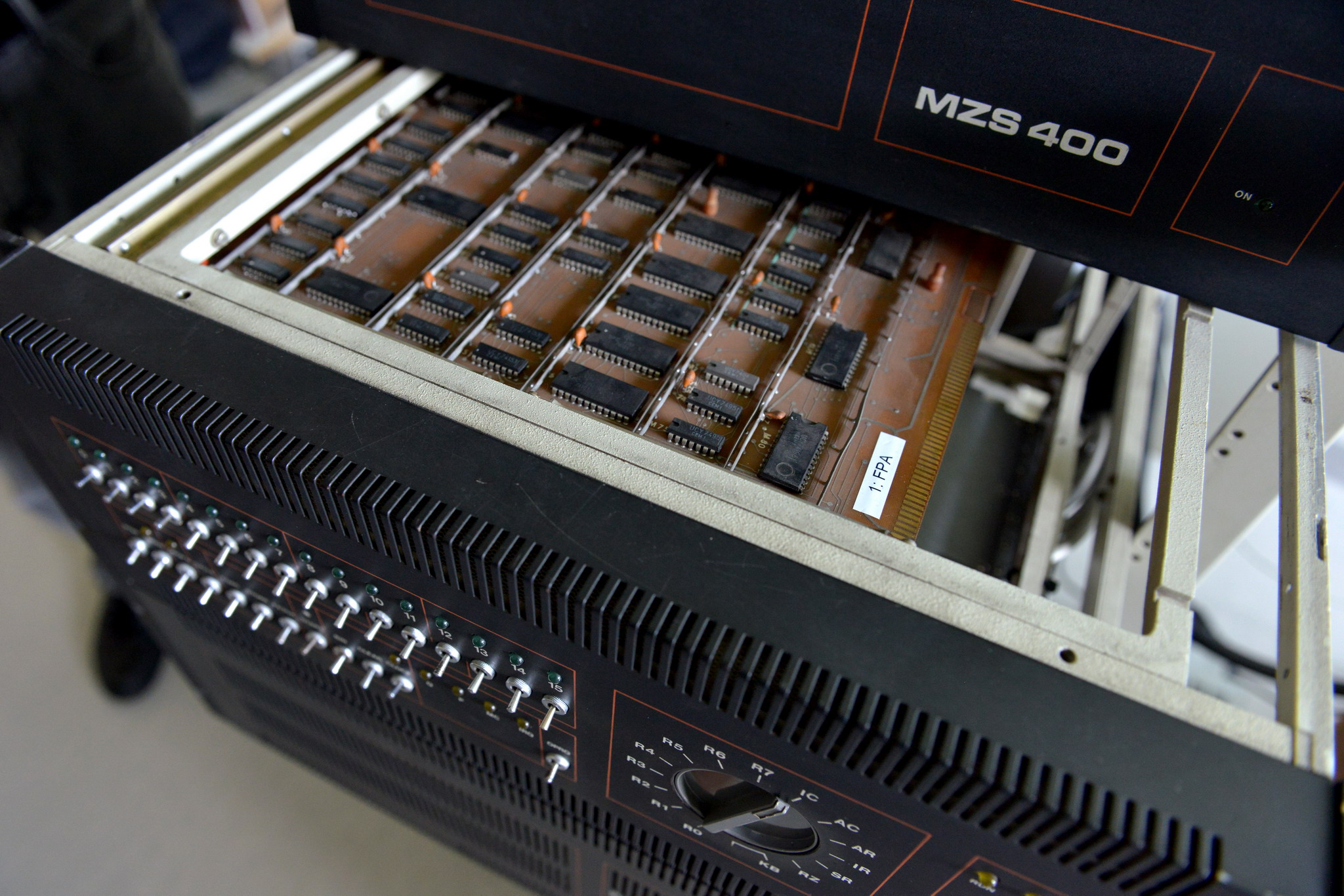
However, not every problem can be solved with just a meter and a soldering iron. With a computer that is several decades old, one of the biggest challenges is the availability of parts. Repairing semiconductor memory proved to be particularly difficult. Several dozen damaged chips were involved, the equivalents of which can no longer simply be ordered from the manufacturer.
– It was necessary to search for functioning equivalents all over the world. When someone puts them up for auction, there are often only two or three pieces, whereas several dozen were needed. In terms of parts availability, that was the greatest challenge – the professor explains.
Reconstructing the missing cabling, searching for documentation, and finding devices compatible with the historical configuration also consumes a lot of time. Among other things, the appropriate terminal model has already been acquired. It will probably not be possible to assemble all the original set components. However, this is not necessary for the computer to be operational again.
– MERA is now ready for demonstration, work, or programming trials. The most important thing is that it can run CROOK, thereby showcasing Gdańsk Tech’s contribution to the development of computer science in the 1970s and 1980s – emphasizes Sadowski.
YouTube helped with the repair
The subsequent stages of the work are documented on the Projekt M400 channel on YouTube. Over 20 episodes have been created so far, showing the diagnostics and repair of various computer components. The channel had two initial objectives. The first was to preserve documentation of the process, which will most likely not be repeated to such an extent again.
– When the computer is functional, it will be much easier for others to take care of it – says Sadowski.
The second goal was to reach people who might have the missing knowledge, documentation, or parts. And it worked. After the videos were published, enthusiasts and individuals with the necessary materials started coming forward. One of them shared the documentation for the punched tape reader, another provided hard-to-find connectors and micro-switches needed to repair the technical console.
– Without spreading the information that such a computer is being repaired, I would not have been able to reach these people – he adds.
The channel has thus become not only a chronicle of the project but also a tool for acquiring knowledge and the parts necessary to operate the computer.
A computer from half a century ago can still teach students
Prof. Sadowski hopes that after the completion of the MERA project, it will not remain solely an exhibit. Its construction allows for the observation of solutions that are hidden within individual integrated circuits in modern computers. The MERA processor is built from hundreds of simpler logic circuits.
– What students learn during laboratories has simply been multiplied here. We increase the number of such circuits and a whole computer is created. You can see where this technology started and why we still teach certain things – explains Jarosław Sadowski.
MERA could therefore be used during classes on computer system architecture or operating systems. Students would be able not only to observe the historical design but also to write and run their own programs on it. Proof that the computer has truly come back to life is, for example, a functioning version of the snake game running on it, written back in the 1980s.
MERA is set to serve Gdańsk Tech again
The work has already reached a stage where it will soon be possible to decide where the historic computer will be permanently placed and how it will be made available.
However, the most important achievement has already been made. The computer that operated at Gdańsk Tech several decades ago is working again. It is possible to run a system developed by Gdańsk Tech researchers on it, retrieve data preserved for decades, and show new generations of students what the beginnings of modern computer science looked like.