City of the future designed together with residents. Gdańsk Tech scientists presented their solutions in Brussels
How to use artificial intelligence, 3D models, and digital analyses so that residents have a real impact on the appearance and functioning of their city? Experts discussed this during the European Week of Regions and Cities in Brussels. Scientists from the Faculty of Architecture at Gdańsk Tech presented the experiences of the ENACT 15mC project, within which modern technologies help design more accessible, friendly, and tailored to local needs urban spaces.
How to use artificial intelligence, 3D models, and digital analyses so that residents have a real impact on the appearance and functioning of their city? Experts discussed this during the European Week of Regions and Cities in Brussels. Scientists from the Faculty of Architecture at Gdańsk Tech presented the experiences of the ENACT 15mC project, within which modern technologies help design more accessible, friendly, and tailored to local needs urban spaces.
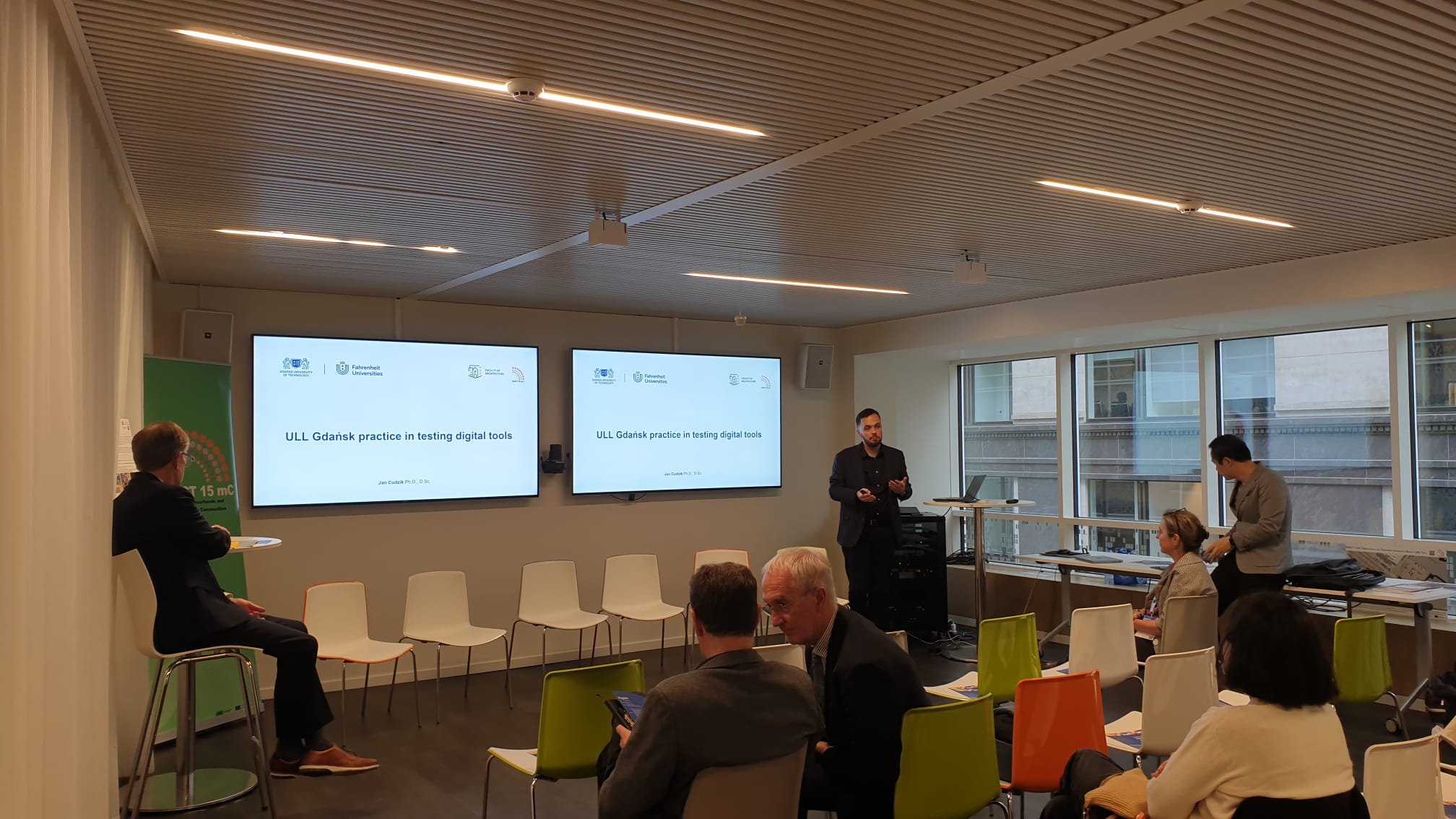
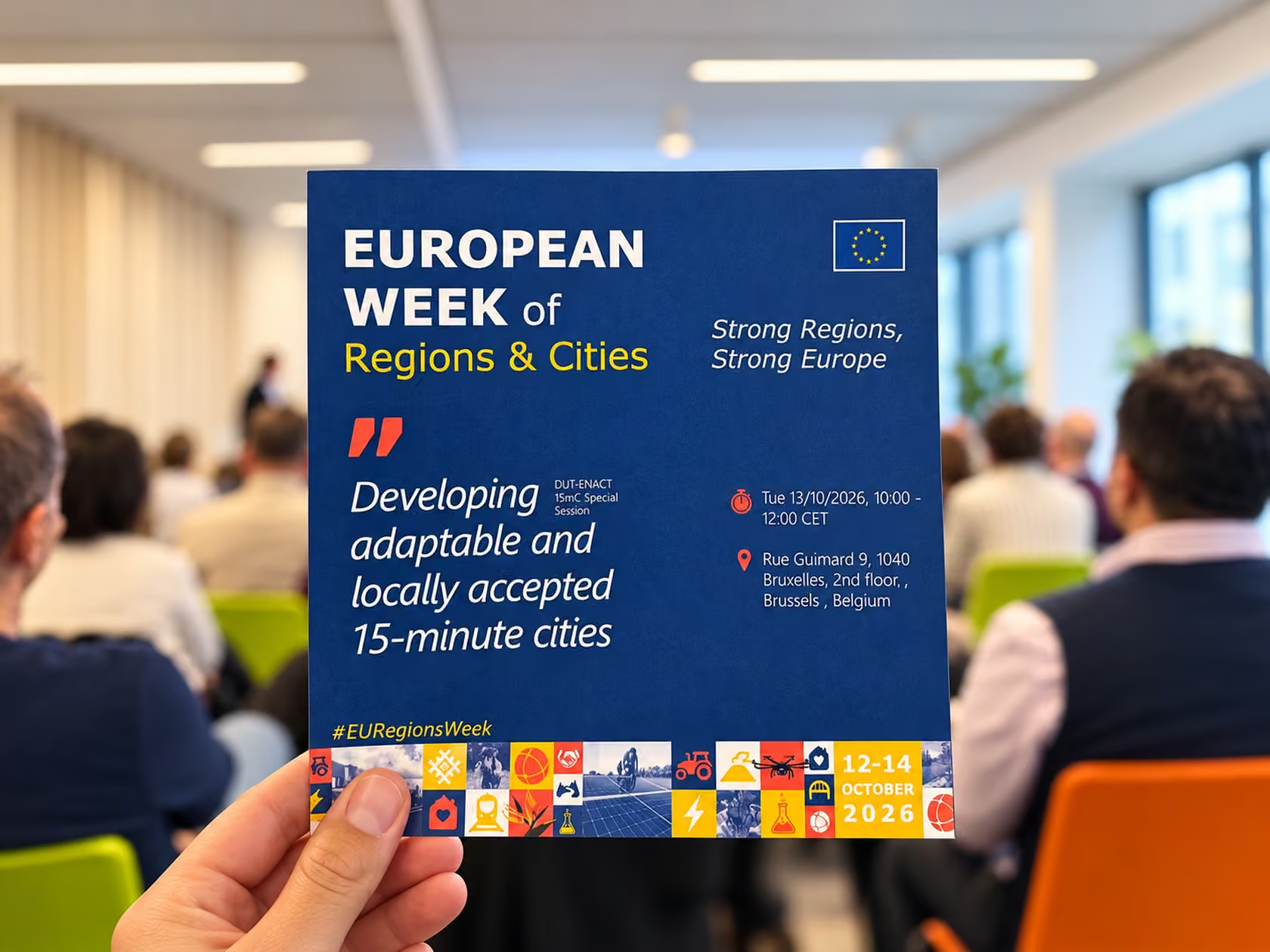
Representatives of the Faculty of Architecture at Gdańsk Tech: Prof. Lucyna Nyka, Prof. Piotr Lorens, and Prof. Jan Cudzik participated on October 13, 2026, in Brussels in a session dedicated to the ENACT 15mC project, organized as part of the European Week of Regions and Cities. The meeting focused on creating 15-minute cities adapted to local conditions and co-created with residents.
The session “Developing adaptable and locally accepted 15-minute cities” brought together researchers, local government representatives, and technology partners. Its starting point was the experiences of four Urban Living Labs operating in Gdańsk, Trondheim, Valencia, and Oxford. The discussion concentrated on how local experiments can support knowledge exchange between cities and the development of more accessible, inclusive, and friendly public spaces.
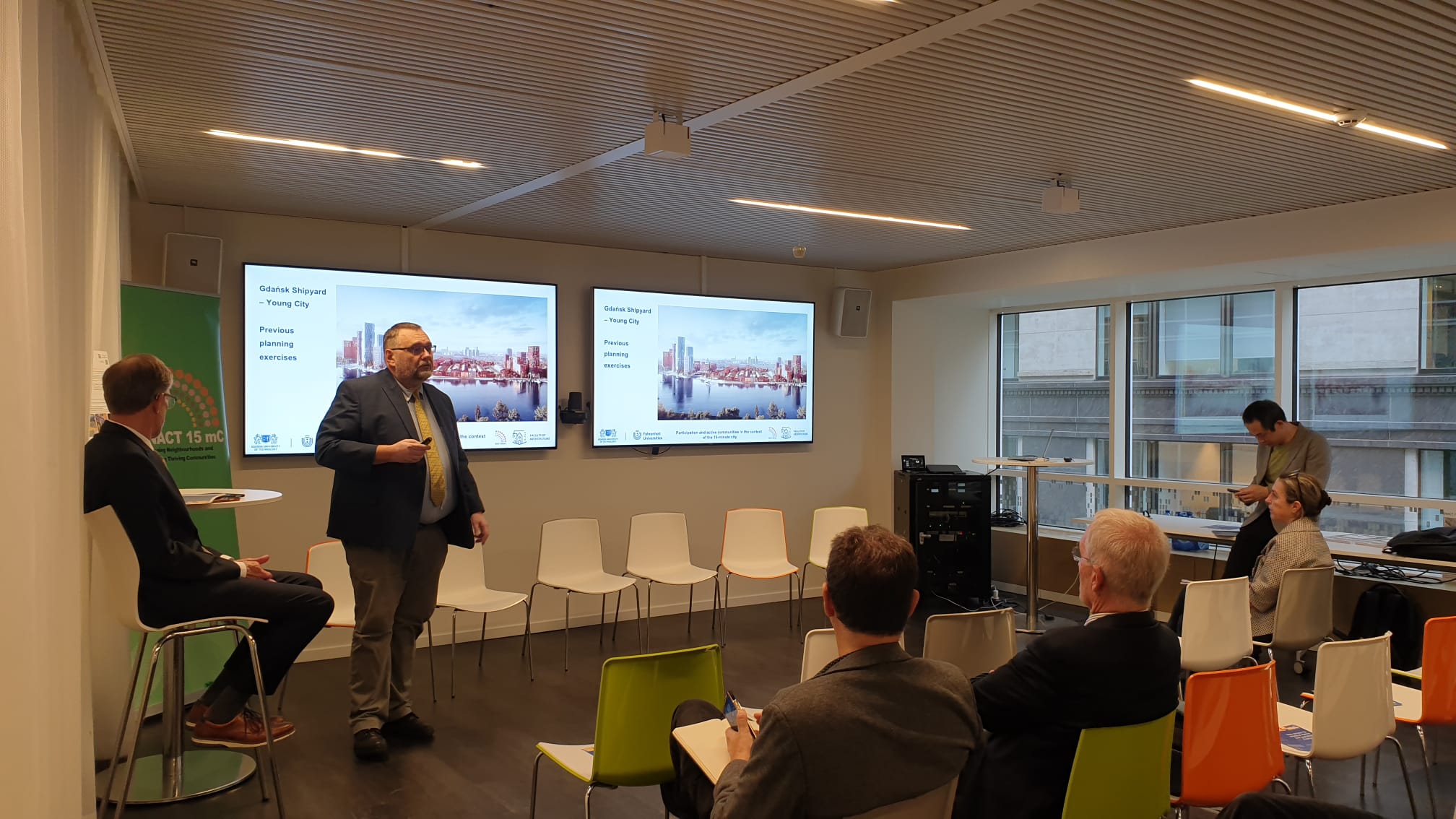
Prof. Piotr Lorens presented the experiences of the Gdańsk Urban Living Lab, focusing on the area of the Imperial Shipyard. The work combines issues of transforming post-shipyard spaces with recognizing local identity, developing social and cultural activities, and engaging various stakeholder groups. An important thread was the need to go beyond formal planning procedures and build cooperation among residents, landowners, designers, and government representatives.
Prof. Jan Cudzik presented the technological dimension of these activities. He demonstrated the use of GIS data, 3D scanning, and photogrammetry to build spatial models, as well as the application of digital analyses, physical models, and rapid prototyping. A significant part of the presentation was linking physical models with digital projections, which made it possible to present data and scenario changes in a way more understandable for people without design training.
The message of the presentation emphasized that technology should support dialogue rather than replace resident participation. Clear data visualization, transparency of decisions, and the possibility of repeatedly discussing and modifying proposals can create better conditions for co-design. Generative tools should serve joint solution-seeking rather than automatic evaluation of residents’ ideas.
The session also presented the experiences of partners from the University of Oxford, Oxford Brookes University, Universitat Politècnica de València (UPV), and the Norwegian University of Science and Technology (NTNU):
- Trondheim: use of temporary interventions, AI-assisted visualizations, and augmented reality to discuss transforming car-dominated spaces.
- Oxford: combining simple workshop exercises with AR and VR to enable residents to explore and co-create proposals for changes in streets and public spaces.
- Valencia: application of digital twins and immersive tools to analyze last-mile logistics in the city’s historic center.
The discussion indicated that effective implementation of new tools requires not only technological infrastructure but also appropriate skills, funding, and sustained engagement from local governments. Participants stressed the importance of accessible forms of participation, actively reaching out to underrepresented groups, and clearly distinguishing between design experiments and investments intended for implementation.
The most important conclusions included:
- combining digital tools with face-to-face meetings and simple workshop methods;
- presenting data and proposals in a way understandable to non-experts;
- conducting participation as a multi-stage process with feedback and opportunities for changes;
- building trust through transparency of data, decisions, and project limitations.
Gdańsk Tech’s participation in the session enabled the presentation of the experiences of the Gdańsk laboratory and the exchange of knowledge on how to combine design technologies with local identity and the real impact of residents on the development of their environment.