
Miniatura 10. NCN will support three more innovative projects at Gdańsk Tech
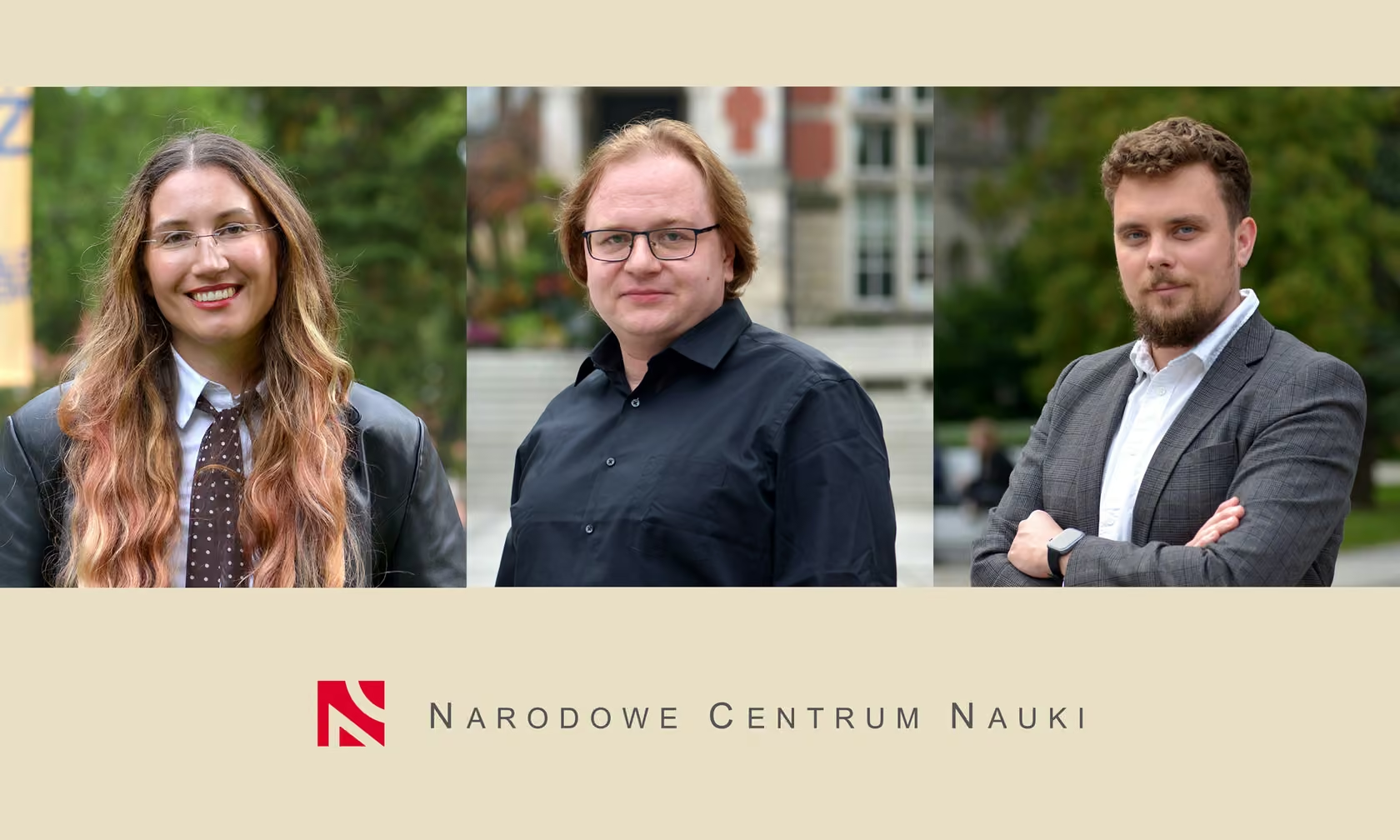
The National Science Centre awarded over PLN 112,000 for the implementation of projects at Gdańsk Tech (applications submitted in June).
The National Science Centre awarded over PLN 112,000 for the implementation of projects at Gdańsk Tech (applications submitted in June).
Grants were awarded to scientists from the Faculty of Management and Economics, the Faculty of Chemistry, and the Faculty of Electronics, Telecommunications and Informatics.
Work Without Labels – A New Approach to Neurodiversity in the Workplace
.JPG)
PhD Elżbieta Karwowska, Faculty of Management and Economics, project: “Work Without Labels: Preferences of People with ADHD or Autism Traits Regarding Teal Work Environments,” funding amount: PLN 13,750
The starting point of the project is the question: Can a workplace be designed so that different individuals can work in harmony with their way of functioning, without the need to conform to a single “ideal” employee model?
In a representative study conducted for the project, over 20 percent of the Polish population declared that they exhibit certain ADHD or autism traits that hinder their professional functioning. Although this is not a clinical diagnosis, the scale of the phenomenon may suggest the need to design work environments that take this group into account. Meanwhile, current solutions may be stigmatizing as they assume these individuals require special assistance to adapt to conditions considered “normal”. Additionally, support is often directed only to those with a formal diagnosis, which requires disclosure and may, in the long term, worsen their professional situation.
The project will develop an original concept of a teal and neurodiverse organization (TiNO), in which autonomy, the possibility to adjust work methods to individual needs, a sense of purpose, and treating diversity as a value rather than a problem to be solved are important. The assumptions of the concept have been published in the journal Employee Relations.
PhD Elżbieta Karwowska will investigate how this approach is actually perceived by people with ADHD or autism traits compared to neurotypical individuals. “What is especially important to me is to combine scientific knowledge with what really happens in organizations and teams. In my work, I look for solutions that allow the creation of open and friendly work environments – ones where a person does not have to hide who they are” emphasizes the researcher.
Chemistry of “mirror molecules”. New materials for distinguishing enantiomers
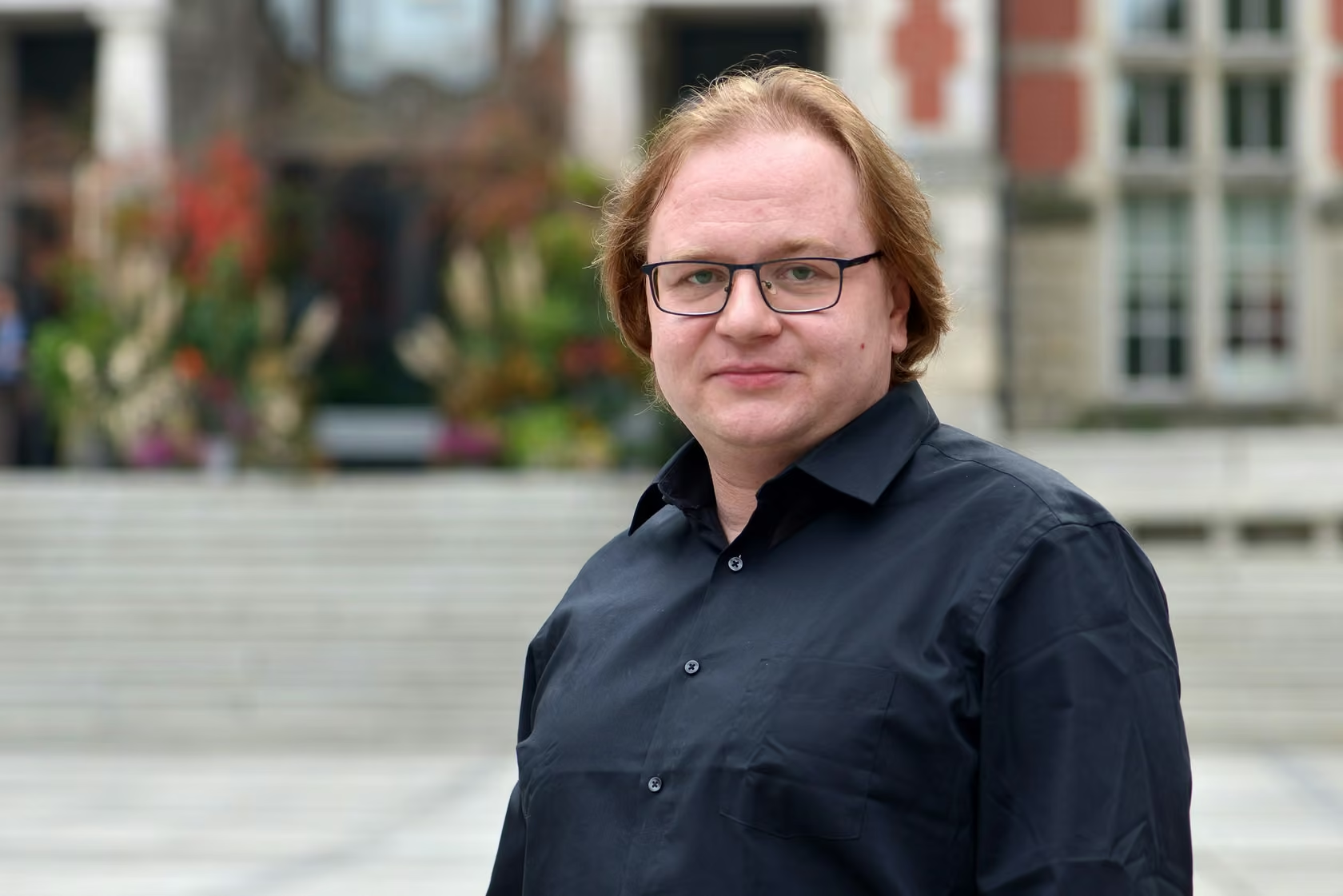
PhD Eng. Michał Nowak, Faculty of Chemistry, project: "Visualizing chirality: design of chiral metal-organic porous frameworks containing crown ethers for enantiomer differentiation of small molecules using amino acids as an example", funding amount: PLN 49,390
The project aims to develop new materials capable of distinguishing enantiomers – pairs of molecules with the same composition and connectivity of atoms but differing in their spatial arrangement. Differentiating enantiomers is particularly important for biologically active compounds, such as pharmaceuticals, because their individual forms can exhibit different properties and biological effects.
The research will utilize chiral metal-organic frameworks (cMOFs), i.e., materials with an ordered, porous structure creating a chiral environment. Chromogenic crown ethers – molecular receptors capable of binding the studied molecules and generating a measurable optical signal – will be incorporated into the framework.
The study aims to determine whether differences in interactions of individual enantiomers with such material can be translated into a measurable optical signal, thus in a sense "visualizing" chirality. Amino acids will be used as model compounds, and the resulting signal will be analyzed using UV–Vis spectroscopy. The results obtained will allow for an assessment of whether such materials could be used in the future to develop new methods for distinguishing chiral molecules.
How to Convert Carbon Dioxide into a Useful Raw Material? New Research on Electrolyzers
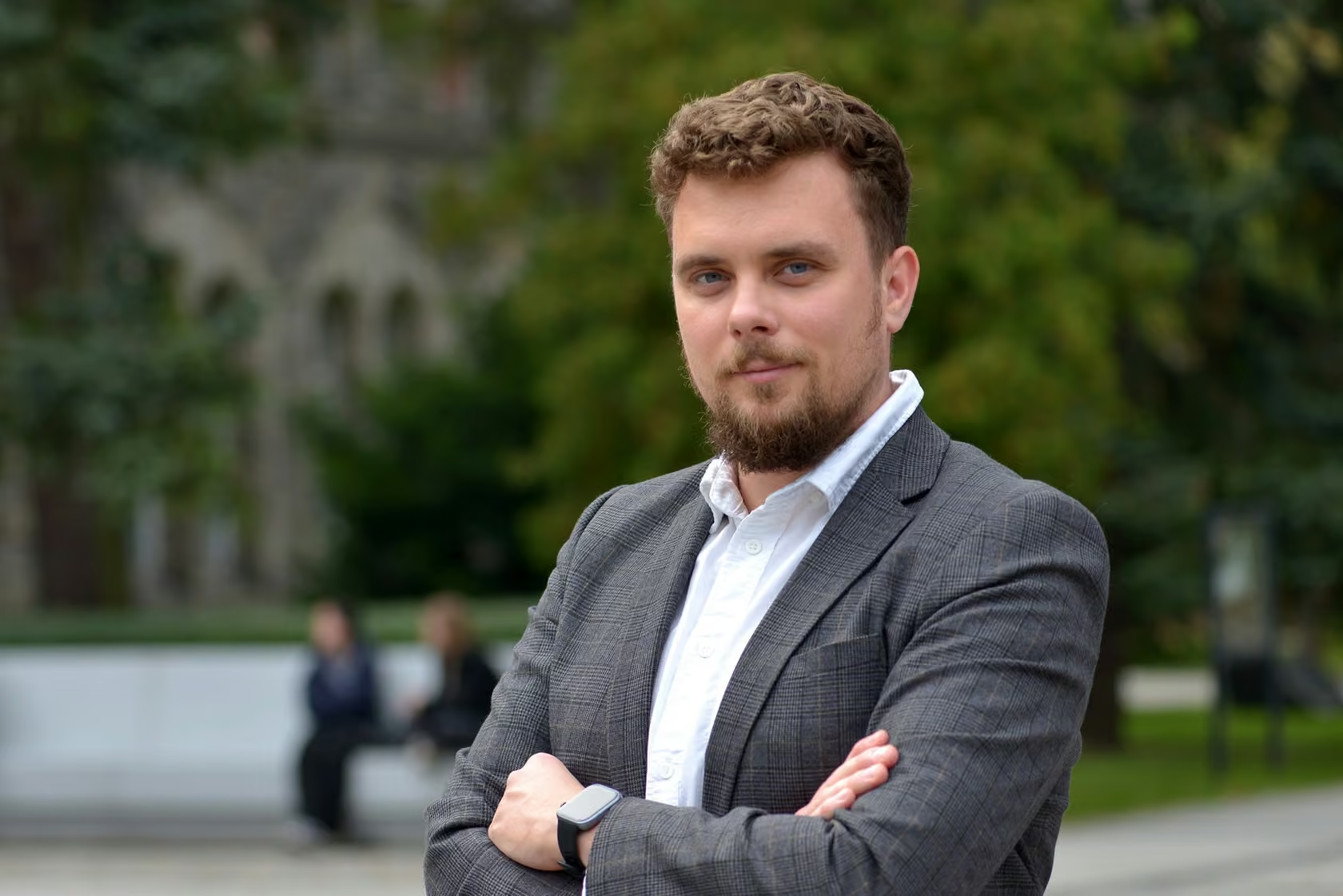
PhD Eng. Patryk Błaszczak, Faculty of Electronics, Telecommunications and Informatics, project: “Two-component nanostructures for improving the efficiency and durability of SOEC in the CO2 electrolysis process,” funding amount PLN 49,500
The project focuses on developing a new method to increase the durability and efficiency of high-temperature solid oxide electrolyzers (SOEC), used for converting carbon dioxide into carbon monoxide. The latter can then serve as a raw material for the production of fuels and chemicals. This technology may play an important role in the future in utilizing CO2 and developing low-emission industrial processes. However, a significant challenge remains the rapid degradation of electrolyzer electrodes when operating in an atmosphere with a very high carbon dioxide content.
Within the project, electrolyzers will be modified with nanostructures containing, among others, lithium, sodium or potassium and cobalt, manganese, iron or copper. Their properties will then be tested under conditions close to real operating environments. The use of special nanostructures composed of alkali metal oxides and transition metals aims to protect the electrode containing metallic nickel against undesirable reactions, including nickel oxidation and carbon deposition. Preliminary research results are particularly important, indicating that the addition of lithium nanostructures can stabilize nickel even during operation in a pure CO2 atmosphere. The conducted studies will determine the impact of such modifications on the efficiency and durability of the device.
The research will be conducted at Gdańsk Tech in cooperation with the National Taipei University of Technology. Their results may contribute to the development of more durable and efficient electrolyzers and, in the longer term, to the advancement of technologies enabling more effective use of carbon dioxide as a raw material.
More information about the MINIATURA 10 competition and the list of laureates can be found on the NCN website.