
Winners of "Fahrenheit. Future Competencies" Will Travel to Munich
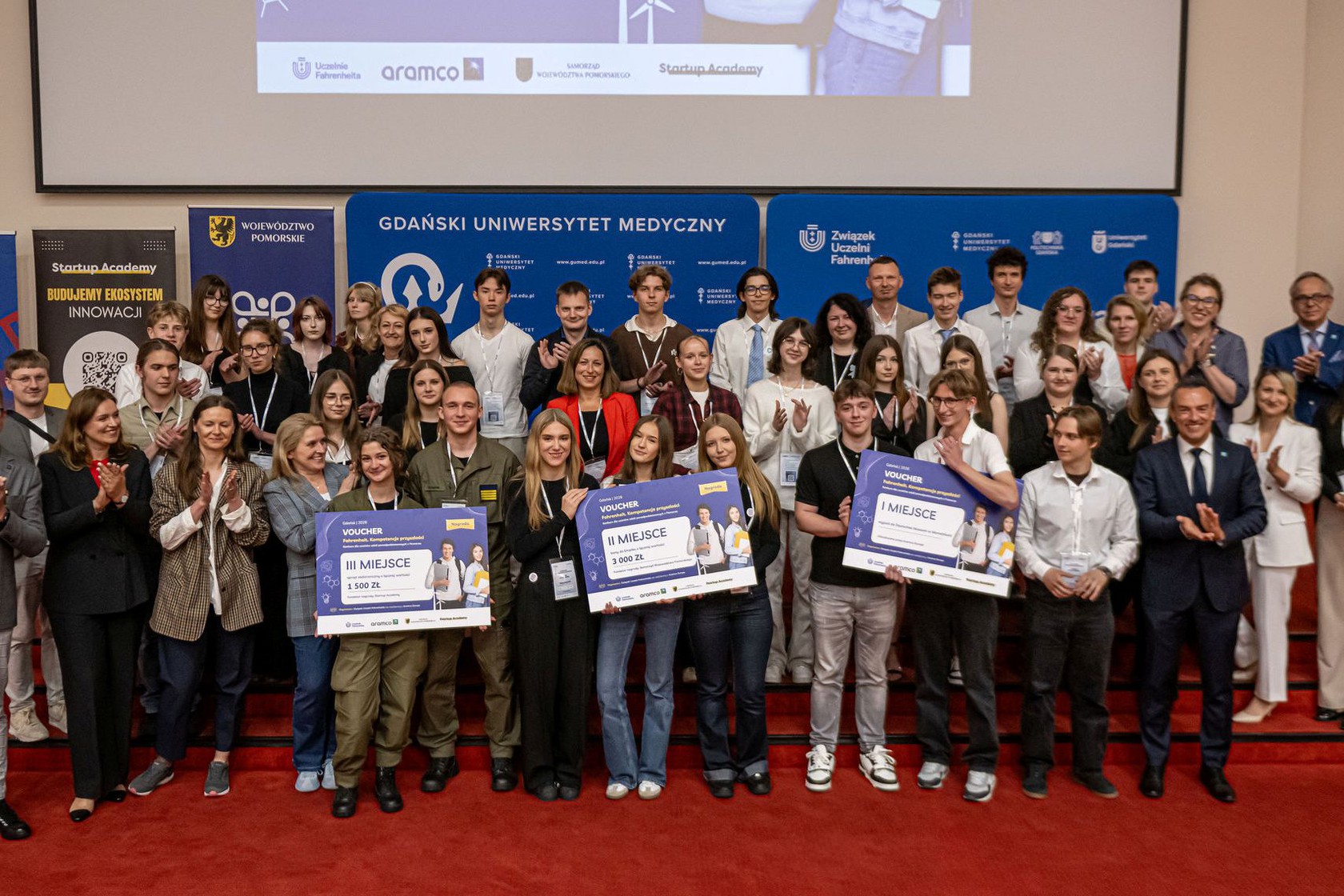
Last Thursday, we announced the winners of the first edition of the FarU competition for schools: "Fahrenheit. Competences of the Future." Twelve teams from nine schools in the Pomeranian region qualified for the workshop and mentoring sessions stage, and three were distinguished with awards also sponsored by the event partners: Aramco Europe and the Pomeranian Voivodeship Self-Government.
Last Thursday, we announced the winners of the first edition of the FarU competition for schools: "Fahrenheit. Competences of the Future." Twelve teams from nine schools in the Pomeranian region qualified for the workshop and mentoring sessions stage, and three were distinguished with awards also sponsored by the event partners: Aramco Europe and the Pomeranian Voivodeship Self-Government.
HydroGen, BloodFly Company, Link Pomerania, Kolumny Olimpu, and Sopot Smart Bin are just some of the project names submitted to the competition for schools from the Pomeranian Voivodeship, organized for the first time by the Fahrenheit Universities. The program aims to support the development of entrepreneurship and the advancement of STEM competencies among secondary school students from the Pomeranian Voivodeship.
Description of the competition challenge
The development of modern technologies, energy transformation, and changes in the economy are driving increasing demand for competencies in science, technology, engineering, and mathematics (STEM). At the same time, solutions that help improve residents' quality of life and support sustainable development are still being sought.
The task for the teams applying to the “Fahrenheit. Competencies of the Future” competition was to design a solution that combines both goals – developing STEM competencies and introducing positive changes in the local community. According to the challenge's theme: Competencies of the Future – The Energy of Good Changes. How can science and technology be used to develop future competencies while simultaneously improving the quality of life for local communities?
The project was to be based on the analysis of a real problem occurring in the given school, town, or the Pomerania region, and then proposing a solution utilizing elements of science, technology, or engineering.
Team Projects
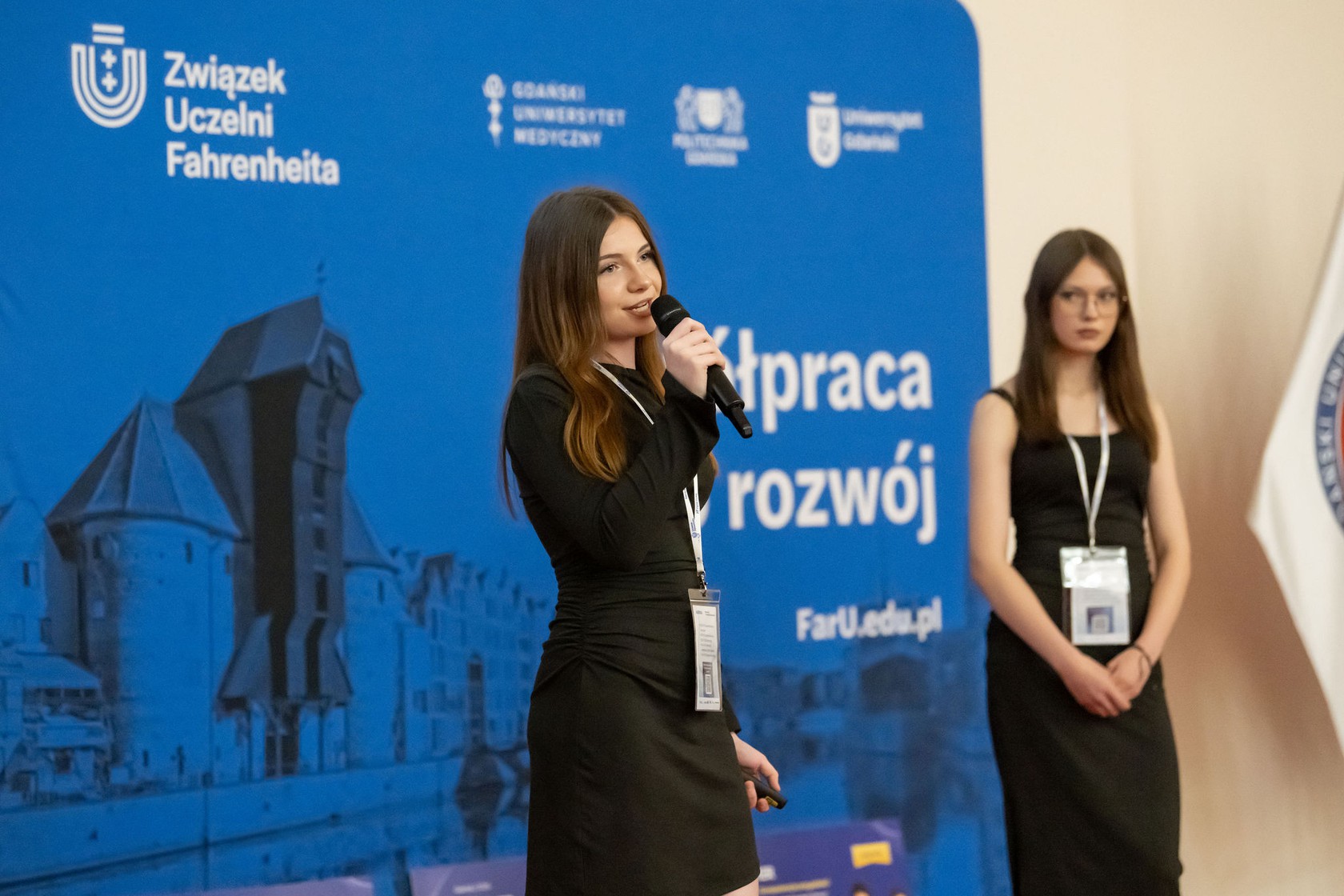
Among all the submissions, 12 ideas were selected. The originators, students from Pomerania, participated in 2 workshop days held sequentially at the Faculty of Social Sciences of the University of Gdańsk and in the main building of Gdańsk Tech. They worked on developing their ideas and skills, and additionally had the opportunity to explore the campuses during tours.
During the month of work, participants could also sign up for online mentoring sessions to refine their solutions under the guidance of experts from the university and the business environment. Representing GUMed was PhD Eng. Maciej Tankiewicz, DSc, professor from the Department of Environmental Toxicology. From Gdańsk Tech - PhD Eng. Roksana Licow from the Faculty of Civil and Environmental Engineering. From UG, students were supported by Dr. Wojciech Glac, DSc, professor from the Neurobiology Laboratory.
Demo Day
On June 11 this year, the program finale took place at the Medical University of Gdańsk. First, a walk around the campus and physiotherapy workshops with the "SKN FizjoKoło" Science Club. Then the project presentations – each group had 5 minutes to present their idea and implementation plan, followed by Q&A with the jury. The presentations followed in this order:
- Soulactive | An application aimed at holistically supporting people with overweight, from calorie counting and dietary advice to psychological support
- Olympus Columns | Support for people with disabilities in finding reliable and verified services under specific conditions
- LinkPomerania | An archetype of an analytical system for identifying transport exclusion
- Cyclists’ System | A tool for finding safe places for comfortable cycling
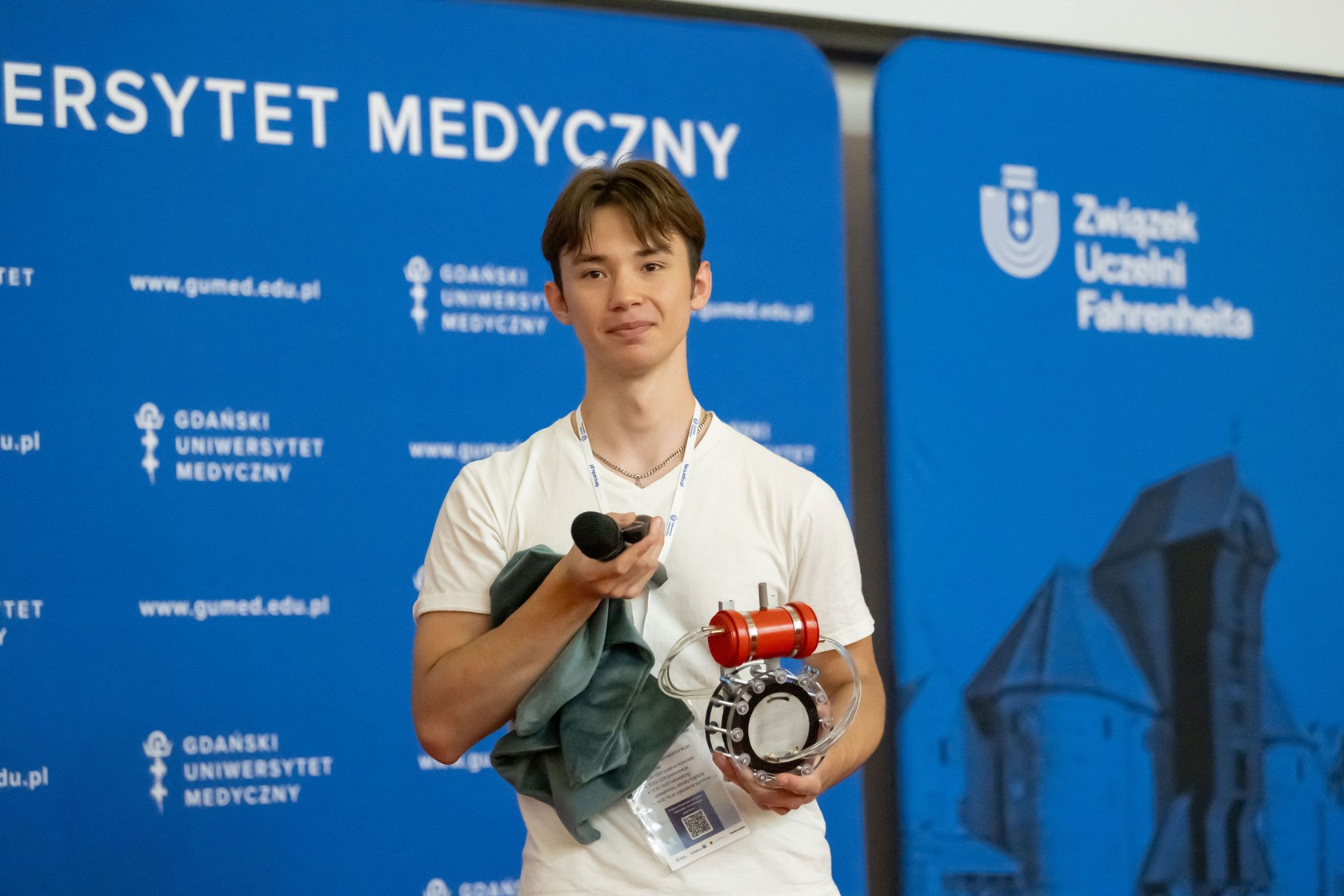
- HydroGen | A proposal for an optimized electrolysis system based on hydrogen electric plates capturing surpluses from renewable energy sources
- Breath of Pomerania | An application collecting information about air pollution and offering recommended actions
- SmartSchoolBalance | Support for school youth in monitoring their well-being while signaling potential threats to schools and families
- JedzieMY | A tool motivating physical activity, featuring a range of route and option proposals, as well as options for finding partners for joint training and earning additional points
- Humavery | A product designed to verify whether data was generated using AI, equipped with, among others, a detection engine and appropriate plugins, including a B2B API model
- BloodFly Company | A solution enabling faster transport of needed blood, bypassing traffic jams and road difficulties
- Eco Smart Bin | An intelligent solar bin teaching waste segregation
Jury Members
On behalf of the universities forming the Fahrenheit University Alliance:
- PhD DSc Anna Michalik, Vice-Dean of the Faculty of Health Sciences with the Institute of Maritime and Tropical Medicine at the Medical University of Gdańsk
- PhD Eng. Andrzej Okuniewski, professor at Gdańsk Tech, Rector’s Plenipotentiary for Cooperation with Schools
- PhD DSc Urszula Patocka-Sigłowy, professor at the University of Gdańsk, Vice-Rector for Student Affairs
- Katarzyna Zygmunt, Director of the Fahrenheit University Alliance
On behalf of the partners:
Jarosław Kobus, President of the Management Board, and Maciej Szozda from Aramco Fuels Poland,
Emilia Koniuszewska from the Competence Development and Talent Attraction Department in the Pomeranian Voivodeship Self-Government.
Award Winners
First place, winning the main prize sponsored by Aramco Europe (a trip to the Deutsches Museum in Munich), was awarded to the creators of the Humavery solution from the Energy School Complex in Gdańsk.
Vouchers totaling PLN 3000 for the EMPIK store, funded by the Pomeranian Voivodeship Self-Government, went to the authors of the SmartSchoolBalance idea for the second place in the competition. The students represented the Jakub Wejher District School Complex No. 4 in Wejherowo.
Third place, electronic equipment worth PLN 1500 from Startup Academy Poland, which supports the initiative organizationally, was awarded to the originators of BloodFly Company from the Maurycy Mochnacki District School Complex in Reda.
We congratulate all participants for their work and thank the supervisors and teachers who supported the students during the competition.
Students from the following schools in the Pomeranian Voivodeship took part in the competition:
- Stanisław Staszic Economic School Complex No. 5 in Słupsk
- Józef Haller Technical School in Owidz
- Wacław Sierpiński VI General Secondary School in Gdynia
- District School Complex No. 3 in Kościerzyna
- Jakub Wejher District School Complex No. 4 in Wejherowo
- Energy School Complex in Gdańsk
- Maurycy Mochnacki District School Complex in Reda
- II General Secondary School in Sopot
- Technical School Complex in Sopot
FarU, the program’s initiator and main organizer, emphasizes that it was crucial to demonstrate that young people can already create their own business ideas at the education stage, develop future competencies, learn teamwork, presentation skills, and design thinking. Thanks to such initiatives, it is possible to bring academic life closer through close cooperation with universities and support from experts representing the Fahrenheit Universities.