
Solar Eclipse 2026. Practical Information and Interesting Facts
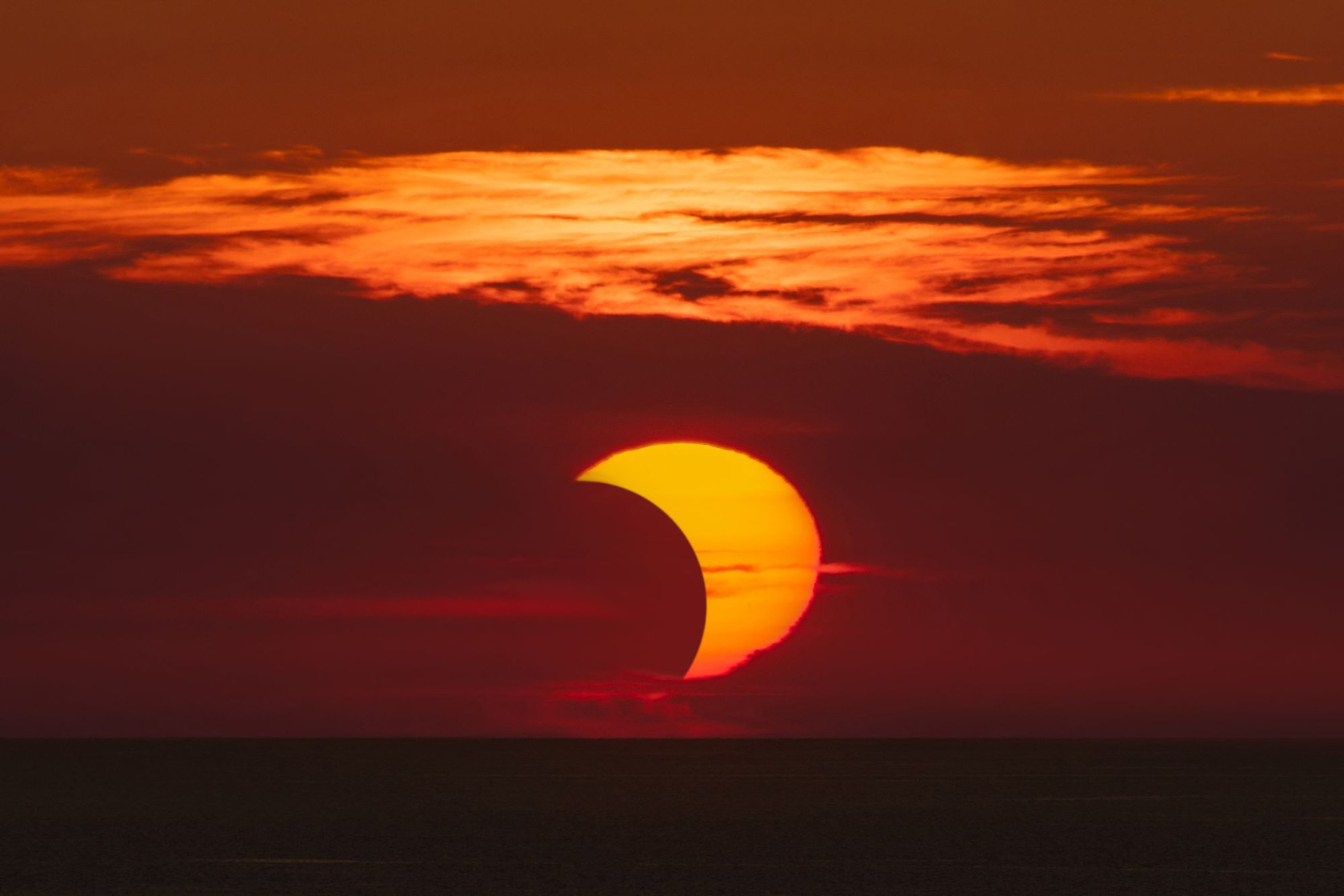
On August 12th, we will witness a unique astronomical event: a total solar eclipse, which will be observed in Poland as a deep partial eclipse. What causes this phenomenon, where will it be best visible, and how can you observe it without risking your eyesight? Members of the Astronomical Scientific Circle of Gdańsk Tech explain.
On August 12th, we will witness a unique astronomical event: a total solar eclipse, which will be observed in Poland as a deep partial eclipse. What causes this phenomenon, where will it be best visible, and how can you observe it without risking your eyesight? Members of the Astronomical Scientific Circle of Gdańsk Tech explain.
A solar eclipse is one of those phenomena that perfectly demonstrates how fascinating the Solar System is and how precisely its mechanics work. For it to occur, the Sun, Moon, and Earth must align in a straight line.
– Then, the shadow of the Moon cast on the surface of our planet causes a partial or total obscuration of the solar disk visible from selected locations – explains Martyna Czudec, PhD student at Gdańsk Tech and founder of the Astrophysics Scientific Club.
What time should you look at the sky?
The eclipse will begin in the evening, between 7:10 PM and 7:18 PM. The exact time, however, depends on the observation location. The maximum phase will occur just before sunset, around 8:00 PM.
– The differences in the duration of the eclipse primarily result from the observer's position relative to the path along which the Moon's shadow and penumbra move across the Earth's surface – explains Miłosz Płoszyński from the Astrophysics Scientific Club at Gdańsk Tech. – You can imagine this shadow as an area moving over the globe, shaped like an ellipse. Different countries lie in various parts of this area and are crossed at different angles; therefore, in some places, the phenomenon starts earlier and lasts longer, while in others it is shorter.
– The low position of the Sun above the horizon means that this year's eclipse may appear exceptionally picturesque – adds Filip Krezymon, Gdańsk Tech graduate associated with the Astrophysics Scientific Club at Gdańsk Tech. – It is worth choosing a location with a well-visible western horizon. In many regions of our country, the Sun will set before the phenomenon concludes.
How to prepare for observation?
Although the eclipse is extremely spectacular, its observation requires adherence to basic safety rules.
– Under no circumstances should you look at the Sun with the naked eye or through binoculars, a telescope, or a camera without appropriate solar filters. Even a partially obscured solar disk emits intense radiation that can cause irreversible eye damage – warns Martyna Czudec.
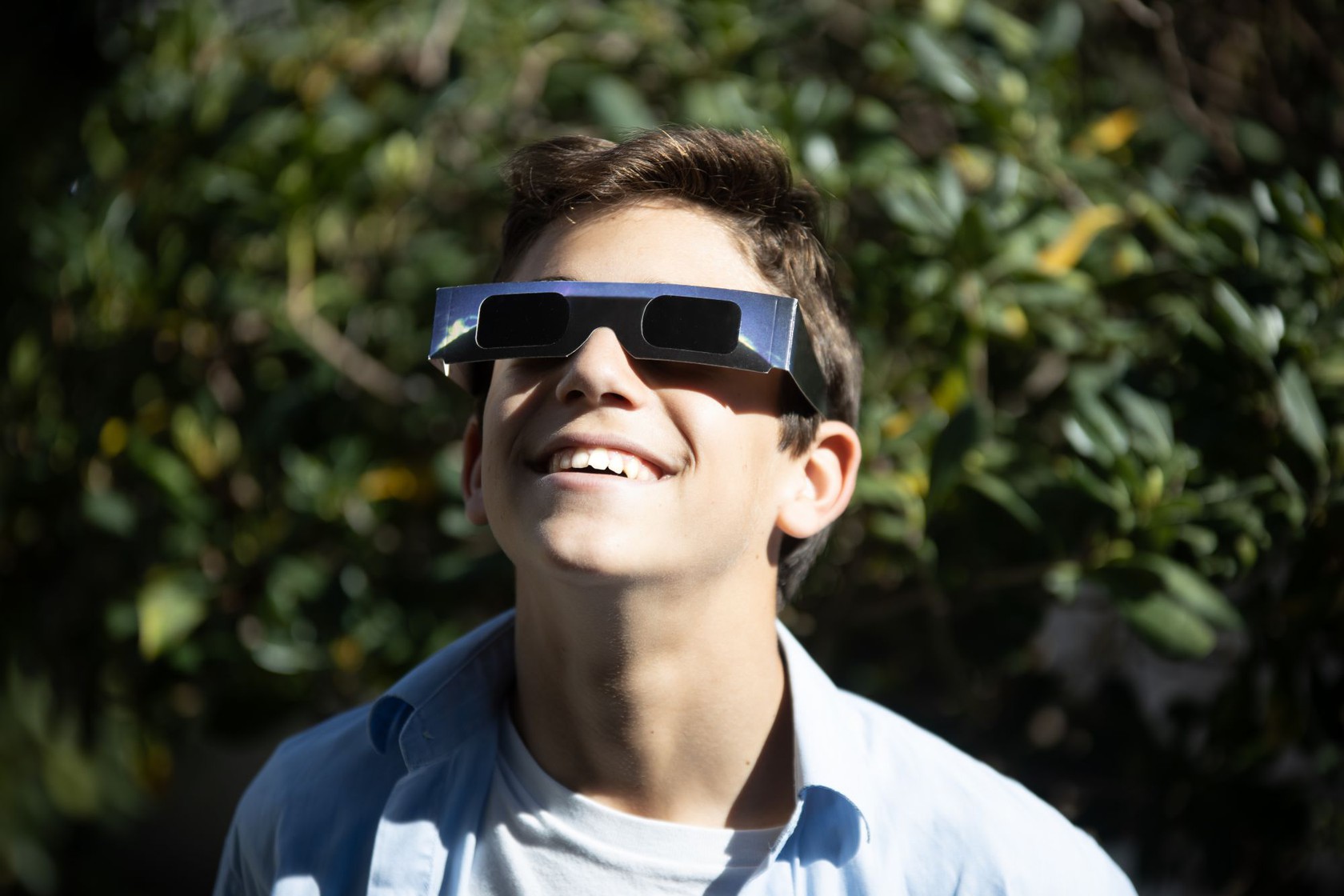
Young scientists from Gdańsk Tech emphasize that only certified glasses with a filter or special solar film designed for astronomical observations should be used for observation. Ordinary sunglasses, CDs, tinted glass, or photographic negatives do not provide adequate protection.
Why will the total eclipse bypass Poland?
The August solar eclipse will be the first total eclipse visible in continental Europe in almost 30 years.
– However, the path of totality is relatively narrow, usually only several hundred kilometers wide. This means that only people located within this path will see the moment when the Moon completely covers the Sun and a few minutes of twilight will fall – says Jakub Nurkiewicz, chairman of the Astrophysics Scientific Circle at Gdańsk Tech.
Unfortunately, Poland will be outside this path, but we will be able to admire a very deep partial eclipse. In the western part of the country, the Moon will cover up to about 85% of the solar disk, while the further east you go, the degree of coverage will be slightly smaller.
From several to several dozen seconds of darkness
The mentioned path of totality on August 12 will pass through Greenland, Iceland, and northern Spain, among other places. It is there that the incredible phenomenon can be fully observed. Many astronomy enthusiasts and photography hobbyists are traveling to these locations. It is worth mentioning that the moment of total eclipse will last relatively short.
The duration of the event depends on the geometry of the specific eclipse: the orbital velocity of the Moon, the Earth's rotation, the direction in which the shadow passes through a given place, as well as the distance of the Earth from the Sun and the Moon from the Earth. For example, when the apparent size of the Moon is too small to completely cover the Sun, an annular eclipse occurs, and a bright ring remains visible around the Moon.
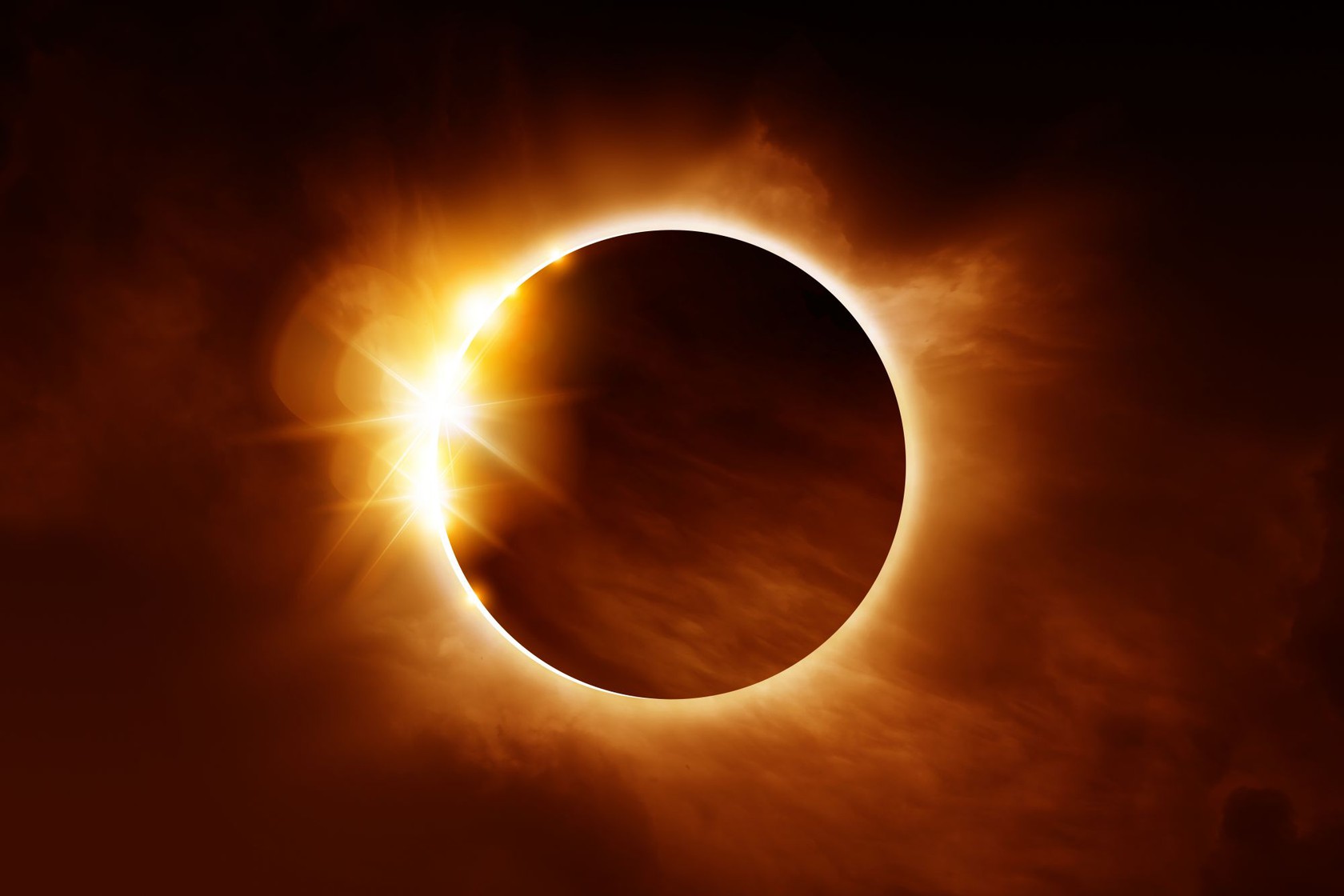
– The time of day is also important. A good example is this year’s eclipse, which will occur in the evening, and the Moon will “not have time” to exit the Sun’s disk because the Sun will already have set below the horizon by that time – explains Miłosz Płoszyński. – Despite the total solar eclipse, we will be dealing with a relatively short observation window.
To enjoy the total solar eclipse for as long as possible, one should travel to Iceland, to the town of Látrabjarg. There, the moment of totality will last 2 minutes and 13 seconds. In popular Spanish cities such as Valencia, Bilbao, Ibiza, Palma de Mallorca, Valladolid, or Santander, the total eclipse will last from about 30 to 100 seconds.
The World Will Change During the Eclipse
Beyond safely observing the Sun itself, it will be interesting to pay attention to what is happening around us, on Earth. In Poland, the amount of light reaching the Earth’s surface will visibly decrease. The Moon will cover about 85% of the Sun’s disk. However, this does not mean it will become 85% darker. Different parts of the Sun’s disk do not shine equally, and our eyes constantly adjust to changing light conditions. During the phenomenon, we will be able to notice contrasting and unusually sharp shadows.
– A particularly interesting effect will appear under trees: small gaps between the leaves act like pinhole cameras and project numerous images of the Sun onto the ground. During the eclipse, these images will take the shape of crescents – says Miłosz Płoszyński.
In regions located within the path of totality, the situation will be much more spectacular.
– When the Moon completely covers the photosphere, direct sunlight will disappear briefly and it will become dark, like during deep twilight. However, complete night will not fall. Near the horizon, a bright glow may still be visible, originating from areas lying outside the Moon’s shadow – adds Płoszyński.
– During deep eclipse, the way our eyes work also changes – emphasizes Martyna Czudec. – In low light, vision becomes more sensitive to blue-green colors, while reds appear darker. This is the Purkinje effect. For this reason, the landscape may appear less saturated, cooler, grayish-blue, or even bluish-metallic. However, this does not mean the corona itself turns blue; it is usually described as white or silvery.
When Will We Observe a Total Solar Eclipse in Poland?
The August solar eclipse will be exceptional for many reasons. It is therefore worth dedicating your time to it. The next opportunity will not be as spectacular.
Next year, we will again be able to observe a partial solar eclipse in Poland. On August 2, 2027, however, the Moon will cover only 40% of the disk of our daytime star.
– We will have to wait much longer for the next total solar eclipse visible within the current borders of Poland. It will occur in 109 years, specifically on October 7, 2135. The path of totality will then include, among others, Lower Silesia and Lesser Poland – explains Jakub Nurkiewicz. – More than 180 years will have passed since the last such event in our country.
How Are Astrophysicists Able to Provide Such Precise Data?
– Calculations accurate to fractions of a second come from super-precise mathematical models of celestial body motions. They take into account not only the gravitational interactions between the Sun, Earth, and Moon but also the influence of other planets, variable Earth rotation, and lunar topography – Nurkiewicz explains.
With their help, scientists can also identify past eclipses. As Jakub Nurkiewicz points out: these calculations are so precise that they made it possible to determine the exact date of the battle at the Halys River (May 28, 585 BCE), during which – according to Herodotus's accounts – a solar eclipse occurred.