Cement to Support Bone Reconstruction. A Gdańsk Tech Invention Triple Awarded at a Fair in Canada
Can cement help in bone regeneration? A team from Gdańsk Tech is developing a new generation of materials that can be applied as a plastic paste directly to the site of bone damage and then set within the defect. The latest of these materials, developed under the name “MG²-MULTISET Bone Cement”, won a silver medal and two special awards at the international iCAN2026 competition.
Can cement help in bone regeneration? A team from Gdańsk Tech is developing a new generation of materials that can be applied as a plastic paste directly to the site of bone damage and then set within the defect. The latest of these materials, developed under the name “MG²-MULTISET Bone Cement”, won a silver medal and two special awards at the international iCAN2026 competition.
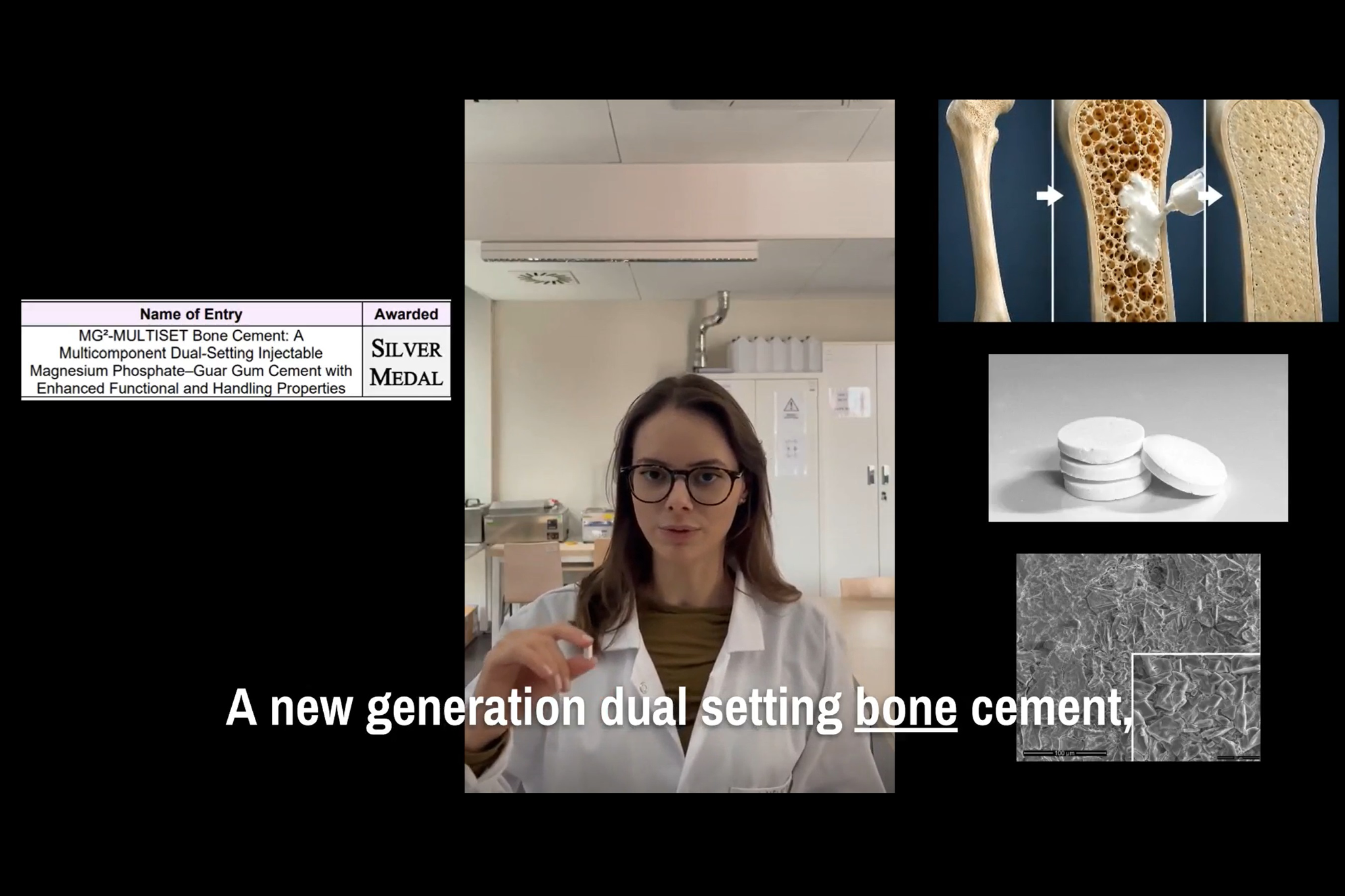
Cement is usually associated with construction, but in medicine, this name refers to a completely different group of materials. Bone cement can be prepared as a paste that hardens after being placed at the site of a bone defect, filling the void. This solution is particularly effective for defects with irregular shapes. Instead of fitting a ready-made implant to the damaged area, a material that adapts to the available space before hardening can be used.
For several years, a team led by Dr. Eng. Marcin Wekwejt from the Division of Biomaterials Technology at the Faculty of Mechanical Engineering and Ship Technology at Gdańsk Tech has been working on such solutions (see also: They will replace bone defects and accelerate their regeneration. New functional bone cements | Gdańsk Tech). The developed cements combine phosphate-magnesium ceramics with natural hydrogels, making it possible to simultaneously shape their application, mechanical, and biological properties.
The material behavior can be controlled on several levels
MG²-MULTISET Bone Cement is a further stage in the development of this concept. It is a multi-component material in which, alongside phosphate-magnesium cement and guar gum, substances such as borax, calcium carbonate, and sorbitol have been used.
– Each component performs a different role, and their interaction allows control of the setting process, consistency, and final properties of the cement – says Dr. Eng. Marcin Wekwejt. – So, this is not a simple “ceramic plus polymer” system. During hardening, both the mineral structure of the cement and the polymer network of the hydrogel develop simultaneously. Borax participates in the crosslinking of guar gum and simultaneously influences the cement reaction, sorbitol modifies the paste properties, while the system containing calcium carbonate affects the development of mineral phases. Thanks to this, the material's behavior can be controlled on several levels: from the preparation and application of the paste, through its hardening process, to the structure of the set cement – he explains.
Not only filling defects but also other tasks
Modern bone cements have increasingly advanced roles. It is no longer solely about mechanically filling a defect.
– The material should be easy to prepare and administer, maintain cohesion upon contact with fluids, and harden within an appropriate time. At the same time, it must function well in a complex biological environment – the researcher states. – Therefore, during the development of MG²-MULTISET Bone Cement, we analyzed not a single material property but the interrelations between its composition, behavior during application and setting, structure, degradation, and biological response.
This approach allows a better understanding of how changing one component affects the entire system and which parameters can be efficiently controlled at the cement design stage.
– The biggest challenge in designing such materials is that individual properties cannot be treated independently – emphasizes Dr. Eng. Wekwejt. – Changing one element of the composition can simultaneously affect consistency, the course of setting, or the cement structure. Therefore, our main focus is on understanding these relationships and increasingly conscious design of the entire system.
Silver medal and two special awards
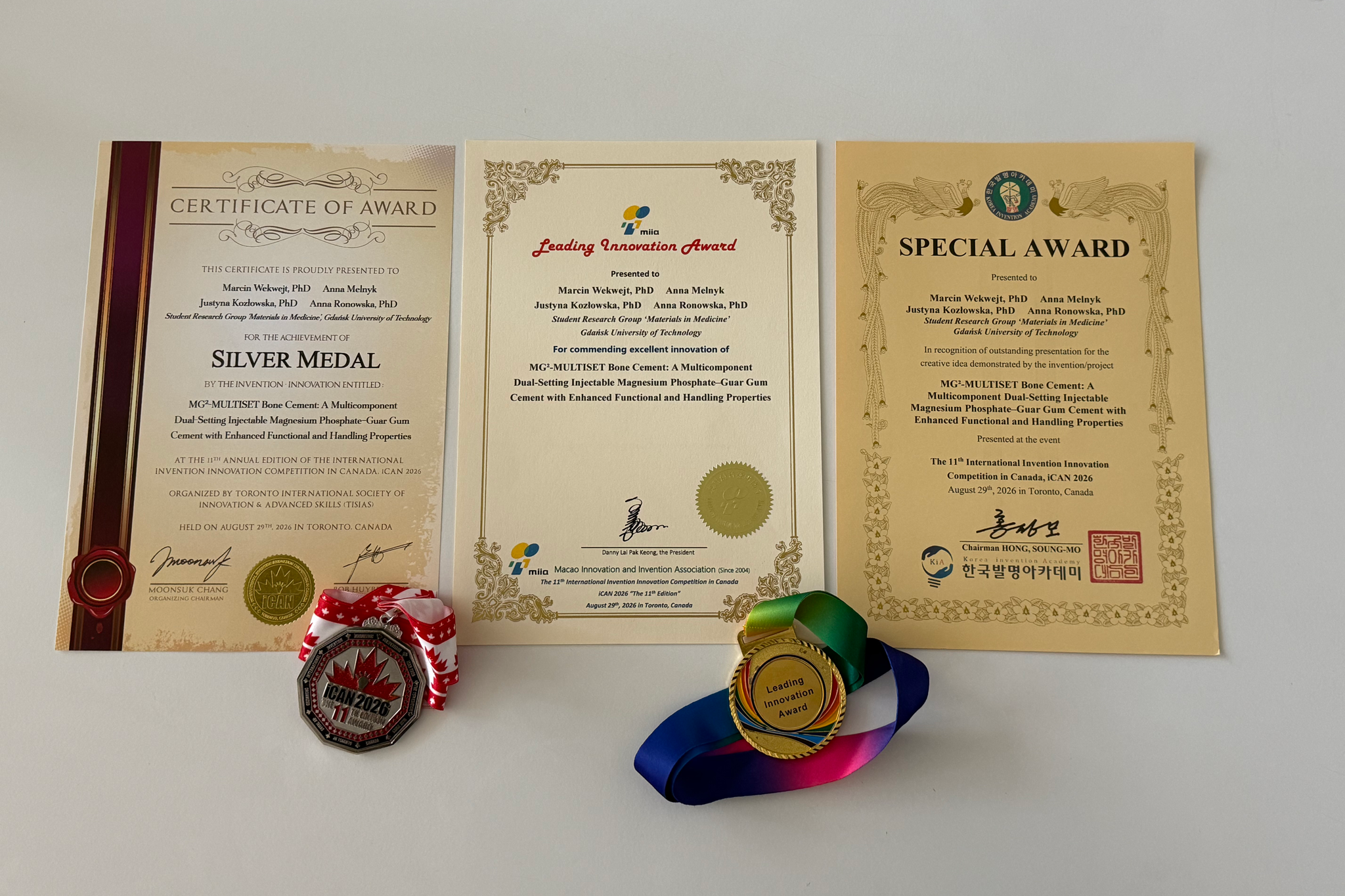
MG²-MULTISET Bone Cement was submitted to the 11th edition of the International Invention Innovation Competition in Canada (iCAN2026). The solution from Gdańsk Tech won a silver medal at iCAN2026, as well as two special awards: the Macao Innovation and Invention Association Special Award and the Korea Invention Academy Special Award.
– Such distinctions confirm to us that the research direction being developed is interesting beyond our immediate scientific environment. I am particularly pleased that this is the result of interdisciplinary collaboration and student involvement in real research and inventive work – emphasizes Dr. Eng. Marcin Wekwejt.
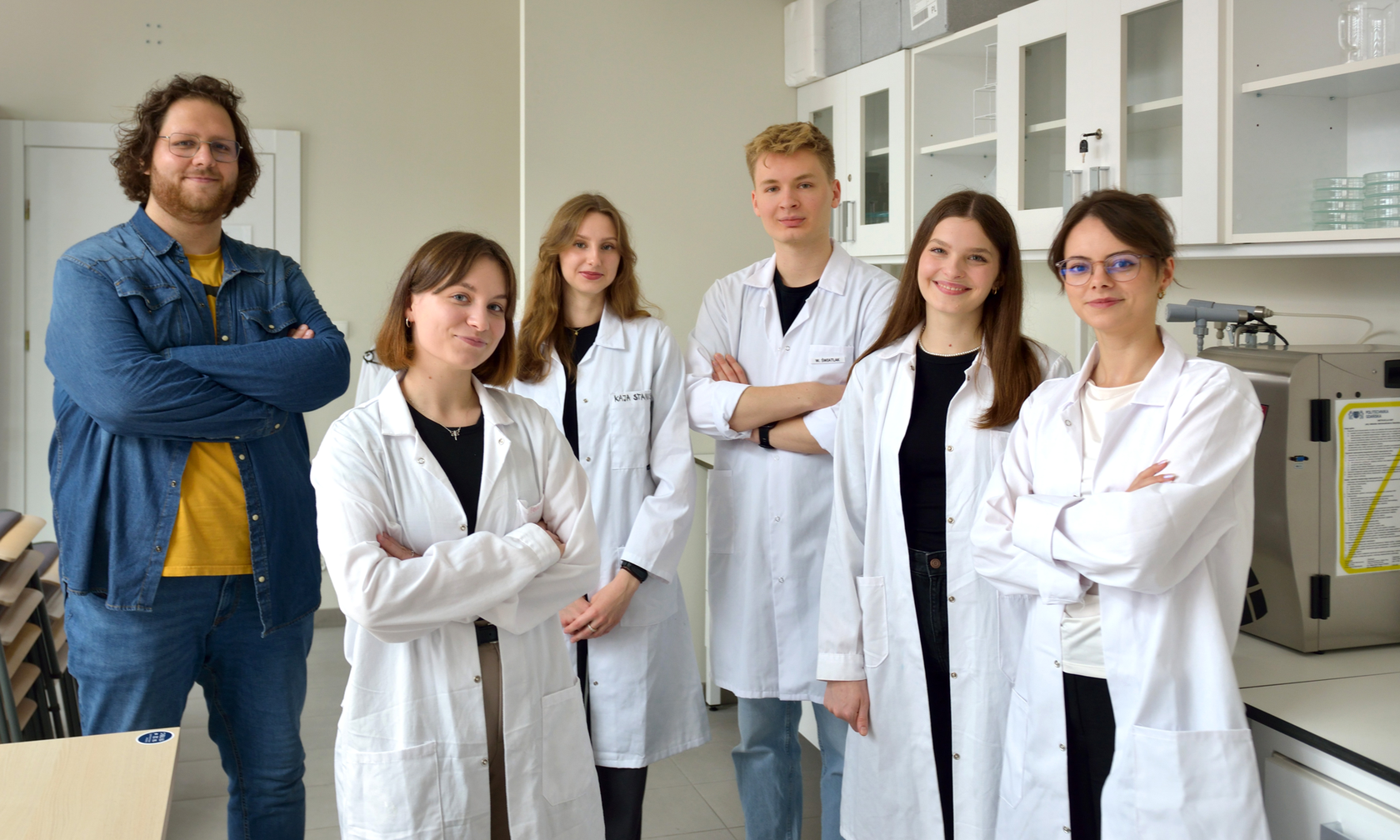
The co-creators of the awarded solution were Eng. Anna Melnyk from the Gdańsk Tech Scientific Circle “Materials in Medicine,” Dr. Hab. Justyna Kozłowska, Prof. UMK, from Nicolaus Copernicus University in Toruń, and Dr. Hab. Anna Ronowska from Gdańsk Medical University.
Student involvement in research
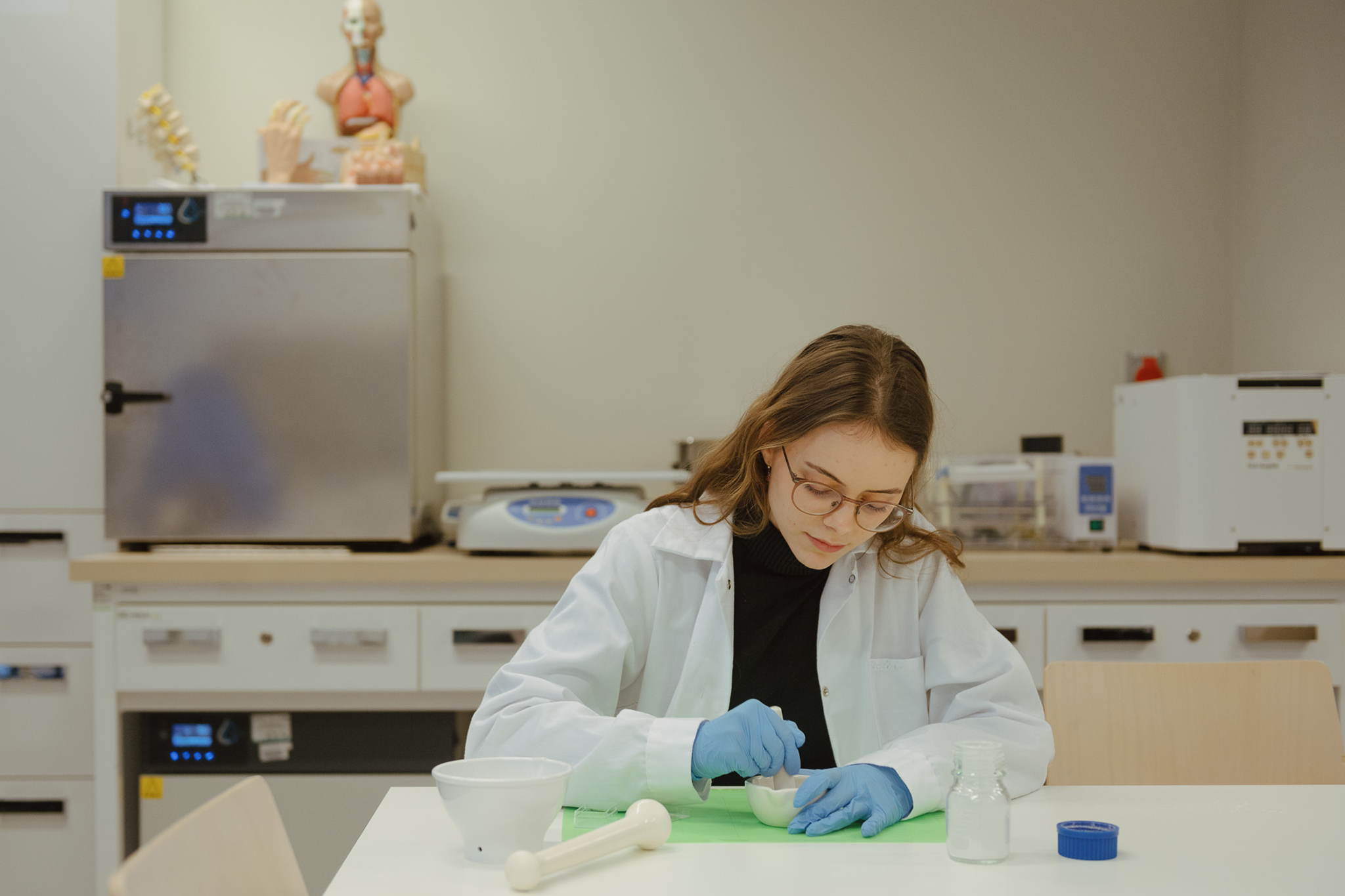
The solution fits into a broader research direction carried out by Dr. Eng. Marcin Wekwejt within the PLUTONIUM project (IDUB PG). Parallel to this, the project “Support for students in enhancing their competencies and skills” (MNiSW, FERS) was also developed, enabling students to actively participate in research on new biomaterials and develop scientific and practical skills (see also: Students will develop skills in biomaterials engineering | Gdańsk Tech). Eng. Anna Melnyk participated, among others, in formulation development, conducting experiments, analyzing results, and developing further material concepts. She also took part in mentoring and scientific sessions, as well as numerous trainings and workshops enhancing research competencies and practical laboratory skills.
From a single formulation to a material platform
MG²-MULTISET Bone Cement is not a single experiment but another element of the ceramic-polymer bone cement platform being developed at Gdańsk Tech.
– In subsequent projects, we investigate how various hydrogels and additives influence the cement setting process, consistency, cohesion, injectability, degradation, and biological response. The goal is not to create one “ideal” formulation but to understand the relationships between composition and material properties and use this knowledge to design further cement variants – announces the head of the research team.
Recall that last year, two other solutions of the team—DuoSet-SaMgCem and MgCarraGelCem—were awarded during iCAN2025, winning gold and silver medals, respectively, as well as additional special awards (Innovative bone cements from Gdańsk Tech awarded at the international iCAN2025 innovation fair | Gdańsk Tech). MG²-MULTISET advances this direction by introducing a more complex, multi-component method of controlling the setting process and material properties.
Inventors from 55 countries and regions
The International Invention Innovation Competition in Canada is an international contest of inventions and innovations organized by the Toronto International Society of Innovation & Advanced Skills. In 2026, its 11th edition took place, with participants from 55 countries and regions around the world. The competition brings together scientists, inventors, students, and creators of new technologies. The presented solutions cover a broad spectrum of fields, from engineering and new materials to medicine and health-related technologies. In addition to contest medals, projects can also receive special awards granted by partner invention organizations from various parts of the world.
Designing the next generations of bone cements
For the team from Gdańsk Tech, this year’s distinctions represent another stage in the development of the technology. Further work is ongoing and will focus on optimizing composition, better understanding the mechanisms occurring during setting, and evaluating materials in more demanding biological models.
– Each new formulation answers some questions but simultaneously opens others. That is precisely what makes this research the most interesting. The better we understand the relationships between individual components, the more consciously we can design the next generations of bone cements – concludes Dr. Eng. Marcin Wekwejt.