From Laboratory to Factory. Gdańsk Tech Students Developed Biodegradable Cups
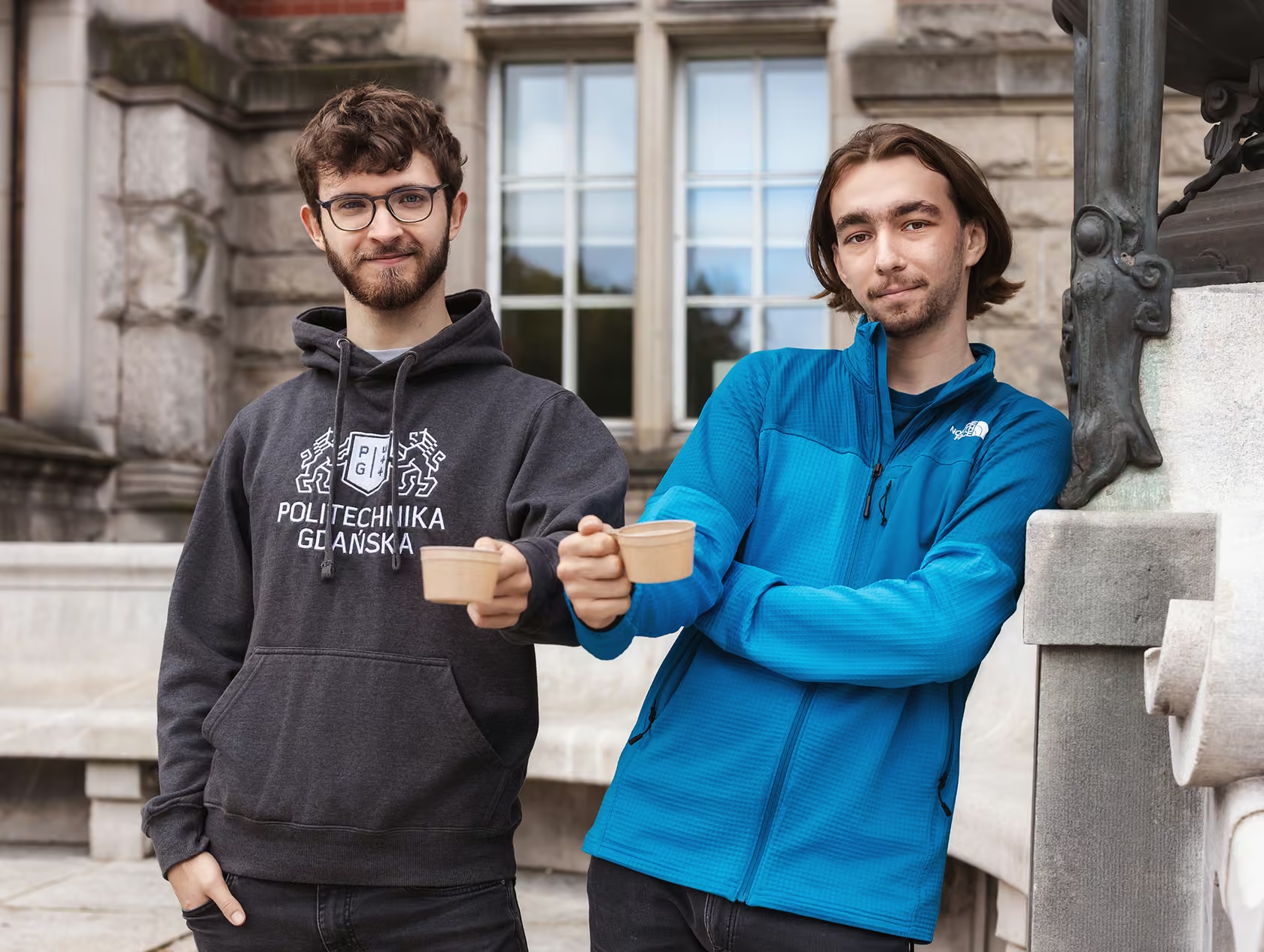
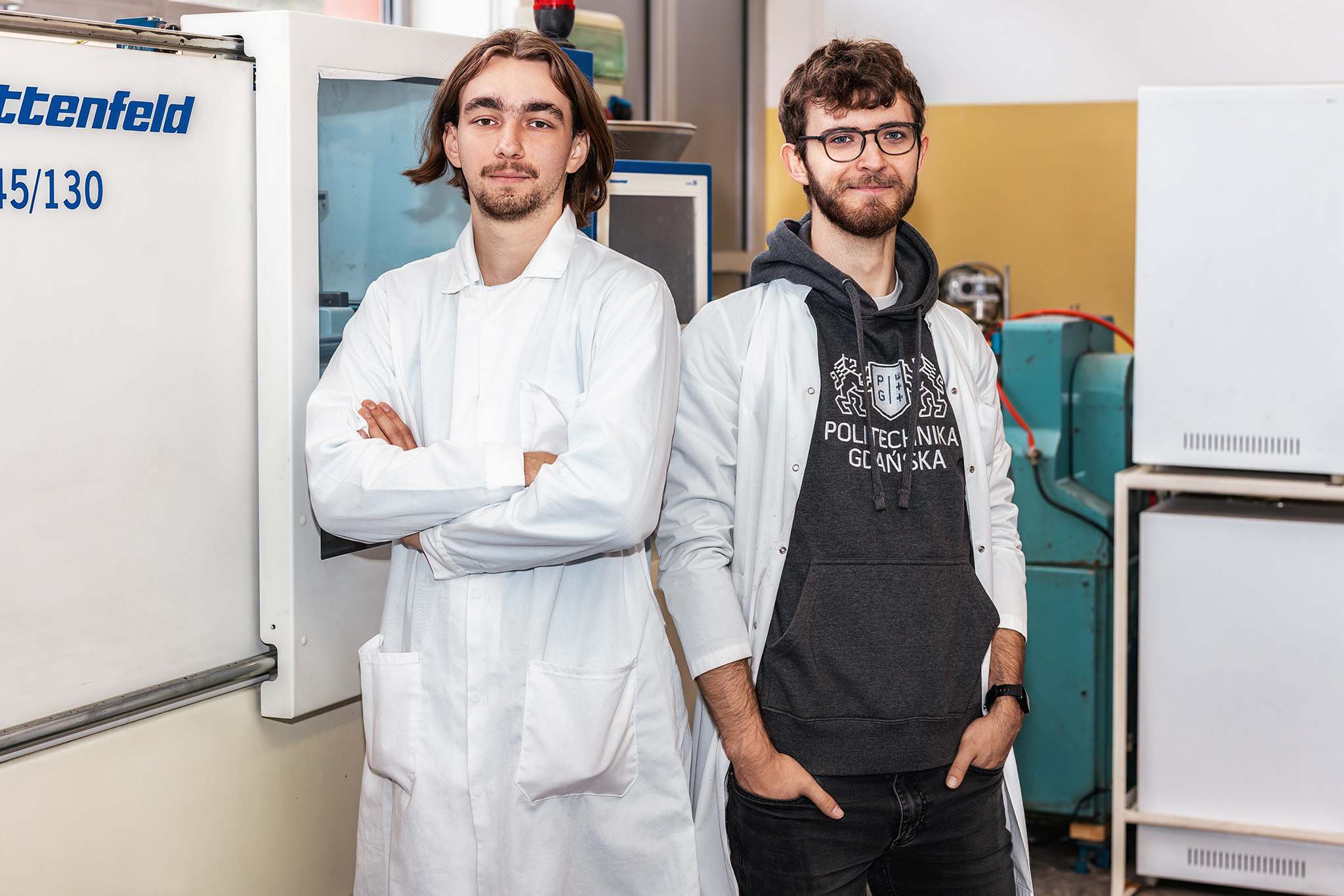
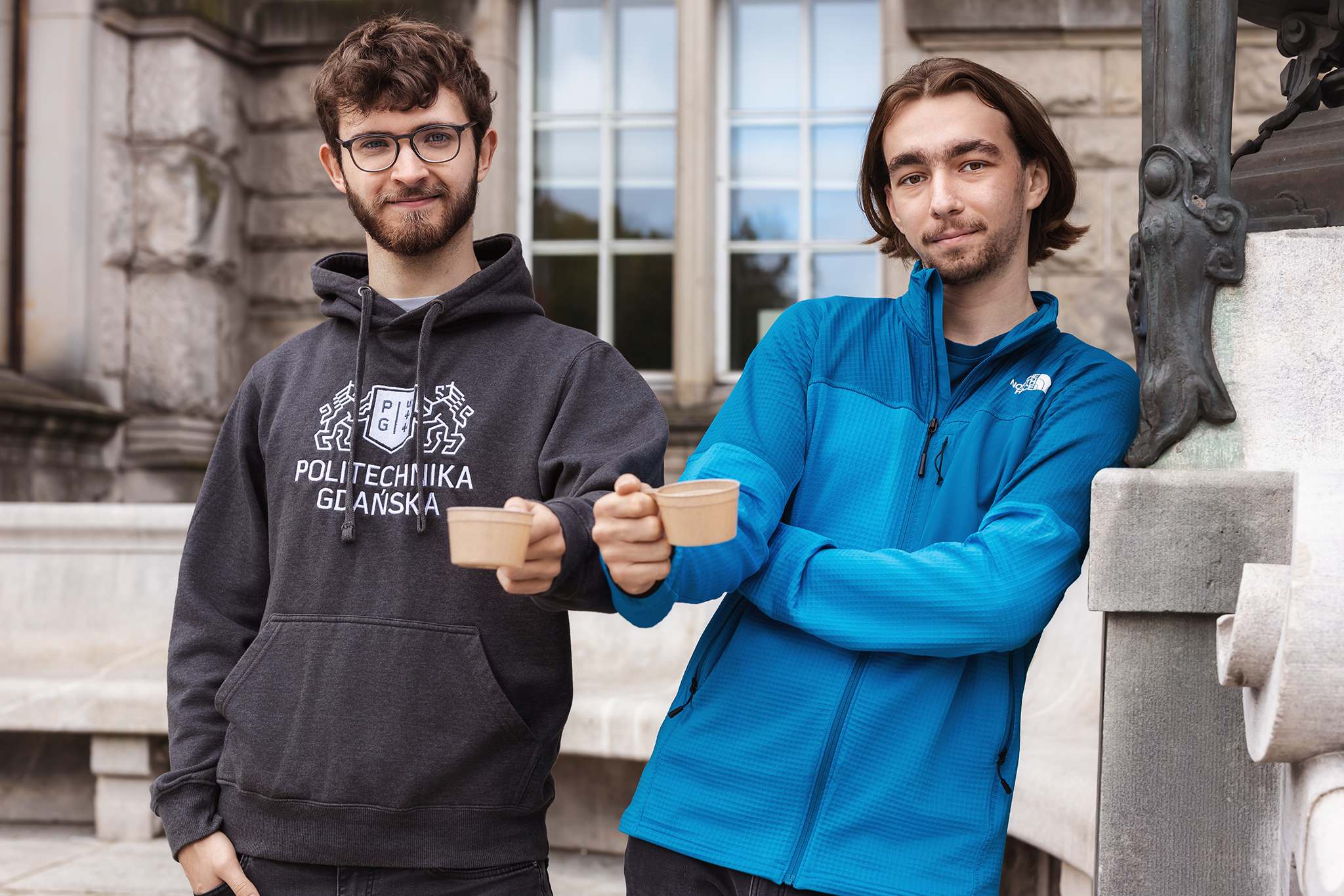
More than 120 cups were produced during industrial trials using a material developed by three students from Gdańsk Tech. Krzysztof Rekowski, Kajetan Siemienowicz, and Łukasz Pędrasik combined a biopolymer with natural cork, creating a composite resistant to high temperatures and capable of biodegradation. They carried out the project as part of the "Universities of the Future" program, and tested the developed solution under industrial conditions.
More than 120 cups were produced during industrial trials using a material developed by three students from Gdańsk Tech. Krzysztof Rekowski, Kajetan Siemienowicz, and Łukasz Pędrasik combined a biopolymer with natural cork, creating a composite resistant to high temperatures and capable of biodegradation. They carried out the project as part of the "Universities of the Future" program, and tested the developed solution under industrial conditions.
From Greenhouses to Disposable Cups
Nanotechnology students from the Faculty of Technical Physics and Applied Mathematics at Gdańsk Tech initially intended to develop laminated panels with glass, utilizing the thermal insulation properties of aerogels. Such a solution could find applications, among others, in greenhouses by reducing heat loss. However, high costs and production difficulties proved to be obstacles.
The team, led by Krzysztof Rekowski, decided to change the direction of their work. Instead of panels for greenhouses, the students focused on material for producing disposable vessels for hot beverages. They aimed to combine resistance to high temperatures, thermal insulation, and biodegradability.
The initially considered aerogel was replaced with natural cork, which has good thermal insulation properties. They combined it with a biodegradable biopolymer, obtaining a composite intended for further research and production trials.
Biopolymer and Cork: How Was the New Material Created?
Popular paper cups often have an inner coating made of plastic, e.g., polyethylene, which prevents leaking. However, its presence can complicate recycling. On the other hand, some bio-based materials, such as polylactic acid (PLA), have limited resistance to high temperatures.
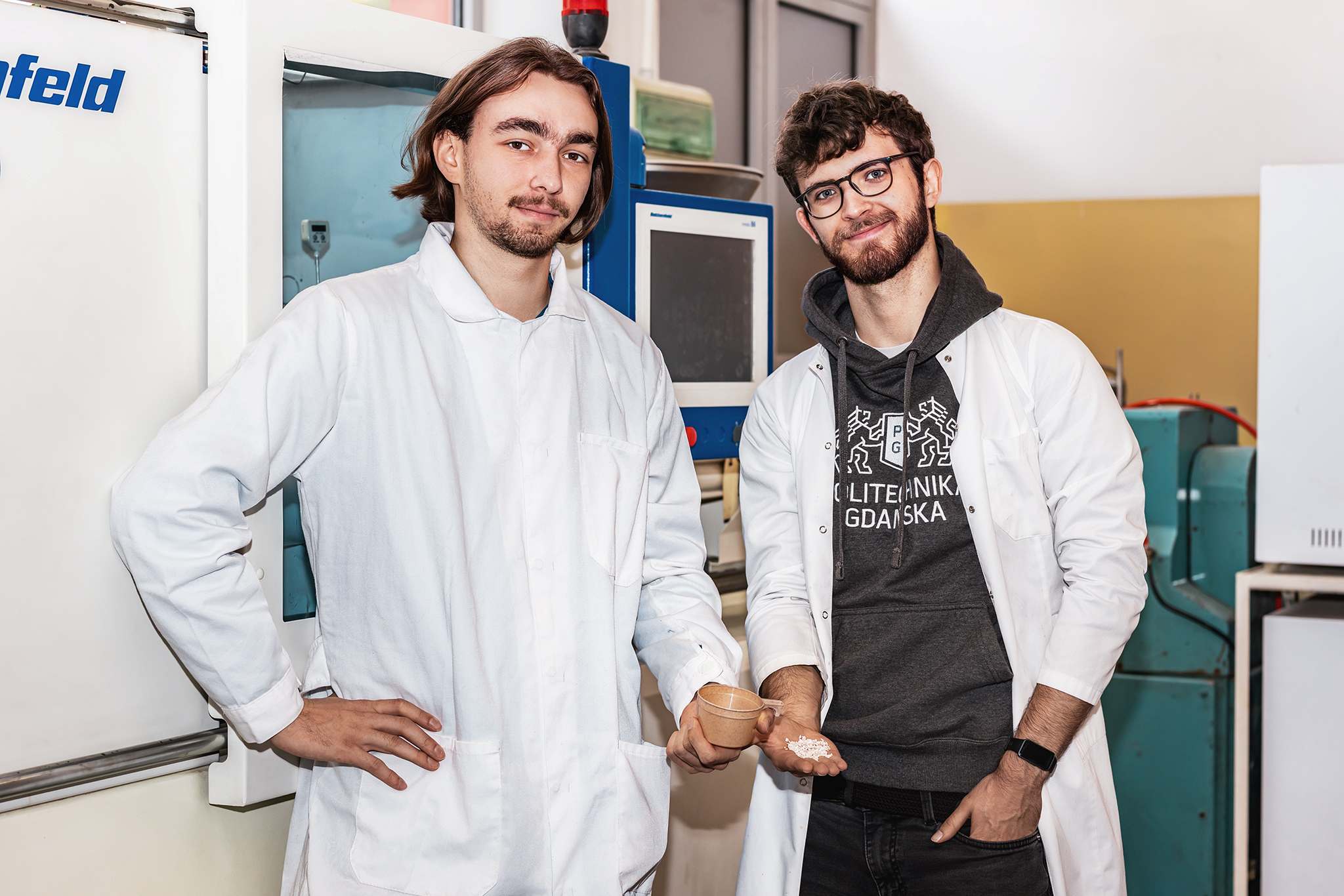
Gdańsk Tech students decided to use PHBV, a biopolymer belonging to the polyhydroxyalkanoates (PHA) family. These materials can be produced by microorganisms and show biodegradability. PHBV forms the base of the composite, and the addition of cork granulate affects its thermal insulation properties.
The biggest challenge was selecting the proportions of both components. The students prepared samples with varying cork content and compared their properties. Ultimately, they chose a composite containing only 1% granulate. According to the team, such a proportion allowed obtaining favorable thermal and mechanical properties while maintaining the possibility of processing the material using industrial methods.
The Cups Retained Their Shape Even with Nearly Boiling Water
The developed composite was subjected to tests assessing its temperature resistance, mechanical properties, and biodegradability.
The heat deflection temperature (HDT) was 145°C. This means that under specified test conditions, the material sample deformed only at this temperature. However, this is not the allowable operating temperature for the finished cup.
During practical trials, the cups maintained their shape even when in contact with nearly boiling water.
Tests also showed over 90% material degradation. This result pertains to the conditions under which the test was conducted and does not mean that the cups will biodegrade to the same degree in any environment.
From the Laboratory to the Factory in Świdwin
Developing the composite was the first stage. The next step was to verify whether the material is suitable for producing finished products on a scale larger than laboratory scale.
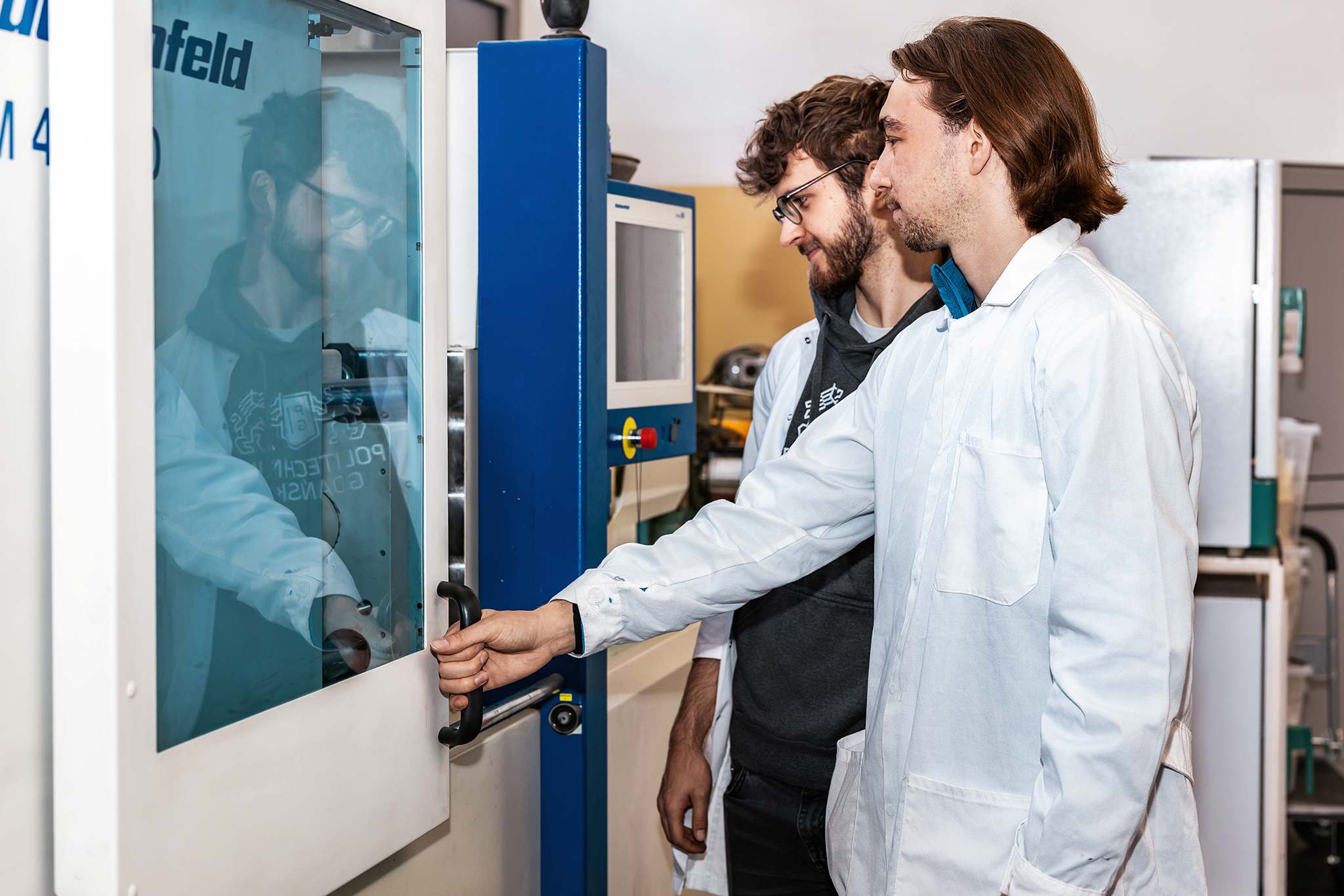
The students collaborated with the company BIO PLAST POM in Świdwin, where they conducted trials on industrial injection molding machines.
In the laboratory, they worked on small samples. In the factory, they had to ensure that the developed material was suitable for reproducible production of finished cups. This required appropriate selection of temperature, pressure, and injection parameters to ensure the composite properly filled the mold.
Ultimately, more than 120 cups were produced from the PHBV biopolymer with the addition of natural cork.
– The greatest satisfaction came when the first successful specimens began to come out of the mold – the students recall.
Next Stage: Safety and New Applications
The developed material may in the future also be used in the production of trays, bowls, and containers for hot meals. However, before such products can reach users, further research is necessary, primarily concerning the safety of the composite in contact with food.
The team also plans to prepare a scientific publication describing the course of the research and the obtained results. The students do not rule out further cooperation with companies or future commercialization of their solution.
Project Implemented within the “Universities of the Future” Initiative
The project, under the full title “Biodegradable PHA Composites with Cork Granulate for Thermoinsulating Disposable Products,” was created as part of the nationwide “Universities of the Future” initiative. The program enables students to develop their original ideas, gain research experience, and collaborate with representatives of science and business.
The team supervisor is PhD Eng. Maciej Sienkiewicz. The program’s activities at Gdańsk Tech are coordinated by the Young Scientists’ Office, and the project leader at Gdańsk Tech is DSc Eng. Mariusz Kaczmarek, university professor, Vice-Rector for Education. The coordinating institution for the project is the National Centre for Research and Development.