
Duration of doctoral training: 8 semesters
Mode: full-time
Tuition fees: none
Language of instruction: English
Completion of doctoral training: submission of the doctoral dissertation
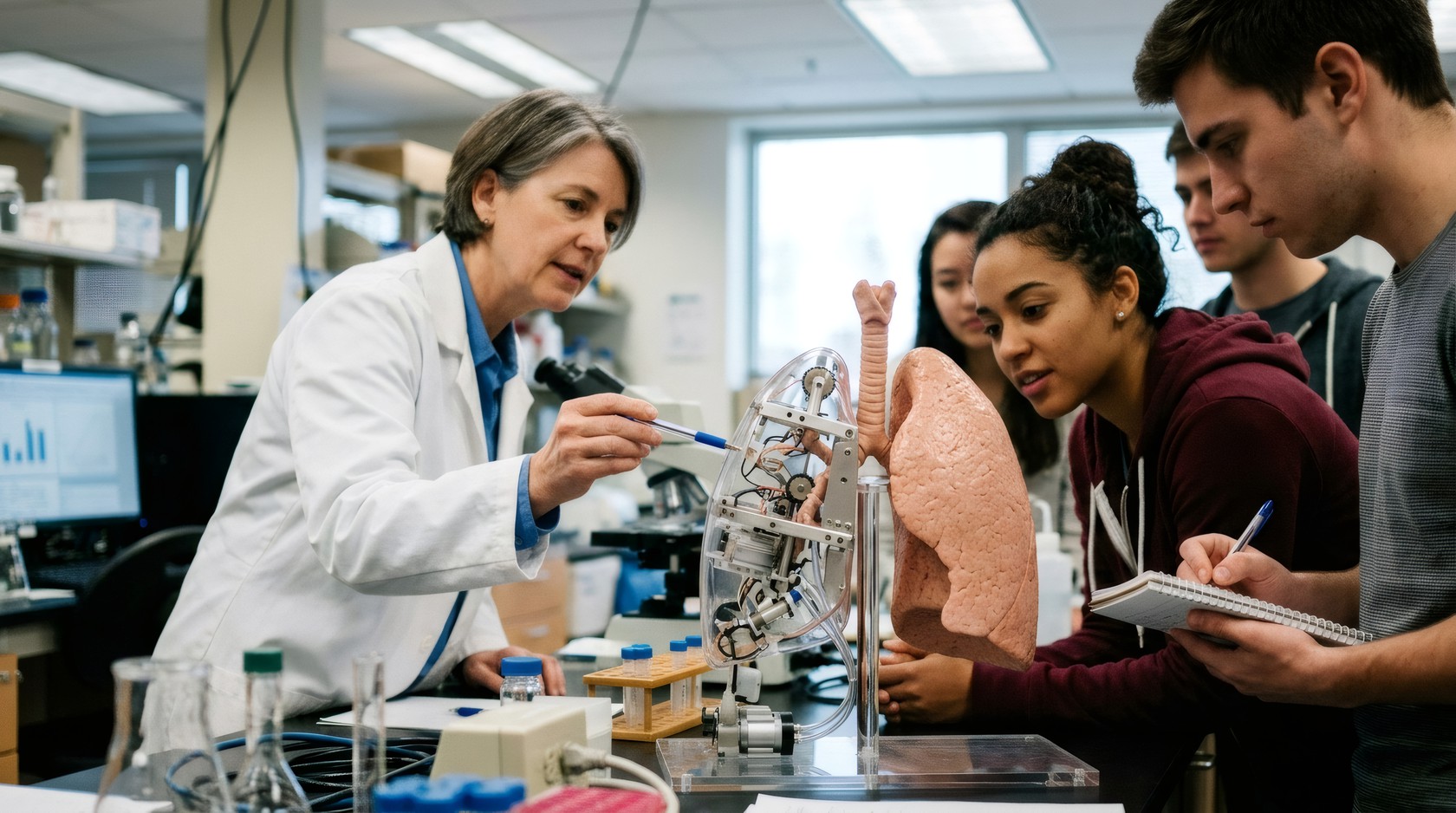
Research at the heart of doctoral education
Doctoral education at our School is guided by the Salzburg Principles. These recognise original research as the foundation of doctoral education and doctoral candidates as early-stage researchers. There is therefore no single, fixed path through the programme for everyone. Your starting point is the research problem you want to address, the nature of your discipline and the methods needed to achieve your objectives.
As your research progresses, you take increasing responsibility for planning your work, making decisions and ensuring the quality of your findings. Your supervisor supports you in developing your project and becoming an independent researcher.
What does the programme include?
Research and teaching skills
You take a compulsory course in your field and choose specialist and interdisciplinary courses suited to your research topic. You develop practical skills in academic publishing, preparing grant applications and finding and using scholarly information, and learn about research ethics. Your teaching practice also gives you experience in teaching university students.
Engaging with the research community
You can take part in research internships, summer and winter schools and workshops, and work with other research teams, including through mobility and scholarship programmes. At seminars and conferences, you present your findings and learn to communicate their significance clearly.
Research planning
In agreement with your supervisor, you develop an individual research plan setting out your research problem, objectives, methods, expected results and key milestones. The plan guides your work on the doctoral dissertation, with your supervisor supporting you at each stage.
Skills for careers in academia and beyond
Working on your doctoral dissertation develops your ability to formulate problems independently, plan complex projects, critically analyse information and data, communicate findings and collaborate with people from different fields. The HIRES-PhD framework identifies these as transversal skills that can be applied across a range of professional settings.
After your PhD, a research career is one of several paths you can take. According to the OECD, many doctorate holders go on to work outside academia. The skills you develop are valuable in research and development, industry, technology companies, consultancy and public institutions, as well as when developing your own business ventures.

Start your PhD at Gdańsk Tech
Learn about the admissions process and deadlines, find out which disciplines we offer doctoral training in and who could supervise your PhD.
Doctoral School at Gdańsk Tech
Tel.: + 48 58 348 65 80
General enquiries: doctoral-school@pg.edu.pl
Admissions enquiries: admissions.phd@pg.edu.pl
Address: G. Narutowicza 11/12, 80-233 Gdańsk, Poland
Office: Main Building, room 209